BJP vows 33% govt job quota for Bengal women: Smriti Irani
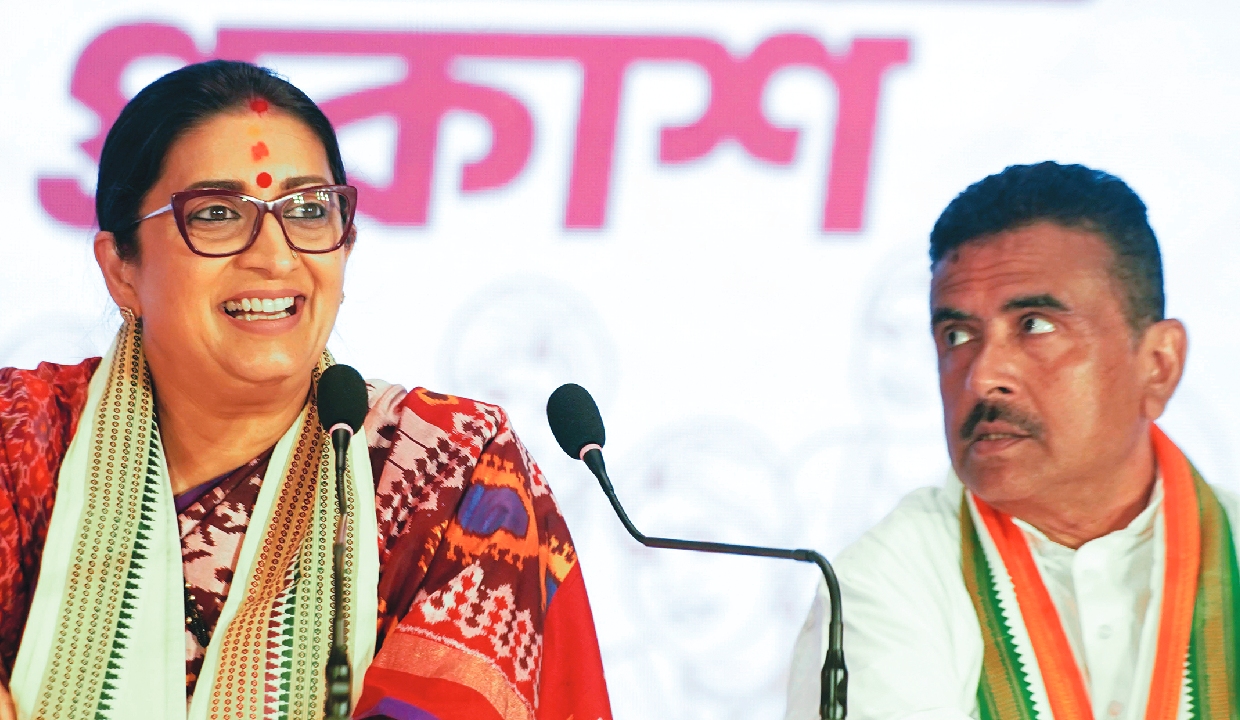
Senior BJP leader Smriti Irani on Wednesday pitched for early implementation of the 33 per cent women’s reservation law, while accusing Opposition parties of “double standards” and reiterating her party’s commitment to women’s empowerment in West Bengal with a promise of similar quotas in Government jobs.
The law providing for one-third reservation for women in the Lok Sabha and State Assemblies is yet to be operationalised as its rollout is linked to the completion of a fresh Census and subsequent delimitation exercise, a key point of contention between the ruling NDA and Opposition parties.
Responding to a question, Irani said the BJP-led Government under Prime Minister Narendra Modi has demonstrated its resolve on women’s empowerment through legislative action.
She accused Opposition parties of “speaking in multiple tongues” despite having had past opportunities to enact the reforms when they were in power.
Opposition parties, including the Congress, have supported the principle of reservation, but questioned the delay in implementation, arguing that linking it to delimitation could push its rollout to the next general elections after 2029.
Against this backdrop, Irani said the BJP remains committed to expanding women’s participation in governance and public life, highlighting complementary initiatives in financial inclusion, healthcare and livelihood support.
Turning to West Bengal, she said the party would replicate its national commitment at the state level if voted to power.
She announced that 33 per cent reservation would be provided to women in Government jobs in the State, alongside direct financial assistance and other welfare measures.
Targeting the ruling Trinamool Congress Government, Irani alleged that women in the State continue to face safety concerns and limited economic opportunities, asserting that “policy intent must translate into governance on the ground”.
The BJP has also promised a monthly financial support of Rs 3,000 for women in West Bengal as part of its broader outreach, positioning women-centric welfare and representation as key planks in its campaign.