Bio fertilisers: The scientific foundation of India’s next agricultural revolution
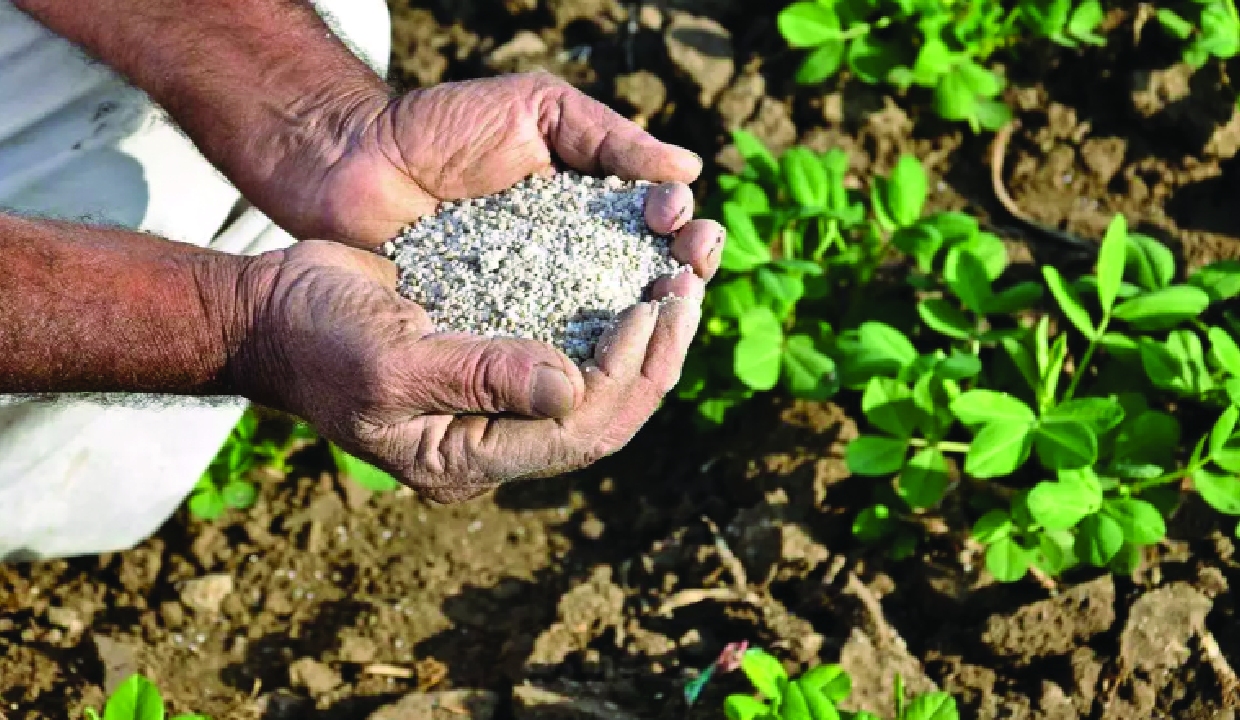
India’s agricultural journey, since Independence, has been one of remarkable transformation. From facing chronic food shortages during the 1960s, the country has emerged as one of the world’s largest producers of food grains, fruits, vegetables, milk and several other agricultural commodities. The Green Revolution fundamentally altered India’s agricultural landscape through improved seed varieties, expanded irrigation and increased use of chemical fertilisers. These interventions helped India achieve food security and transformed the lives of millions of farmers.
However, every scientific revolution demands continuous evolution. The challenges confronting Indian agriculture today are very different from those of five decades ago. The country now faces declining soil fertility, nutrient imbalance, increasing input costs, climate change, groundwater contamination and shrinking cultivable land. Therefore, India’s next agricultural revolution must focus not merely on increasing production but on ensuring that productivity is sustainable, environmentally responsible and economically rewarding for farmers.
Prime Minister Narendra Modi has consistently emphasised that agriculture must move towards sustainability. His vision extends beyond increasing crop production. It seeks to protect India’s natural resources while improving farmers’ incomes and securing the future of coming generations.
Bio fertilisers: Need of the hour
India today feeds over 1.4 billion people and contributes significantly to global food security. At the same time, the world’s population is projected to approach 10 billion by 2050, requiring a substantial increase in food production. Achieving this objective cannot depend solely upon greater use of chemical fertilisers because the ecological costs have become increasingly evident.
Climate change has further complicated the situation. According to the 2024 drought assessment, 91 districts in India fall under the very high drought risk category, while another 188 districts are categorised as high drought risk. Rainfed agriculture, which supports millions of farmers, has become increasingly vulnerable to erratic rainfall and prolonged dry spells.
In such circumstances, improving soil health has become just as important as improving crop productivity. Healthy soils not only produce higher yields but also retain more water, withstand drought better and require fewer external inputs. This is where bio fertilisers assume national importance.
Unlike conventional fertilisers, bio fertilisers work with nature rather than against it. They contain beneficial living microorganisms that naturally improve nutrient availability, enhance root development, restore microbial diversity and strengthen soil biology.
Instead of merely adding nutrients, they activate the soil’s own biological processes, making agriculture more resilient and sustainable.
The hidden cost of excessive chemical fertiliser use
Chemical fertilisers played a transformative role in India’s agricultural development, but decades of excessive and imbalanced use have created serious long-term consequences. Scientific studies indicate that crops absorb only 30 to 40 per cent of nutrients supplied through conventional chemical fertilisers. Nearly 60 to 70 per cent of nutrients are lost through leaching, surface runoff and volatilisation. This not only increases cultivation costs for farmers but also contaminates rivers, groundwater and surrounding ecosystems.
India’s ideal nutrient application ratio is 4:2:1 for Nitrogen, Phosphorus and Potassium. However, the present ratio has widened to nearly 10.9:4.4:1, indicating excessive dependence on nitrogen-based fertilisers, particularly urea. This imbalance has gradually reduced nutrient use efficiency and weakened soil fertility.
The findings of the All India Coordinated Research Project on Long Term Fertiliser Experiments, conducted by the Indian Council of Agricultural Research (ICAR) over several decades, clearly demonstrate that continuous application of chemical fertilisers alone leads to deficiencies of secondary nutrients and micronutrients while reducing long-term productivity.
Excessive nitrogen application also contributes to nitrate contamination in groundwater, posing risks to human health and environmental sustainability.
Why bio fertilisers are a scientific solution?
Bio fertilisers represent one of the most significant scientific innovations in sustainable agriculture. Unlike chemical fertilisers, bio fertilisers do not directly supply nutrients to crops. They contain carefully selected beneficial microorganisms that naturally convert atmospheric nitrogen, insoluble phosphorus, potassium and micronutrients into plant-available forms. These microorganisms colonise the root zone, stimulate plant growth, improve nutrient uptake and strengthen the soil ecosystem.
Scientific evidence from global field trials demonstrates that microbial bio fertilisers can improve crop productivity by 12 to 25 per cent, depending upon crop type and soil conditions.
Bio fertilisers restore soil organic matter, increase microbial diversity, improve water holding capacity, enhance drought tolerance, reduce disease incidence, suppress harmful pathogens and improve long-term soil fertility.
Because they improve nutrient use efficiency, they also reduce farmers’ dependence on costly chemical fertilizers.
These characteristics make bio fertilizers particularly valuable for India’s rainfed agriculture, where healthy soils determine crop resilience under changing climatic conditions.
Science is Driving the Next Agricultural Revolution
India, today, possesses world-class scientific capability in agricultural biotechnology, microbiology and precision farming. One promising innovation is Multi Nutrient Efficiency Bio Fertilizer Technology, scientifically validated by Tamil Nadu Agricultural University using patented microbial consortia containing multiple beneficial bacterial strains capable of improving nutrient uptake from both native soil reserves and applied fertilizers.
Unlike conventional microbial products containing a single organism, microbial consortia combine several complementary microorganisms that work together to improve nutrient availability, strengthen soil biology and stimulate root development. Advanced microencapsulation technology further increases shelf life to nearly two years while ensuring sustained release of beneficial microorganisms after application. Field evaluations conducted across different crops have produced encouraging scientific evidence.
Studies have reported nearly a 20 percent increase in cotton yield despite reducing chemical fertilizer application by 25 percent, approximately 8 percent increase in maize productivity, a 12 to 13 percent increase in paddy yield under different cultivation systems and significant productivity improvements in Bengal Gram. These results demonstrate that higher productivity does not necessarily require higher fertilizer consumption. Instead, scientific nutrient management can simultaneously improve yields, reduce input costs and restore soil health.
This assumes national importance because nearly 50 percent of India’s fertilizer consumption is concentrated in only four crops, namely Paddy, Cotton, Maize and Bengal Gram. Furthermore, over 75 percent of fertilizer consumption occurs in just ten states, including Uttar Pradesh, Maharashtra, Madhya Pradesh, Punjab, Andhra Pradesh, Karnataka, Gujarat, Bihar and Tamil Nadu. Improving nutrient use efficiency in these major crops alone can generate enormous economic and environmental benefits for the country.
India, therefore, stands at the beginning of a new agricultural revolution where biology, biotechnology and precision agriculture are replacing excessive dependence on chemical inputs. This transformation aligns perfectly with Prime Minister Narendra Modi’s vision of making Indian agriculture more productive, sustainable and globally competitive while safeguarding Mother Earth for future generations.
Prime Minister Narendra Modi has consistently maintained that the future of Indian agriculture lies in restoring soil health while improving farmers’ prosperity. His government has therefore adopted a balanced and science-based approach that does not advocate the complete replacement of chemical fertilizers overnight. Instead, it promotes balanced nutrient management by integrating bio fertilizers, nano fertilizers, organic inputs and precision farming with conventional fertilizers. This approach ensures that farmers continue to achieve high productivity while gradually restoring the biological health of India’s soils.
Scientific Innovations That Can Further Transform Indian Agriculture
While Government initiatives have laid a strong foundation, India’s scientific institutions and innovators are developing technologies that can accelerate the transition towards sustainable agriculture.
One such innovation is the Multi Nutrient Efficiency Bio Fertilizer Technology, scientifically validated by Tamil Nadu Agricultural University. This technology uses patented microbial consortia consisting of multiple beneficial Bacillus strains that function together to improve the uptake of primary nutrients, secondary nutrients and micronutrients from both native soil reserves and applied fertilizers.
Next-generation multi-nutrient biofertilizers represent a significant advancement over conventional single-function biofertilizers. These scientifically validated, multifunctional microbial consortia comprise carefully selected proprietary strains, deposited in Microbial Type Culture Collection and Gene Bank (MTCC) under patent deposition, are capable of simultaneously enhancing nutrient acquisition, nutrient mobilization, nutrient use efficiency, nutrient transport, root development, rhizosphere engineering, nutrient recovery from indigenous soil reserves, and tolerance to biotic and abiotic stresses. Such integrated microbial technologies are expected to play a pivotal role in the future of sustainable agriculture by reducing fertilizer inputs, improving resource-use efficiency, enhancing climate resilience, restoring soil health, and contributing to global food and environmental security.
Economic Benefits Beyond Agriculture
Balanced fertilizer management is not merely an agricultural reform. It also has significant economic implications.
India spends approximately Rs 1.71 lakh crore annually on fertilizer subsidies. Scientific technologies that reduce fertilizer consumption by even twenty-five percent without compromising productivity can generate enormous savings for the exchequer. These savings can be redirected towards agricultural research, irrigation infrastructure, farm mechanisation and rural development.
Lower fertilizer consumption also reduces India’s dependence on imported raw materials, strengthens supply chain resilience and improves national food security. Most importantly, lower input costs combined with higher productivity directly contribute to the Government’s objective of doubling farmers’ income.
The Road Ahead
The global bio fertilizer market is expanding rapidly and is expected to reach nearly US$1.6 billion by 2030. Countries across the world are increasingly investing in biological agriculture as concerns regarding soil degradation, climate change and food safety continue to grow. India possesses all the necessary ingredients to emerge as a global leader in this sector. It has internationally respected agricultural research institutions, world-class microbiologists, a rapidly growing biotechnology ecosystem and one of the largest agricultural extension networks in the world.
To accelerate adoption, greater emphasis should now be placed on quality assurance, large-scale demonstrations, farmer awareness, easier availability of scientifically validated bio fertilizers and targeted support for innovative technologies with proven field performance. During the initial years, providing financial support for advanced bio inputs can encourage widespread adoption, particularly among small and marginal farmers.
Prime Minister Narendra Modi has repeatedly reminded the nation that agriculture cannot prosper by exhausting Mother Earth. His government’s emphasis on balanced fertilizer use, Soil Health Management, Nano Fertilizers, Neem Coated Urea, PM PRANAM, ICAR research and promotion of bio fertilizers reflects a long-term vision that combines science with sustainability.
The future of Indian agriculture lies not in applying larger quantities of chemical fertilizers but in applying knowledge, biotechnology and innovation. Healthy soils, efficient nutrient management and scientifically proven microbial technologies can simultaneously increase productivity, reduce cultivation costs, conserve natural resources and improve farmers’ incomes.
India now has the opportunity to lead the world in sustainable agriculture. By embracing bio fertilizers and advanced biological technologies, the nation can build an agricultural system that is productive, profitable, environmentally responsible and resilient to climate change.
The journey from Food Security to Soil Security has already begun. Under the leadership of Prime Minister Narendra Modi, India is laying the foundation for an agricultural model that not only feeds the nation but also protects its soil, empowers its farmers and preserves Mother Earth for generations to come.
The writer is national coordinator of digital library and documentation, BJP; Views presented are personal.