Ayurveda at $20 billion: How India is driving the world’s fastest-growing traditional healthcare market
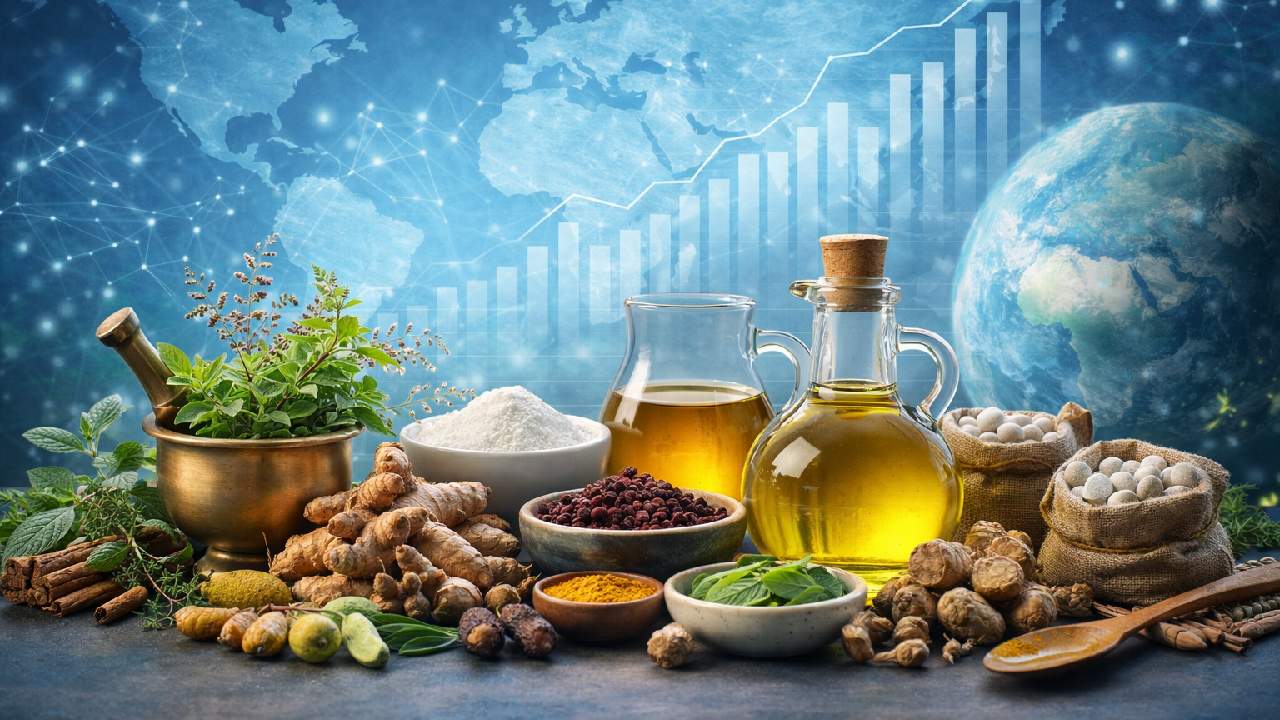
In 2025, Ayurveda has crossed a defining milestoneevolving from being viewed as a traditional or alternative system of medicine to becoming one of the fastest-growing structured healthcare markets globally. With the global Ayurveda market valued between $19.3 and $20.5 billion in 2025 and projected to reach $46 billion by 2030, the sector is now firmly on the radar of policymakers, investors, healthcare institutions, and global trade bodies.
At the center of this transformation is Indianot only the birthplace of Ayurveda, but increasingly its manufacturing base, innovation hub, and export engine. Importantly, this growth is no longer driven by sentiment or cultural nostalgia. It is being shaped by policy alignment, enterprise-scale formalisation, scientific validation, and rising global demand for preventive healthcare.
2025: The Inflection Point
The year 2025 marks a structural inflection for the Ayurveda industry. Several forces are converging: a global shift toward preventive healthcare, growing dissatisfaction with symptom-led treatment models, and rising long-term costs of chronic disease management. Ayurveda is among the fastest-growing segments within traditional and complementary medicine, clocking an estimated CAGR of 19-20% through the decade. Unlike earlier phases dominated by fragmented players and informal supply chains, today’s expansion is driven by organised enterprises, standardised manufacturing, regulatory oversight, and digital distribution platforms.
Crucially, demand is no longer India-centric. While Asia-Pacific holds the largest share, North America has emerged as the fastest-growing region, reflecting a deeper global shift. Ayurveda is increasingly positioned not as “ethnic medicine,” but as a holistic, plant-based preventive healthcare system aligned with modern wellness priorities.
India’s Structural Advantage
India’s leadership in Ayurveda is structural. The country controls key levers across the value chain - raw material sourcing, classical knowledge systems, practitioner base, manufacturing capacity, and institutional backing. In 2025, India’s domestic Ayurveda market is estimated at $10-11 billion, with projections suggesting it could exceed $40 billion in the early 2030s. Growth is supported by strong domestic demand and India’s expanding role as a global supplier of certified, scalable Ayurvedic products.
Government support has played a catalytic role. The Ministry of AYUSH, increased budget allocations, international collaborations, and initiatives such as the WHO Global Centre for Traditional Medicine have strengthened institutional credibility. The integration of Ayurveda within public health frameworks has further positioned it as a strategic healthcare asset rather than a parallel system.
This institutional backing has helped address a long-standing bottleneck: credibility. As quality benchmarks and regulatory frameworks strengthen, Indian Ayurveda is increasingly meeting compliance expectations of developed markets.
From Fragmentation to Formalisation
One of the most significant shifts underway is industry formalisation. Historically characterised by small-scale manufacturers and limited standardisation, the sector is now undergoing rapid professionalisation. Growth today is driven by enterprises investing in GMP-certified facilities, clinical research, pharmacovigilance, and traceable supply chains. Partnerships between traditional knowledge institutions and modern research centers are accelerating scientific validation-critical for global scalability.
Investor perception is also evolving. Ayurveda is no longer seen merely as a heritage-driven FMCG category; it is increasingly evaluated as a healthcare, nutrition, and preventive medicine opportunity with long-term demand resilience.
Export Momentum and Global Demand
International demand is expanding beyond diaspora-led consumption. Developed markets are showing strong interest in herbal formulations, plant-based supplements, and natural personal care productsparticularly those positioned around stress management, metabolic health, immunity, and longevity. The personal care segment, driven by the global clean beauty movement, is among the fastest-growing application areas. At the same time, classical herbal formulations continue to dominate in value terms, reinforcing Ayurveda’s dual identity as both a wellness and therapeutic system. For India, this represents a significant export opportunitybut also a responsibility. Global markets demand stringent compliance, safety, and evidence, making regulatory alignment and scientific backing non-negotiable.
Technology and the Next Phase
Technology integration is defining Ayurveda’s next growth phase. Digital health platforms, AI-enabled personalisation, and data-driven dosha assessment tools are bridging traditional frameworks with modern consumer expectations. Personalised Ayurveda-once dependent solely on practitioner experience-is being reimagined through scalable, tech-enabled models. This convergence of authenticity and convenience particularly resonates with millennials and Gen Z consumers.
The Road Ahead
Despite strong momentum, challenges remain. Regulatory harmonisation across markets is uneven. Scientific validation must expand in scale and depth. Competition from nutraceuticals, functional foods, and alternative wellness systems is intensifying. Yet these challenges also act as filters. As the sector matures, credibility, compliance, and capability will distinguish scalable enterprises from short-term players.
At $20 billion today and projected to reach $46 billion by 203, Ayurveda is no longer niche-it is emerging as a strategic healthcare market. India’s leadership will depend not on legacy alone, but on sustained investment in research, standardisation, and global trust-building. The coming decade will not be defined by tradition alone-but by how effectively that tradition is translated into globally relevant, scientifically grounded, and scalable healthcare solutions.
Founder & CEO, Sheopal’s