Telangana civic polls signal urban endorsement of governance under Revanth Reddy
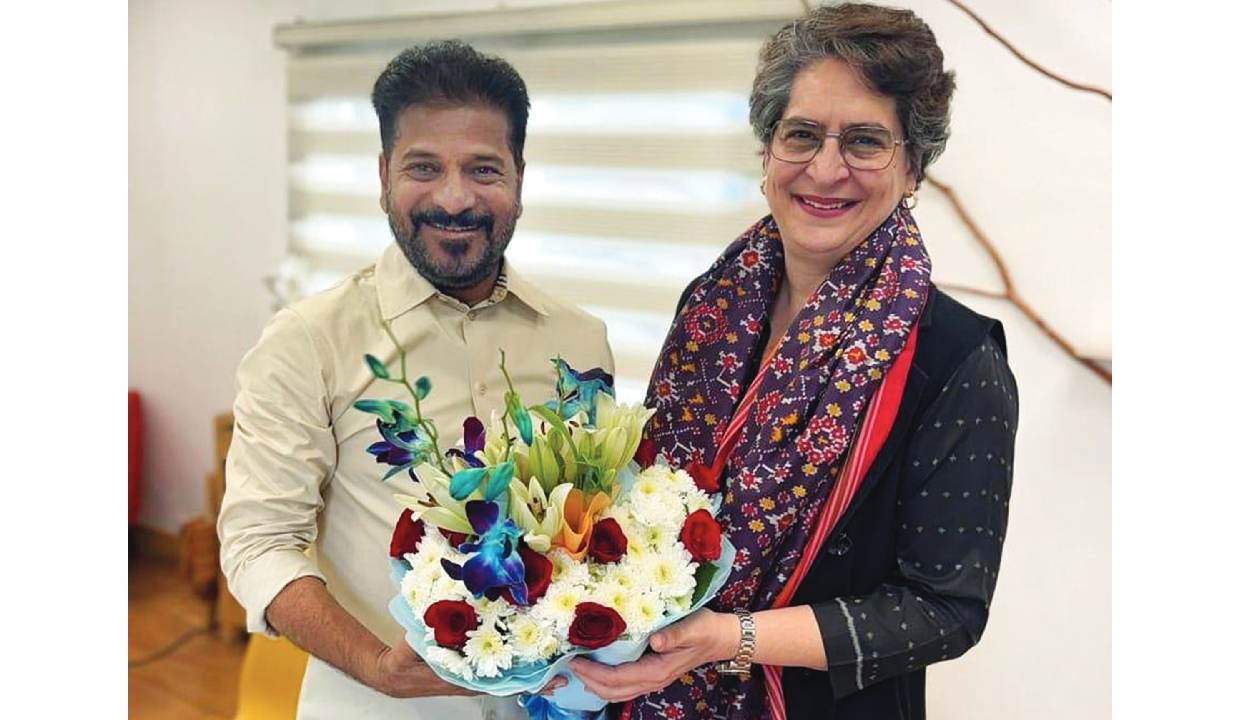
The recent civic polls in Telangana have delivered a significant political message, with the ruling Congress registering a strong performance across several municipalities and municipal corporations. The results are widely being seen as an endorsement of the governance approach adopted by Chief Minister A. Revanth Reddy, particularly in urban centres.
The elections, held across multiple urban local bodies, witnessed enthusiastic participation from voters, reflecting heightened civic engagement. Counting trends and early results indicated that Congress candidates secured leads in a large number of wards, while the opposition Bharat Rashtra Samithi (BRS) and Bharatiya Janata Party (BJP) put up a competitive fight in select pockets.
Political observers note that municipal elections often serve as a barometer of public sentiment toward the State Government. In this context, the outcome assumes added significance, as it comes amid the ongoing implementation of welfare schemes and urban infrastructure initiatives announced by the Congress Government after assuming office.
Since taking charge, Revanth Reddy has focused on a blend of welfare delivery and administrative reforms. Flagship initiatives, including financial assistance schemes, subsidised essential commodities, and commitments to strengthening civic infrastructure, formed a central plank of the party’s campaign during the municipal polls. Party leaders repeatedly framed the elections as crucial for ensuring smooth coordination between the State Government and local bodies to accelerate development works.
Congress leaders attributed their performance to what they described as “visible governance” and consistent outreach. Campaigning for party candidates, the Chief Minister emphasised accountability in municipal administration and pledged enhanced support for urban local bodies. He urged voters to back candidates who would align with the State’s broader development roadmap.
In several municipalities, the margins reflected not only organisational mobilisation but also consolidation of urban voters behind the ruling party. While opposition leaders maintained that local factors influenced outcomes in certain wards, the overall trend suggested that Congress retained momentum in key urban areas.
The civic results also hold strategic importance ahead of future electoral contests. A strong showing in municipalities strengthens the ruling party’s grassroots network and administrative leverage.
Urban local bodies play a critical role in implementing welfare programmes, infrastructure upgrades, sanitation drives, and housing initiatives — areas the State Government has prioritised in recent months.
Analysts point out that urban voters tend to respond to tangible service delivery, including improvements in roads, drainage systems, water supply, and waste management. The ruling party’s campaign messaging consistently highlighted such themes, projecting continuity and stability in governance.
For Revanth Reddy, the outcome reinforces his standing within the State’s political landscape. Though municipal elections are fought at the local level, their cumulative effect often shapes perceptions of leadership at the top. The results suggest that the Government’s urban development narrative has found resonance among voters.
As newly elected municipal councils and corporations begin functioning, the focus will now shift to delivery. With expectations running high, the administration faces the task of translating electoral gains into measurable improvements on the ground.
For now, however, the civic poll outcome underscores a broader political takeaway: in Telangana’s evolving urban landscape, governance performance remains central to voter choice — and the ruling leadership appears to have secured a renewed vote of confidence.