Stubble burning causes only 5% of Delhi pollution: Chouhan
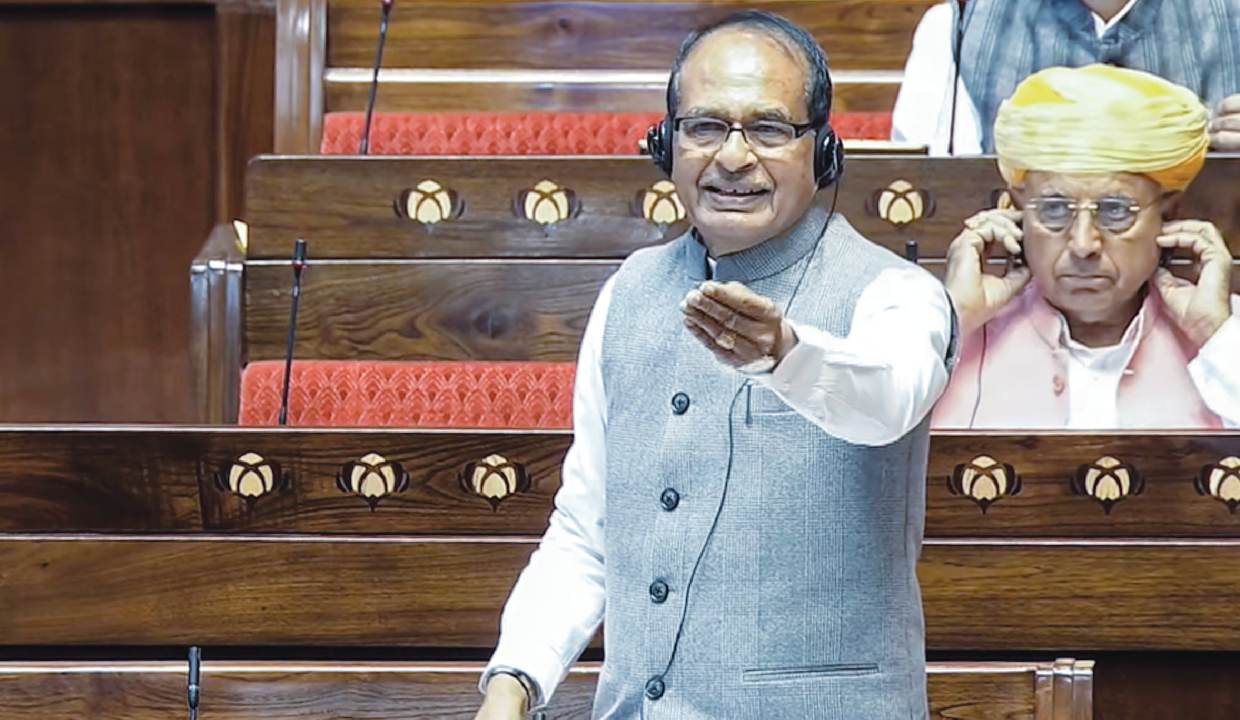
With the launch of the Crop Residue Management (CRM) Scheme, under which machines are provided to farmers at subsidised rates, instances of stubble burning have been steadily declining, especially in States like Punjab and Haryana, Agriculture Minister Shivraj Singh Chouhan said in the Rajya Sabha on Friday.
Chouhan said that stubble burning is not the only cause of pollution, as scientific studies have established that it contributes no more than 5 per cent to pollution in the Delhi-NCR region, even during winter.
Industrial units and vehicles are among the other major sources of pollution, but farmers are often blamed for it, he added.
Explaining the rationale behind launching the Crop Residue Management (CRM) Scheme, the agriculture minister said that although stubble burning is an easy way for farmers to clear their fields for the next crop sowing, it has several disadvantages apart from causing pollution.
These include the destruction of crop-friendly insects, loss of nutrients and organic carbon, and a reduction in soil fertility. That is why the Government introduced the Crop Residue Management (CRM) Scheme, he stated.
Introducing the scheme, Chouhan said that farmers receive a 50 per cent subsidy on the purchase of machines for stubble management. Institutions that set up centres to rent out these machines to farmers can avail of an 80 per cent subsidy.
More than 3.5 lakh farmers — including 1,60,296 in Punjab, 1,10,550 in Haryana, and 76,135 in Uttar Pradesh — have been provided with machines under the CRM scheme. With these efforts, cases of stubble burning have significantly declined in States like Punjab and Haryana, Chouhan pointed out.
However, he admitted that only a 17 per cent reduction in stubble burning cases has been recorded in Uttar Pradesh, and the Government is making further efforts in this direction.
Responding to questions regarding the decline in the production of pulses in 2024-25, he said that the Government is working with agricultural scientists to develop high-quality seeds for better crop yields, as there is a shortage of quality seeds and many farmers continue to use traditional varieties.
He added that extreme weather conditions also impact crop production.
According to Chouhan, production of pulses has increased over the years. He stated that while in 2016, India was the largest importer of pulses, with the use of technology, improved seed varieties, and better facilities for farmers, the country witnessed a ‘Dalhan Revolution.’
As a result, the production reached a record high of 27.30 million tonnes in 2021-22, he said.