Arvind Kejriwal to skip excise case hearing in Delhi HC
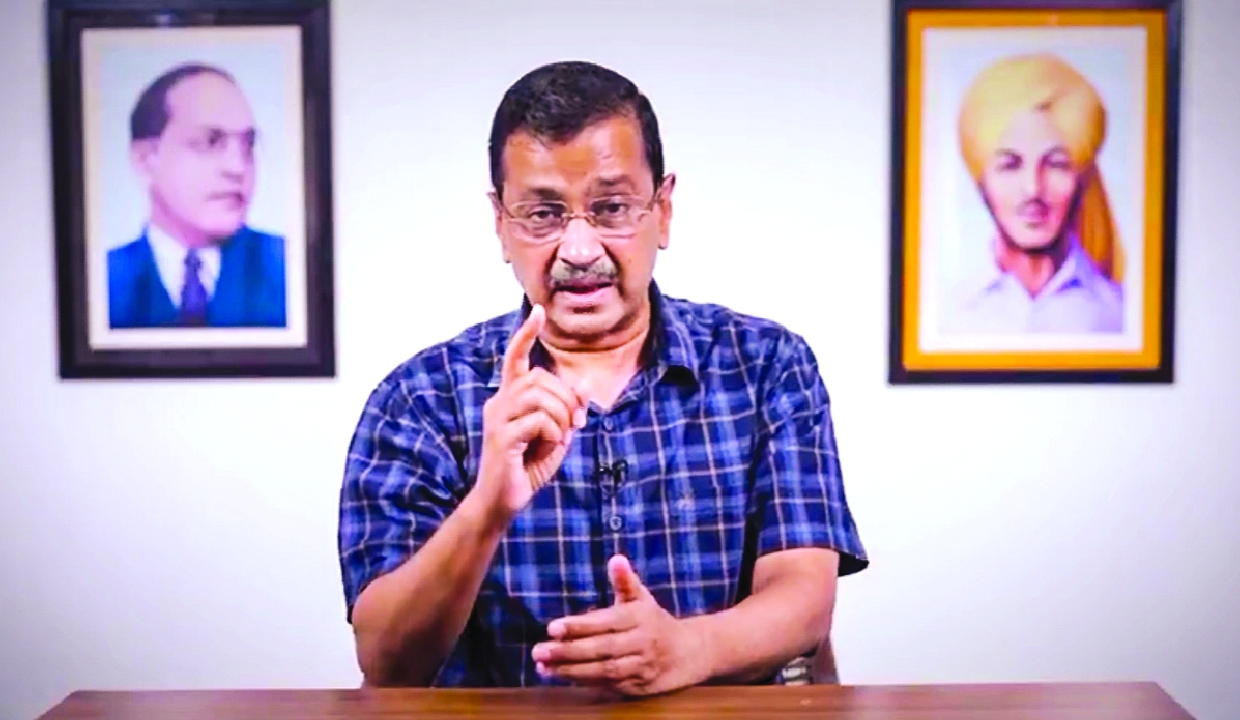
AAP leader Arvind Kejriwal on Monday wrote a letter to Delhi High Court Justice Swarana Kanta Sharma, saying “he has no hope of getting justice” from her and will not appear in person or through a lawyer for the hearing of the Delhi excise policy case. Justice Sharma had dismissed his plea seeking her recusal from the Delhi excise case.
In the four-page letter, Kejriwal claims that he has decided to “follow Mahatma Gandhi’s path of Satyagraha.” “I have lost hope of getting justice from Justice Swarana Kanta. That is why I have decided to follow Mahatma Gandhi’s path of satyagraha,” the former Delhi chief minister wrote.
He stated that he was prepared to face the adverse legal consequences of his decision. “I shall not participate in the further proceedings. I am fully conscious that by doing so, I may prejudice my own legal interests. I am prepared to bear those consequences. That is the burden which every conscientious act of Gandhian satyagraha must bear, and my conscience leaves me no other dignified course,” the letter read.
He added that the decision was taken after listening to his “inner voice” and maintained that he will exercise his right to appeal the order before the Supreme Court.
The Delhi High Court is expected to continue hearing the CBI’s appeal on April 29. Even if Kejriwal does not attend or instruct lawyers to appear, the court can continue proceedings through other legal mechanisms. The judge may issue notices, direct appearance, appoint a lawyer or take coercive steps if required.
Legal experts say Kejriwal’s refusal to participate could create complications but does not stop the case from continuing. Legal experts said criminal appeals cannot proceed entirely one-sided because courts are expected to ensure fairness.
Even if Kejriwal or his legal team stops appearing, the High Court may appoint an independent lawyer, known as an amicus curiae, to represent his interests. An amicus curiae, meaning “friend of the court”, assists judges in ensuring that all legal arguments are fairly considered.
In a separate video released on Monday, Kejriwal said, “People can ask me that if I am unsatisfied with the rescusal order, then why do I not approach the Supreme Court? I am preparing for that, this is a very sensitive case. Keeping in mind the law, respect and public trust in judiciary, I am taking one step at a time. I am not taking this step in ego, rebellion or as an insult to judiciary.”
His earlier plea seeking the recusal of Justice Sharma, which was rejected on April 20, was interpreted as a personal attack, the AAP chief claimed.
He wrote that the language used in the order rejecting recusal conveyed that his plea had been perceived as a personal attack on the judge and the institution, which, according to him, made it impossible to believe that he would receive an impartial hearing.
Kejriwal also reiterated two grounds cited earlier in his recusal plea.
“First, the issue of Your Ladyship’s repeated public association with the RSS’s legal front, the Akhil Bharatiya Adhivakta Parishad (ABAP) — an organisation belonging to the ideological ecosystem of the ruling dispensation,” he wrote, further pointing out that Justice Sharma’s children “are professionally engaged on multiple advocates’ panels of the Union Government which happens to be the opposite party in this case”.