AI summit showcases inclusive vision
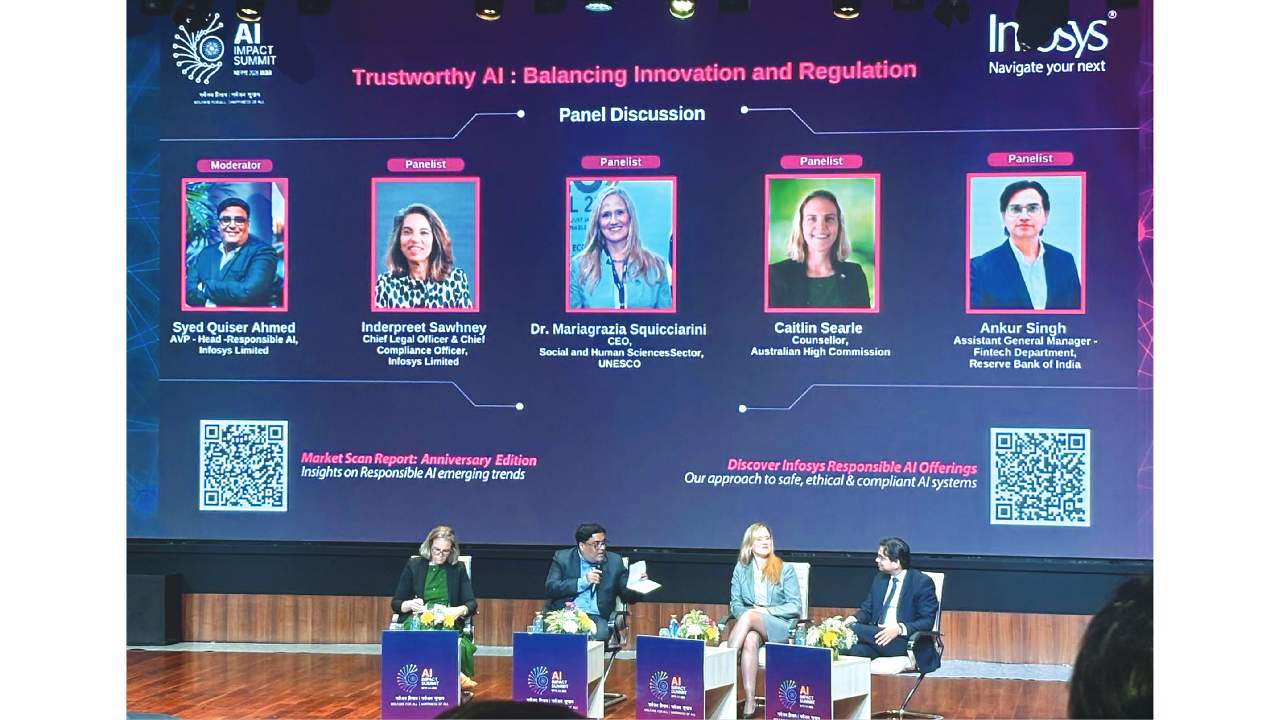
The India AI-Impact Summit 2026 at Bharat Mandapam opened with strong participation from across the globe, signalling India’s growing influence in shaping the future of artificial intelligence. With over 3,250 speakers and more than 500 sessions scheduled through February 20, the summit has brought together policymakers and business leaders. A major theme running through the conference is India’s push for widening access to AI and building
a shared “global AI commons” to ensure the technology benefits the Global South. In the session titled AI for Inclusive Economic Progress: The Public Service AI Stack, panellists emphasised that AI development must be anchored in digital public infrastructure that is accountable, transparent and inclusive.
Gabriela Ramos, former Assistant Director-General of UNESCO, cautioned that AI is emerging in a world already marked by sharp inequalities, with foundational models concentrated in a few countries and languages. She argued that Governments must not only regulate AI but also use it responsibly to strengthen connectivity, skills development and social protection systems. Other discussions, including those on trustworthy AI and balancing innovation with regulation, reinforced the need for safeguards without stifling competitiveness.
In contrast to the policy-heavy tone of these sessions, entrepreneur and podcaster Raj Shamani delivered a more energetic and future-facing perspective in his session, AI is Your New Teammate. Framing AI as a collaborator rather than a competitor, he argued that those who embrace the technology early, particularly Gen Z, will definitely gain a decisive edge. Shamani predicted the rise of “solo unicorns”, individuals running highly automated ventures at scale, and described India as a likely “second-order beneficiary” of AI by building applications atop global infrastructure.
While acknowledging ethical concerns such as deep fakes and misinformation, he maintained that AI does not diminish human intelligence but exposes it and amplifies the capabilities of disciplined and focused thinkers. His session, marked by audience engagement and practical tool recommendations, stood out for translating abstract debates about governance and inclusion into everyday use cases, productivity gains and entrepreneurial opportunity.