AAP slams Raghav Chadha as ED raids Ashok Mittal’s premises
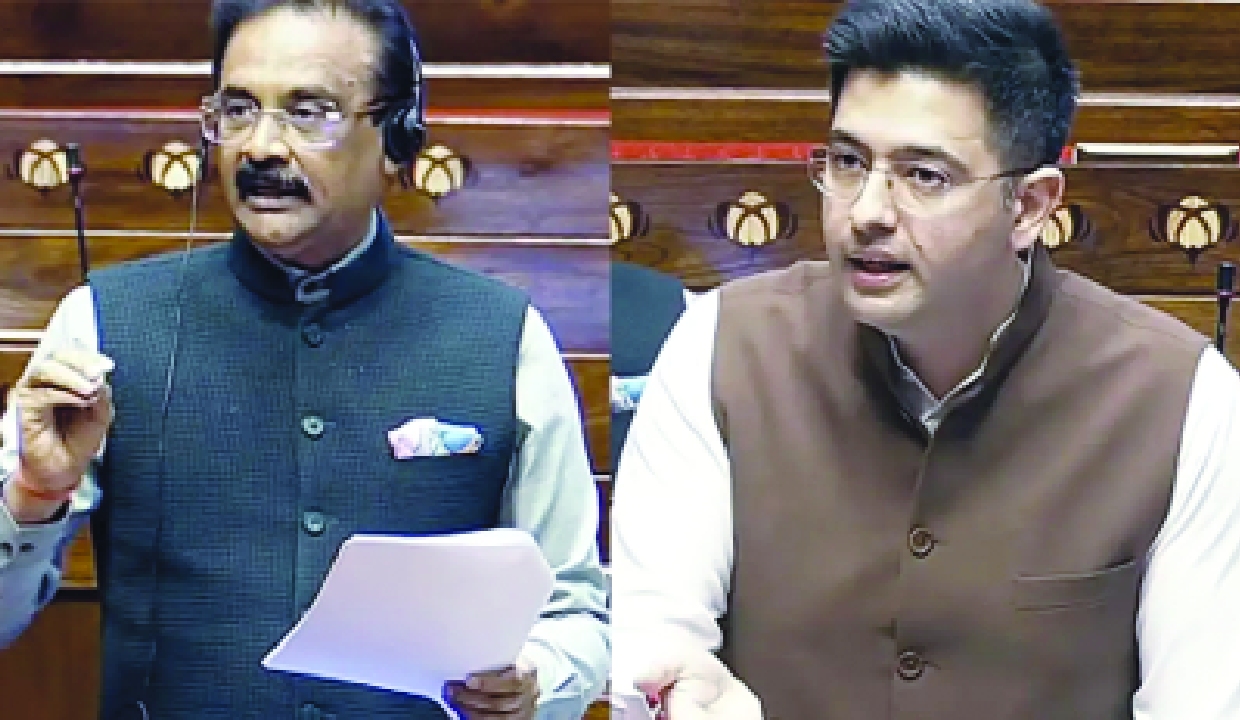
A raid by the Enforcement Directorate (ED) on multiple business premises linked to its newly appointed Rajya Sabha deputy leader, Ashok Mittal, in Punjab, under the Foreign Exchange Management Act (FEMA), has ignited a firestorm.
The raids, as per the ED, were conducted in the premises of the targeted entities connected to the Lovely Group, owned by Mittal, including Lovely Professional University (LPU) in Phagwara, Lovely Autos and other sites in Jalandhar and Gurugram.
Here, the optics are damaging. Raids on a freshly elevated leader, coupled with Raghav Chadha’s security upgrade from the Centre, fuel narratives of collusion, even if unproven.
Aam Aadmi Party (AAP) was quick to question the timing of the raid and did not mince words in accusing Chaddha of betrayal. They claimed Chaddha has colluded with the BJP to orchestrate the raids to avenge his demotion. The trigger was the Ministry of Home Affairs (MHA) granting Z-category security to Chaddha following the Punjab Government’s withdrawal of his earlier Z+ cover.
AAP spokesperson Priyanka Kakkar alleged a high-level BJP meeting with Chadha, where security upgrades and raids on Mittal were reportedly discussed. The party views this as a classic political vendetta, especially with the Punjab Assembly polls on the horizon.
Chadha, once AAP supremo Arvind Kejriwal’s blue-eyed boy and a key architect of AAP’s 2022 Punjab victory, has responded cryptically but defiantly. In videos, he declared himself ‘silenced, not defeated’ and invoked poetic lines about a wounded river turning into a devastating flood. Chadha’s former colleagues in AAP cite his absences during party crises like the arrests of top leaders in the liquor policy case and a perceived softer stance towards the Modi Government as signs of drift.
The chasm between Chaddha and Arvind Kejriwal has widened, and AAP’s letter to the Rajya Sabha secretariat seeking Mittal’s elevation without naming him was an indication that both were staring at the point of no return.
Mittal, a Punjab heavyweight with deep roots in education and industry, brings local credibility that Chadha, a Delhi-trained chartered accountant who rose through the India Against Corruption movement, lacked in the State. Yet the move exposed fault lines in a party long defined by Kejriwal’s centralised control. Chadha’s rapid ascent from television face to strategist had bred resentment among Kejriwal’s followers within the party.
Chadha’s ouster may strengthen short-term loyalty around Kejriwal, but it signals deeper churn. Ambitious leaders chafe under a one-man dominance, and Punjab remains a battleground where local satraps like Mittal could prove vital.
Whether this rift heals or widens into a full break, perhaps Chadha floating a new platform will shape AAP’s future. In an era of polarised politics, internal unity is no longer optional; it is existential. The party that promised ‘alternative politics’ now confronts the oldest test of all to manage its own house.