A pre-election bonanza for Nepal?
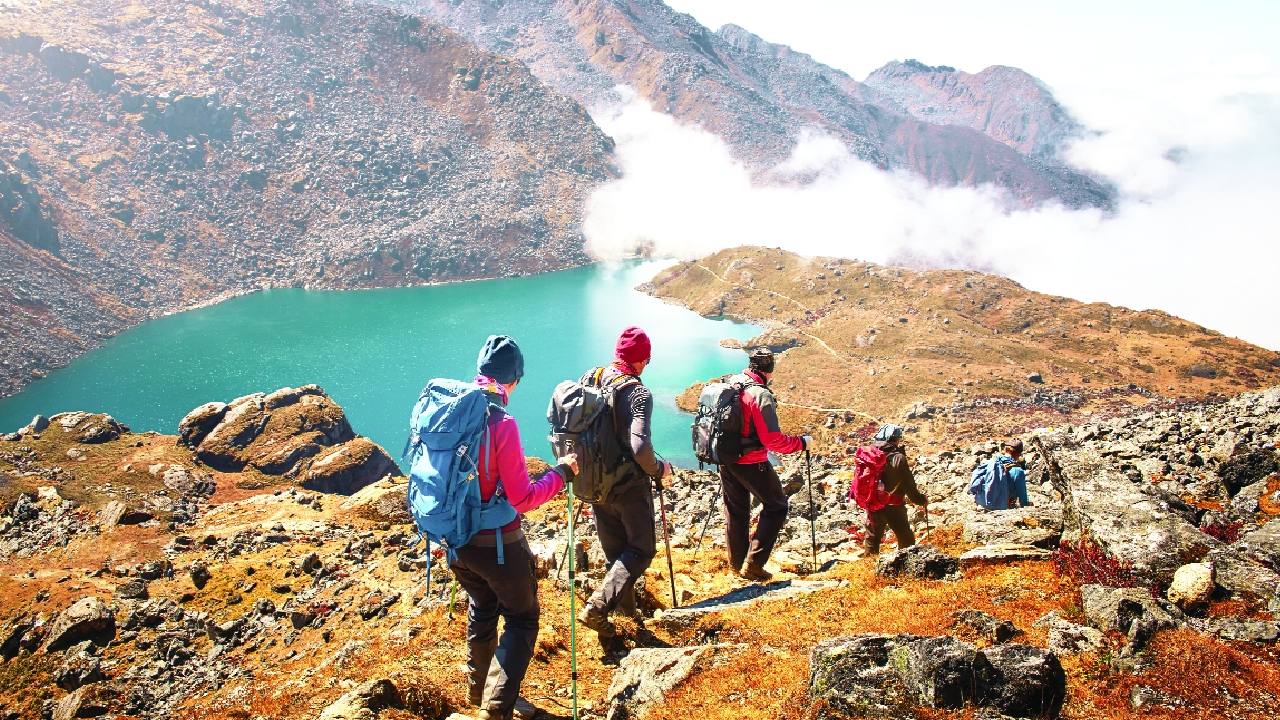
A month before the March national elections in Nepal, even as the nation grappled with several political and economic crises, there was a spot of good news. Global tourists, who arrived by air in February 2026, exceeded the pre-pandemic levels for the first time. Justice AK Sinha, the tourism minister in the previous interim government, was ecstatic. “I do agree that it (arrivals) did not touch the pre-Covid numbers till about two months back. Then, there was a surge with arrivals recording the highest number in any month,” he says proudly. Sinha was appointed the minister in December 2025.
According to Nepal’s Tourism Board, the number of air-borne global visitors stood at 1,05,441 in February 2026, 8.8 per cent over the February 2025 number (96,880), and 2.9 per cent higher than in February 2019 (1,02,423; monthly pre-pandemic level). On an annual basis, Nepal received 11,97,191 tourists by air in 2019 (calendar year), compared to 11,58,459 tourists in 2025, and a lower 11,47,548 in 2024. Indians accounted for the highest percentage (21.6 per cent) of the foreign arrivals in February 2026, followed by China (10.3 percent), the US (9.2 per cent), Sri Lanka (7.1 per cent), and Myanmar (5.7 per cent).
Tourism is a sensitive and crucial topic in Nepal, which thrives on foreigners to boost revenues, even in related segments such as transport, trade, hospitality, and food and beverages. Not surprisingly, in the runup to the national election that was held on March 5, 2026, the manifestos of most political parties focused on it. Attractive and ambitious plans were disclosed to boost foreign footfalls. There were claims to double the number of tourist arrivals, and increase their spendings via extended stays, and higher contribution to the GDP.
“Although the political parties included tourism, stakeholders say that the sector has historically received little priority. While manifestos mention (several measures) … many believe these (will) remain ambitious plans on paper,” stated a skeptical article on a local news website. “Nepal has been receiving just over one million tourists annually over the past three years, and… industry stakeholders cite recurring plane crashes, poor highway infrastructure, and weak international promotion as key deterrents,” claimed another report in a local newspaper. However, the latest figures from February 2026, if the trends continue, may offer a more optimistic picture.
In addition, global trends may have helped Nepal. According to UN Tourism, there were 1.52 billion foreign arrivals worldwide, across nations in 2025, which was driven by surges in Asia and Africa. The overall number was four per cent higher than in 2024, and Africa and Asia-and-the-Pacific recorded hikes of eight per cent, and six per cent, respectively. “Demand remained high throughout 2025, despite high inflation in tourism services and uncertainty from geopolitical tensions. We expect this positive trend to continue into 2026 as the global economy is expected to remain steady, and (as) destinations still lagging behind (the)
pre-pandemic levels fully recover,” said Shaikha Alnuwais, secretary general of the Madrid-based
UN Tourism.
However, the challenges remain. At the global level, the Iran-Israel-US war, if it continues and escalates, may derail tourism, hospitality, and civil aviation, apart from other sectors and economies. In Nepal, the tourist influx in February 2026, which was accounted for by those who arrived by air, was possibly ignited by huge sections interested in the national elections, especially after exceptional students’ protests, which captured the global headlines last year. In addition, Nepal still needs sweeping reforms in aviation safety, and diplomatic efforts to secure air entry routes with India, among other measures if it wishes to achieve the ambitious target to double arrivals within five years.
Hence, a common thread that ran through the manifesto pledges was a commitment to remove Nepal from the European Commission’s civil aviation blacklist, and expand flights from the country’s two new international airports. At present, talks are on between Nepal and the Europeans on the initiatives that will enable the former to be designated as a safe flying zone. But it is not going to be an easy task. The peaceful national elections are a good beginning. The quiet transition to a new regime may be next. But the new government needs to deliver.
The fact remains that Nepal is largely considered a pro-tourist and peaceful destination, despite the social protests last year. “During the movement, tourists were not harmed; the protestors came to their help. Travelers were assisted on the way to the airport, space was made to allow vehicles to reach hotels,” claimed former minister Sinha. But he agreed that there were instances of vandalism. “Few hotels were set on fire, possibly by miscreants. In the case of the Hyatt (burning), there was looting of currencies. The people knew the exact place where money was kept. It was found that they worked there,”
he asserted.
A day before the national elections were held, the usually bustling marketplaces in Kathmandu looked deserted. After the February deluge, the tourists had possibly vanished, or stayed in hotels due to fears of violence. This is indeed peak season, ideal for tourists and shoppers. “Even as the market picked up after Covid, there came the Gen Z uprising. Now, there are hardly any tourists for about a week before the elections. I estimate the losses to be 60-70 per cent,” said a despondent Navraj, a shopkeeper who sells traditional wares.
His words echoed in cab-driver Roshan Shrestha’s feelings, who added that “otherwise it is the time for tourists, most of whom are from India.” According to an executive in a capital’s leading hotel, occupancy was almost half this season. The Middle East conflict led to cancelled flights, and tourists postponing trips. Policy issues, mismanagement, and air accidents afflict the civil aviation sector, which impacts tourism. The slump in civil aviation is attributed to oversight, negligence, and corruption. Only 18 of Nepal’s 52 airports are profitable.
Environmental issues led to strictures on mountaineers eager to conquer Mt Everest from its south side. In February 2026, the Nepal’s National Assembly passed the Integrated Tourism Bill, “a wide-ranging piece of legislation that introduces stricter rules for mountaineering, tighter safety, and insurance provisions, and a permanent environment fund aimed at cleaning up the country’s high mountains, including Mt Everest. Nepal’s top court ordered the officials to seek sustainable solutions to keep the mountains clean, and prevent deaths. However, the bill’s fate lies in the hands of the new House of Representatives, which was elected through the recent elections.
(The author has more than three decades of experience across print, TV, and digital media); views are personal