A life that shared its pain with the world: Remembering Hakeem Abdul Hameed
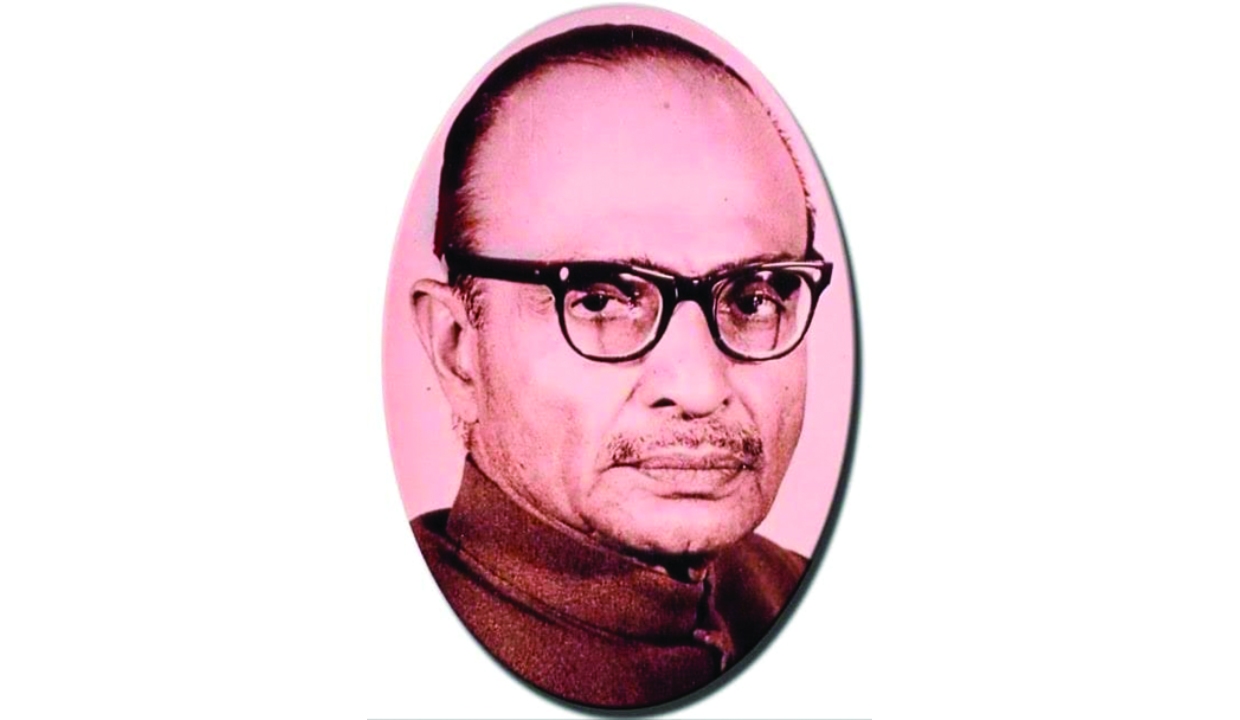
There are men whose lives are measured by what they accumulate, and there are those rarer few whose lives are measured by what they build for others. Hakeem Abdul Hameed belonged unmistakably to the second kind. On the fourteenth of September, as Jamia Hamdard observes Founder's Day, we do not merely mark a birthday. We pause to remember a man who took a modest inheritance of healing and turned it into an enduring architecture of learning, service and compassion that continues to shape countless lives.
Hakeem Saheb was born in Delhi in 1908, into a family already devoted to the relief of human suffering. His father, Hakeem Hafiz Abdul Majeed, had established the Hamdard Dawakhana in 1906, and had chosen for it a name that held its entire philosophy in a single word. Hamdard means the sharing of pain, a sympathy for all. That idea, so simply stated and so difficult to live by, became the thread that ran through everything the son would later attempt. He inherited not a fortune but a purpose, and he honoured it with a seriousness that defined the rest of his years.
What strikes me most, when I reflect on his life, is the breadth of his imagination. He could have remained a fine physician of the Unani tradition and lived a respected and comfortable life. Instead, he saw that traditional medicine, if it was to survive and serve, could not remain locked in the secrecy of individual practitioners. It had to be studied, standardised, taught and made available to ordinary people through modern laboratories and scientific method. In pursuing this, he became something of a reformer of Unani medicine itself, giving an ancient system a nationalist inspiration and an indigenous scientific base. He believed that heritage and progress were not enemies, and he spent his life proving it.
Even at the moment of Partition in 1947, when so much around him was breaking apart, Hakeem saheb was already dreaming of building. He imagined a complex of educational institutions that would celebrate the contribution of Islamic culture to Indian civilisation while advancing the science of healing. It was an act of faith in the future of a newly independent India, and in the place of his community within it. That same year he established the Hamdard Charitable Trust, directing the earnings of Hamdard toward public good rather than private gain. It was a decision that revealed the man completely. He treated wealth as a trust to be spent on others, not a possession to be hoarded.
The institutions came steadily, each one a brick in a larger design. In 1963, he set up the Hamdard Tibbi College and the Indian Institute of Islamic Studies. In 1964, he founded the Hamdard National Foundation. The Hamdard College of Pharmacy followed in 1972. Around these grew the Hamdard Education Society, Hamdard Public School, the Ghalib Academy, the Hamdard Institute of Historical Research and much else besides. He was building not a single college but an ecosystem, one in which medicine, pharmacy, the humanities, historical scholarship and cultural preservation could all flourish together.
The culmination of this long labour came in 1989, when the institutions he had nurtured were brought together, and Jamia Hamdard was granted the status of a deemed-to-be university. For Hakeem Saheb, this was the fulfilment of a dream carried patiently across decades. He became its Founder-Chancellor, and he had built it, in large part, with his own resources and the funds of Hamdard. Few universities in this country can claim so pure an origin, an institution raised not by the state or by commerce but by one man's conviction that learning is the highest form of service.
I have spent a meaningful part of my own life within the institution he founded, and I can testify that his presence still lingers in it. It lingers in the university's continuing commitment to Unani and integrative healthcare, in its hospitals that carry his name and his intent, in the scholars who come from across the world to its libraries. When I walk the campus, I am aware that I am walking through a realised idea, and that the idea belonged to a physician who refused to accept that the horizon of the possible was fixed.
His work did not go unrecognised. The nation honoured him with the Padma Shri in 1965 and the Padma Bhushan in 1992. The former Soviet Union conferred on him the Avicenna Award in 1983, a fitting tribute to a man who had done so much to carry forward the tradition of the great physician-philosophers. He served as Chancellor of Aligarh Muslim University in the final years of his life, and after his passing, institutions abroad continued to acknowledge his contribution to the preservation of cultural heritage and the promotion of scholarship. Yet I suspect the honours mattered less to him than the quiet knowledge that a poor patient had been treated, or a first-generation student had found a place to study.
It would be a mistake to remember him only as an administrator or a builder of institutions. He was, at heart, a physician, and the physician's instinct never left him. He understood pain, and he understood that the relief of pain, whether of the body through medicine or of the mind through education, was the truest work a person could undertake. This is why education and health were never separate projects for him. They were two expressions of a single compassion. To heal a body and to open a mind were, in his understanding, the same essential act of care.
There is a lesson in this for those of us who have inherited the responsibility of carrying his institutions forward. Hakeem Saheb did not build for applause or for his own name. He built because he believed that a society grows only when its members are willing to share the pain of others and to act on that sharing. He gave his wealth, his energy and his imagination to this belief, and he asked for little in return. In an age that often measures success by accumulation, his life stands as a quiet and powerful rebuke, and as an invitation to a better way of living.
Hakeem Abdul Hameed left us in 1999, but the truest thing about a life like his is that it does not really end. It continues in every student who graduates from the university he founded, in every patient healed in the hospitals he imagined, in every scholar who draws on the resources he assembled. He planted institutions the way a wise man plants trees, knowing he would not sit in all their shade, content that others would.
On this Founder's Day, we honour him best not with words alone but with renewal of purpose. We recommit ourselves to the ideal that gave his life its meaning: the sharing of pain, the service of the vulnerable, the union of knowledge and compassion. That is the inheritance he left us. It is our privilege, and our duty, to prove ourselves worthy of it.
The author is former vice chancellor of Jamia Hamdard