A 30-year curse revived: Behind the defeat of the women’s reservation bill, 2026
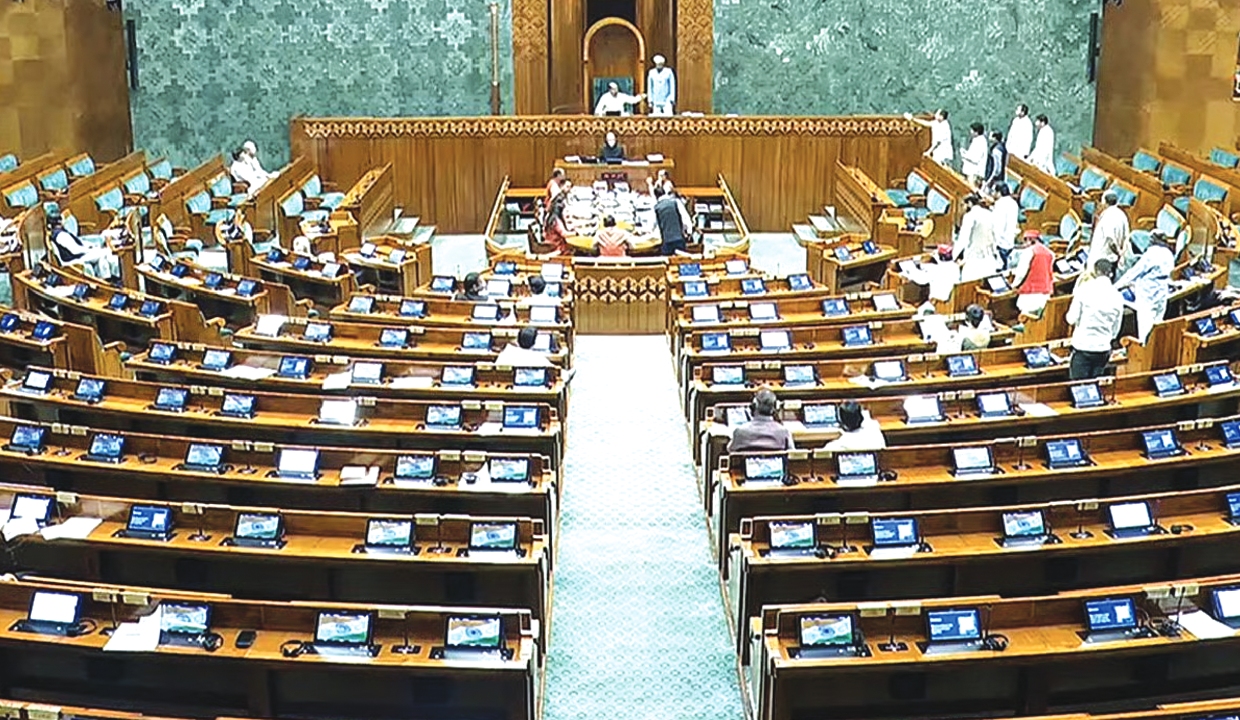
The Women’s Reservation Bill (Nari Shakti Vandan Adhiniyam) was defeated in the Lok Sabha on April 17, 2026. The Constitution (131st Amendment) Bill, 2026, which sought to operationalise the reservation by 2029, failed to secure the required two-thirds majority. While 298 members voted in favour, 230 voted against it — leaving the Government 54 votes short of the “magic figure” of 352.
This April 2026 defeat is not an isolated event; it marks the latest setback in a 30-year struggle. Since its introduction in 1996, the Women’s Reservation Bill failed six times before the 2023 version was finally signed into law.
For decades, the path to implementation was blocked by deep-seated political divisions. Parties like the RJD and Samajwadi Party frequently stalled the Bill, demanding a specific sub-quota for OBC and Muslim women out of fear that the reservation would only benefit “elite” women.
Beyond public debates, there was also quiet resistance from male MPs across party lines who feared losing their seats to the massive “rotation” of constituencies that a 33 per cent reservation would trigger. Until 2023, there was never a moment when both the ruling party and the major opposition parties were on the same page regarding the technical details.
The 2026 Bill was designed as a “bridge” to fast-track the women’s reservation, which was technically passed in 2023, and remains stuck in legal limbo. Its primary aim was to implement the 33 per cent quota by the 2029 General Election by decoupling it from the requirement of a fresh Census.
Specifically, the Bill sought to achieve three main objectives: The original 2023 Act stated reservation would only kick in after a new Census and subsequent delimitation-a process likely to push implementation to 2034. This Bill proposed using 2011 Census data to start delimitation immediately for a 2029 rollout. It aimed to increase the Lok Sabha’s strength from 543 to 850 seats. By doing so, the Government could reserve 283 seats for women without reducing the absolute number of seats currently held by men, thereby reducing “political resistance” from sitting MPs.
The Bill sought to remove the constitutional freeze (in place since 1976) on the number of seats per state, allowing for a “reset” of India’s electoral map based on current population densities.
Following the defeat after a high-voltage debate, the Government withdrew two related pieces of legislation: the Delimitation Bill, 2026, and the Union Territories Laws (Amendment) Bill, 2026. The Lok Sabha was subsequently adjourned sine die, ending this legislative push for the current session.
The primary reason for the Bill’s defeat was its linkage to the new delimitation exercise. While the amendment promised a 33 per cent quota by 2029, the united opposition (INDIA Bloc) argued the Bill was a “Trojan horse.” They claimed the Government was using women’s rights to sugar-coat a massive electoral overhaul that would unfairly shift political power toward certain states.
While Shashi Tharoor is credited with popularising the “Trojan horse” label, it became a collective “war cry” for the opposition led by Mallikarjun Kharge and Rahul Gandhi to justify defeating a Bill that, on the surface, supported a popular cause. Concerns were particularly sharp in Southern and Northeastern states, which feared a loss of political representation. States like Tamil Nadu and Kerala argued that redrawing seats based on 2011 or 2026 population data would penalize them for successful population control.
Ultimately, the Opposition insisted that women’s reservation should be a standalone measure rather than a tool to overhaul the entire parliamentary structure, noting that the proposal to use 2011 Census data failed to inspire confidence.
Despite the defeat of the amendment, the original Constitution (106th Amendment) Act, 2023, remains law. In a late-night move on April 16, the Government formally notified the commencement of the 2023 Act. This means the legal framework is technically “active,” though its practical execution remains tied to the completion of the next Census and subsequent delimitation.
Without the now-defeated 2026 amendments, the implementation of women’s reservation is likely to revert to the original timeline, which experts suggest may not be feasible until the 2034 elections.
The Opposition has stated they will write to the Prime Minister demanding the implementation of the reservation as a “standalone” measure, without tying it to the controversial redistribution of parliamentary seats.
An interesting aspect of the whole issue was that the debate was triggered by the sudden announcement of a Special Session of the House. This was a significant departure from the normal legislative course, as Special Sessions are traditionally reserved for landmark historical milestones or national emergencies.
Because the agenda was kept under wraps until the very last moment, both the Opposition and political observers were left completely unaware of the true reasons for holding such a high-stakes debate under these extraordinary circumstances.
The timing of the development was particularly striking, as the debate was called while the country was in the midst of a major election cycle. The Election Commission of India (ECI) had already scheduled assembly elections for four states-Tamil Nadu, Kerala, West Bengal, and Assam-and the Union Territory of Puducherry, alongside several key bye-elections.
With voters in these regions heading to the polls this month, critics argued that a discussion on such a sensitive and transformative issue as women’s reservation should have waited for a regular session. This timing provided a clear opening for leaders from opposition-ruled states currently in the heat of a campaign to question the Government’s motives. They contended that the sudden urgency was less about constitutional progress and more about creating a political narrative to influence the electorate in those poll-bound states.
On one side, the Government has taken a sharp offensive. They are portraying the defeat of the Bill as a betrayal of Indian women by the Opposition. Their narrative is that they provided a practical “bridge” to make the 33 per cent quota a reality by 2029, rather than making women wait another decade.
By focusing on the “Nari Shakti” (Women’s Power) theme, the Government is telling voters-especially in the states currently going to the polls-that they tried to fast-track equality, but were blocked by “regressive” political rivals.
On the other side, the Opposition has stood firm on its “Trojan Horse” argument. They argue that their role was not to block women’s rights, but to protect the country from a secret overhaul of the electoral system. By voting against the Bill, they claim they saved the Southern and Northeastern states from losing their voice in Parliament. Their counter-attack is simple: they want the women’s quota as a “standalone” law. They are challenging the Government to bring back a clean version of the Bill that grants the 33 per cent reservation immediately, without tying it to the controversial redrawing of the map or the 850-seat expansion.
For Prime Minister Narendra Modi and Home Minister Amit Shah, the stakes for this Special Session were incredibly high, both for their personal legacies and their long-term political strategy.
For the first time in 12 years of governance, a Bill introduced by the Modi Government was actually defeated in Parliament. Their reputation for being able to pass any major reform through sheer political will was on the line. By calling a Special Session, they had “all-in” on this Bill. The defeat wasn’t just a policy setback; it was a rare crack in the image of a Government that usually has total control over the legislative process.
Political commentators were of the view that Modi and Shah weren’t just thinking about women’s rights; they were looking at the 2029 General Elections. The plan to increase the Lok Sabha to 850 seats was a way to “future-proof” their political power. By redrawing the map using 2011 data now, they could have secured a massive advantage before the full post-2026 Census. The defeat means their roadmap for the 2029 elections has been thrown into chaos, forcing them back to the drawing board.
As the Government now pivots to a narrative of ‘betrayal’ for the ongoing state polls, the actual implementation of women’s reservation remains as elusive as ever.
With the ‘bridge’ legislation defeated and the process tied once again to the post-2026 Census and delimitation, the 33 per cent quota has effectively been pushed back another decade. What was framed as a historic leap for ‘Nari Shakti’ has, for now, returned to the original timeline-a reality that may not see a woman in a reserved seat until the 2034 General Elections.
Writer is a senior journalist covering legal affairs; Views presented are personal.