60,000 migrants enter Spain’s border; 34 dead in clashes
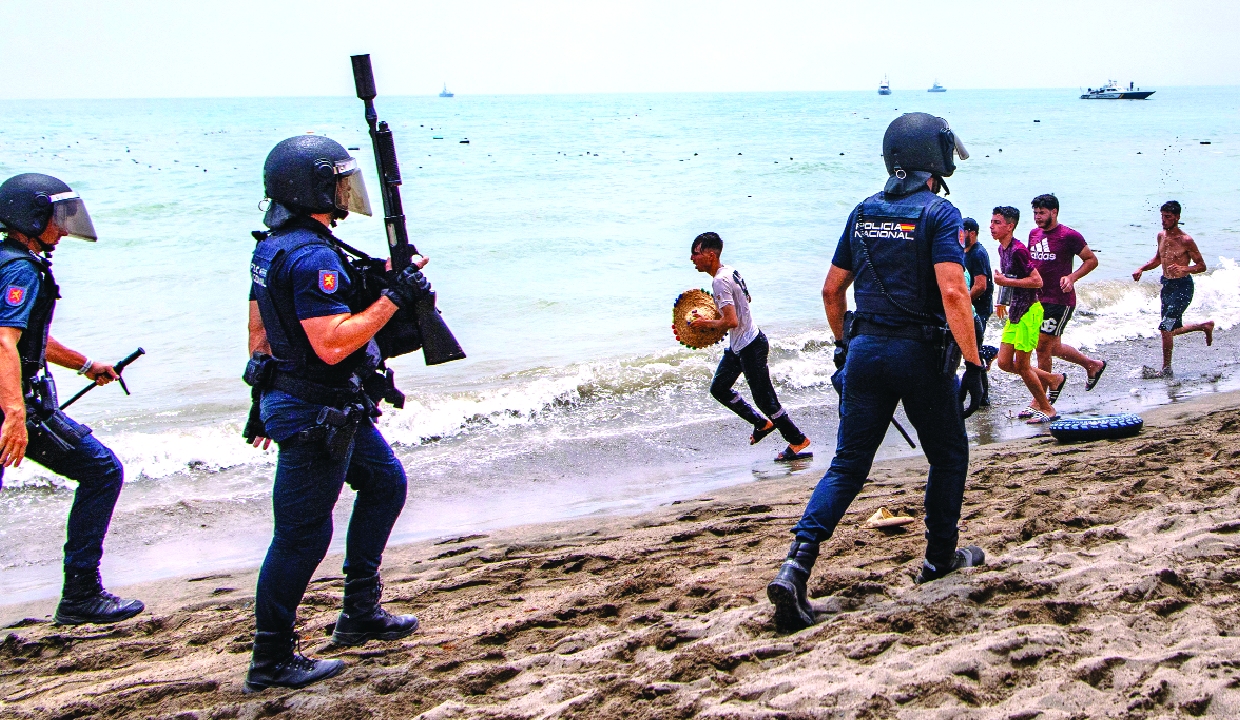
Some 60,000 migrants have entered Spain’s Ceuta from Morocco in the past 24 hours, Ceuta’s president says. That is equivalent to 70 per cent of the city’s regular population.
At least 34 migrants have died in the process. “The situation that Ceuta is going through is absolutely unsustainable,” said Juan Jesus Vivas on Friday.
The border crisis boiled over Thursday and continued on Friday with security forces clashing with migrants on the Moroccan side of the border.
Spanish Prime Minister Pedro Sanchez condemned the breach of the border on Friday, speaking in Ceuta, describing the events as “a violation of Spain’s territorial integrity.” The Spanish leader cast blame on human smugglers, saying they “deceive so many young people, and ultimately lead many of them to their deaths - whether in the ocean or, as in this case, at Spain’s border in the autonomous city of Ceuta.” Live footage of the border showed hundreds of migrants gathered on a hill overlooking Ceuta being dispersed with tear gas by Moroccan forces, while others continued to swim to the Spanish territory.
At the same time, large groups of migrants walked back from Ceuta toward Morocco to return home. Rachid Sbihi, who leads a local workers association representing Civil Guard officers, called the situation a “serious humanitarian crisis,” saying thousands of migrants, including unaccompanied children, were left sleeping in parks and on sidewalks, while others roamed the streets aimlessly.
“People are still entering. The reinforcements, including Spanish military troops, that have arrived are only helping the injured and other humanitarian efforts,” he said. “It’s chaotic.” Among the 18 who died, many drowned, Sbihi said, but some were also killed in a stampede to cross the breakwater fence at Tarajal beach, an urban beach near a border checkpoint with Morocco.
Ahmed Karim, a 33-year-old Moroccan, said he had crossed into Ceuta because of the lack of jobs in his country.
“Many people want to go to Europe, America, but they don’t have the opportunity,” Karim said.
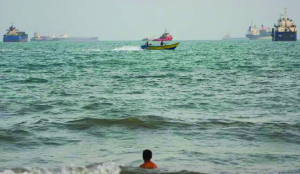
On Friday morning, the waters near the border fence were littered with buoys, shoes and other belongings left behind.
Moroccan police deployed additional personnel, used water cannons and fired warning shots into the air to prevent migrants from crossing into Ceuta, according to rights groups in Morocco. “Despite the heavy police presence, people crossed through the waterway, while the land border remained closed,” said Achraf Maimouni, a human rights activist in Fnideq, the Moroccan city bordering Ceuta.
Migrants arrested at the border were taken farther into Morocco, away from Ceuta, “but people are still coming,” he said.
Morocco’s ambassador to Spain expressed hope that those who crossed from Morocco into the Spanish exclave would return. Karima Benyaich described the situation in Ceuta as difficult, saying it had unfolded against Morocco’s wishes. “We have always prioritised legal, orderly and safe migration for all,” she said. Benyaich did not comment on what prompted the migrants to cross into Ceuta.