23-year Jewar journey now a reality
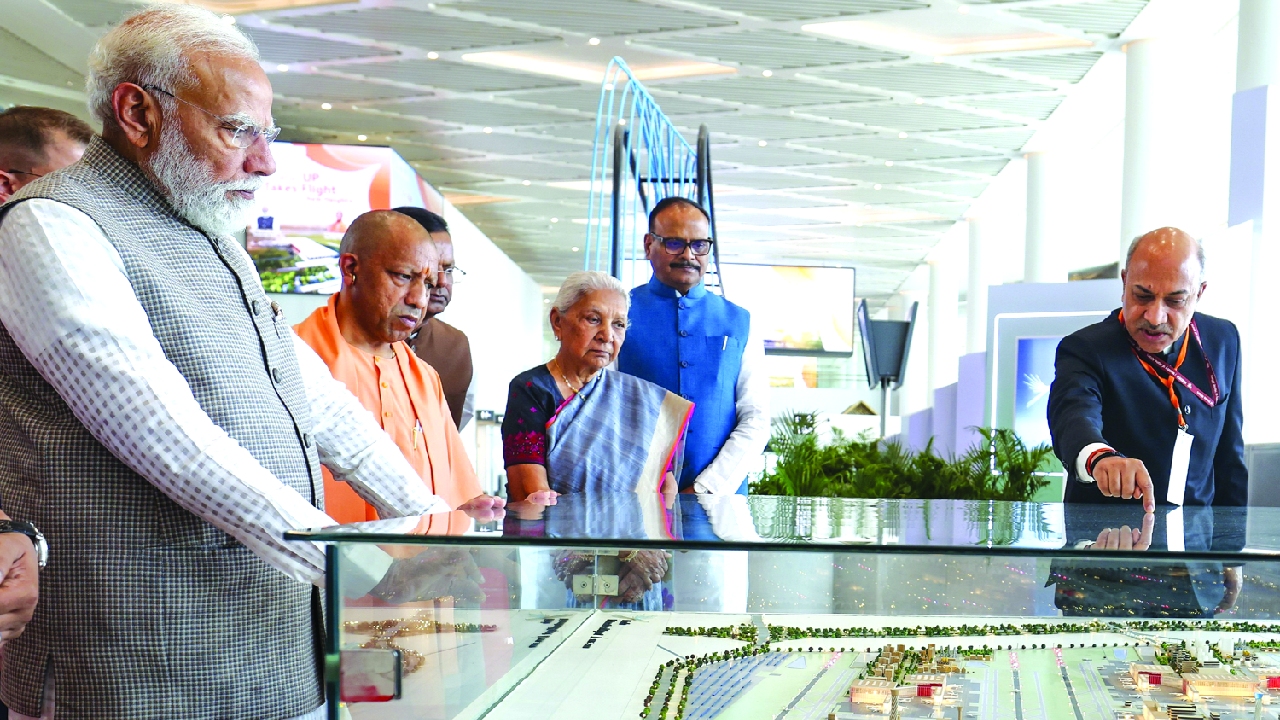
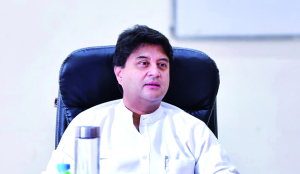
Prime Minister Narendra Modi on Saturday inaugurated Phase I of the Noida International Airport in Jewar: a project first approved in 2003 that survived three Governments, four postponements, and over two decades of political blame before a plane could taxi on its runway.
Standing before a crowd of thousands, Modi did something unusual for an airport inauguration. After pulling the ceremonial curtain, he declared the job only “half done.” He asked every person present to switch on their mobile phone flashlights and raise their hands, effectively handing the inauguration over to the public.
“This is your property, this is your future, this is your hard work, and therefore, its inauguration is also being done by your hands,” Modi said, as a sea of glowing screens lit up the venue. The moment was captured in a single image, revealing the political messaging behind the event: that the airport belongs to the people, not just the Government.
The Atal Bihari Vajpayee Government first approved the airport in 2003. It remained buried there for over a decade. Modi was pointed in his attack on the Congress and the Samajwadi Party. “From 2004 to 2014, this project remained hidden in files,” he said. “Even when our Government was formed in Delhi, the SP Government in UP blocked it for the first two to three years.” Even after the BJP came to power in Lucknow, the airport’s opening was pushed back repeatedly from December 1, 2024, to April 2025, then September 2025, and finally to early 2026.
The DGCA issued the aerodrome licence only on March 6, 2026, barely three weeks before the inauguration.
Domestic and cargo flights are expected to begin within 45-60 days, somewhere between mid-April and May 2026. International flights are likely to start from September this year, said Civil Aviation Minister K Rammohan Naidu on Saturday.
PM Modi further cautioned all Opposition parties against “harmful rhetoric” during the ongoing West Asia war and warned that citizens will never forgive those who damage national interest in times of crisis.
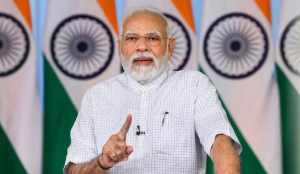
“We have to face this crisis with a calm mind, with patience, with unity. Those who do wrong rhetoric for politics will get some numbers in political debate, but the people of the country never forgive actions that harm the country,” Modi said in his speech during the inauguration of the Noida International Airport in Jewar near Greater Noida.
PM’s remarks were pointed. He drew a direct line to the Covid pandemic, when, he said, some political forces spread rumours and lied about vaccines to make governance difficult. “What was the result? The public rejected such politics during elections,” he said.
He then issued an appeal framed as a request to all political parties. “Avoid saying such things in this kind of crisis, which are harmful for the country. Whatever is in the favour of Indians, whatever is in the interest of India, that should be the policy and strategy of the Government of India.”
Modi acknowledged the severity of the global disruption caused by the West Asia conflict. He said the war had triggered a crisis in food items, petrol, diesel, gas, and fertilisers across many countries. India, he said, has been importing crude oil and gas in “very large quantities” from the war-affected region, while the Government takes steps to ensure the burden does not fall on ordinary families.
“Every country is making some effort to face this crisis. India is fighting it with full strength, relying on the strength of its people,” he said. He added that he had discussed the situation in detail in Parliament and had also held a meeting with all Chief Ministers of the country the previous day, describing the discussion as “very positive.” Pivoting from the crisis, Modi laid out what he called “unprecedented investment” in modern infrastructure. He said the infrastructure budget has been increased more than six times in the last 11 years. In that period, Rs 17 lakh crore has been spent on highways and expressways, with over one lakh kilometres of highways constructed.
On railways, he said, electrification of only 20,000 kilometres of route had happened before 2014. Since then, more than 40,000 kilometres of railway track have been electrified, taking the broad gauge network to nearly 100% electrification.
“Today, be it the Kashmir Valley or the capitals of the North East, these are connecting to the rail network for the first time,” he said. He added that the capacity of ports has more than doubled in the last decade, and the number of river waterways is continuously increasing.
Modi said that in just the last few weeks, Western UP had seen four major projects: the foundation stone of a semiconductor factory in Noida, the launch of the Delhi-Meerut Namo Bharat train, the expansion of Meerut Metro, and now the inauguration of the Noida International Airport.
“Earlier, people of the Samajwadi Party (SP) had made Noida an ATM for their loot. But today in the BJP Government, that same Noida is becoming a powerful engine of UP’s development,” he said.
Modi pointed to Dadri, close to the airport, as the meeting point of two major freight corridors connecting North India to the coasts of Bengal and Gujarat. “What farmers grow here, what industries make here, will be able to reach every corner of the world quickly by land and by air,” he said.
The number of airports in India has grown from 74 before 2014 to over 160 today, with UP alone now having 17 airports. Under the UDAN scheme, over 1.6 crore passengers have flown at subsidised fares. The Government has recently approved an expansion of UDAN worth Rs 29,000 crore, with plans to build 100 new airports and 200 helipads in smaller cities. On aviation employment, Modi noted that with hundreds of new aircraft on order across Indian airlines, a large trained workforce would be needed and said the Government is expanding aviation training facilities to meet that demand.