1,000-year-old temple lies battered after Cambodia-Thai border clashes
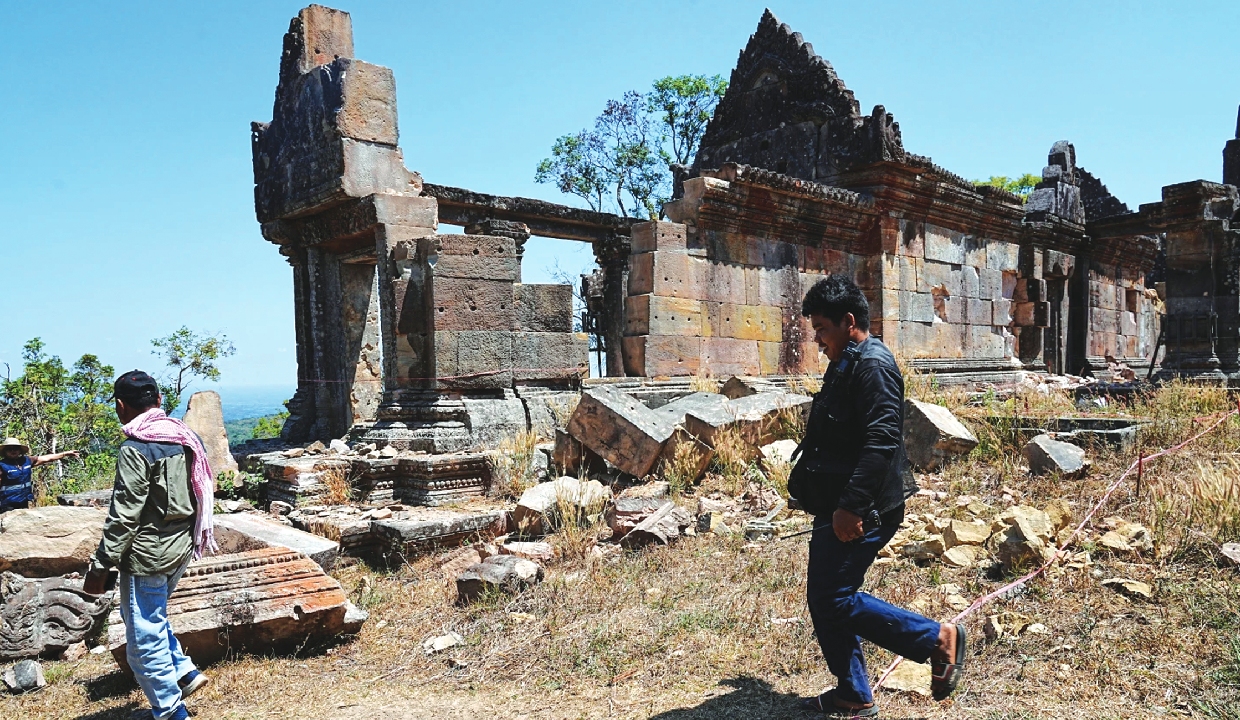
It’s been three months since a ceasefire ended bitter border fighting between Cambodia and Thailand, but signs of combat are cut deep in this 11th-century temple atop a 525-metre cliff in the Dangrek Mountain range.
The neighbouring Southeast Asian countries have been fighting over the Preah Vihear temple on and off for decades, and that’s putting the ancient holy site in danger. Built by the same Khmer Empire that constructed Angkor Wat 160 kilometres southwest, the temple was declared a UNESCO World Heritage site in 2008 and are held as an important cultural relic by Cambodians.
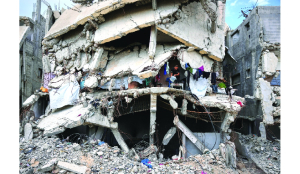
But after two rounds of major combat last year, much of the structure is damaged and Cambodian officials say that parts of it may be in danger of collapse. There’s lots of wreckage, but no tourists. Where tourists once admired the weather-beaten structure’s elaborate carvings and a magnificent view over the Cambodian plains, there is now stone debris, artillery craters, and the ashes of burnt vegetation.
“The temple has turned quiet, and its beauty looks so sorrowful because of the tragedy,” Hem Sinath, archeologist and deputy director-general of the National Authority for Preah Vihear, told Associated Press journalists visiting earlier this month. The site is closed to tourism due to unstable walls and concerns about the presence of unexploded ordnance. Areas are roped off and dotted with signs warning of land mines, a hazard Cambodians know well after decades of civil war that ended in the late 1990s. Conservation staff, groundskeepers and troops remain stationed in and around the temple, from which Thai soldiers can be seen just across the border.
All five of the temple’s notable gateway pavilions were damaged, three almost beyond recognition, according to a damage assessment issued in January by Cambodia’s Culture Ministry.
An ancient northern staircase previously restored by a US-funded conservation project sustained severe hits from repeated bombardment.
A statement issued last week by Cambodia’s Culture Ministry said the temple had suffered damage in 142 locations during the fighting in July, and at 420 more during heavier and more sustained combat in December.
“Experts have predicted that during the upcoming rainy season, some structures on the verge of collapsing could finally fall,” Hem Sinath said.
No independent outside evaluations of the damage are available.
Cambodia charges temple was deliberately attacked. Information Minister Neth Pheaktra accused the Thai military of relying on false information to justify incursions and of deliberately damaging the temple.
“Preah Vihear temple belongs to all humankind. It is not an enemy of Thailand,” he wrote.
International law forbids attacks on important historical sites like the temple, but Thailand has argued that Cambodia militarised the temple by installing weapons systems, storing ammunition, and using the site as a base for surveillance equipment, voiding its wartime protection.
This included a tall construction crane at the site, which the Thai army attacked after claiming it served as part of a military command and control system.
Thai Army spokesperson Major General Winthai Suvaree has insisted that Thai forces directed their fire strictly at military targets.