
- HOME
- INDIA
- WORLD
- BUSINESS
- STATES
- LAW & JUSTICE
- ENTERTAINMENT
- SPORTS
- VIEWPOINT
- LIFESTYLE
- TECH
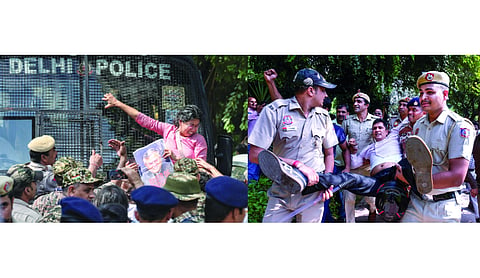
A particular kind of exhaustion settles into a person’s voice after weeks of chasing the same Government office for the same unanswered question. That exhaustion was everywhere at Jantar Mantar on Friday, carried by people who had not come for politics so much as for an answer nobody would give them.
Among the crowd was a homemaker in her fifties from Vishwas Nagar, who had spent the past several weeks moving between offices after learning her family person’s name had been struck off the electoral rolls during the ongoing Special Intensive Revision (SIR). Her own name had passed through the process cleanly. Her children had not, even though they voted in previous elections without incident.
To fix it, she gathered every document she could find: identity cards, a marksheet, Aadhaar, PAN, voter ID, proof of her own residence as backup, and submitted the lot. She still does not know why the name was removed in the first place, since she says she had already filed the correct forms earlier. Officials have told her she will only find out in November whether the resubmission was accepted at all.
Getting to that point of resubmission was its own ordeal. She was directed to specific SIR booths scattered across the city, forcing her to make repeated trips. At the booths themselves, she described standing in long queues, pushing through crowds, waiting roughly ninety minutes each time before her turn came, only to be sent away with no firm answer, just a wait stretching into November, months after she had filed everything before the August 24 deadline.
A few feet away, a younger voice cut through the crowd with a different kind of anger, not weary but sharp. Ayesha, a college student who said she had turned 18 only this year, had come to the protest not for herself but for her grandmother, who cannot read the forms being handed to her and has no one at home free during working hours to stand in the lines the process demands.
Ayesha said the exercise seemed built for people who have time to spare and paperwork to spare, two things her family has in short supply. She said she kept wondering what happens to the households where no one can take a day off, where no one can read the notices taped to a booth wall, where the absence of a signature is mistaken for the absence of a citizen.
Further down the barricade, a shopkeeper named Devendra spoke less about documents and more about dignity. He said he had run his small electronics stall in the same market for over two decades, paid his taxes, voted every election without fail, and never once imagined that proving he belonged on a list would become harder than proving he belonged in his own shop.
He said what stung most wasn’t the paperwork itself, but its tone, the quiet suggestion that his claim to a vote needed re-earning after a lifetime of simply having one.