Why Canada’s intelligence reports matter for India-Canada relations?
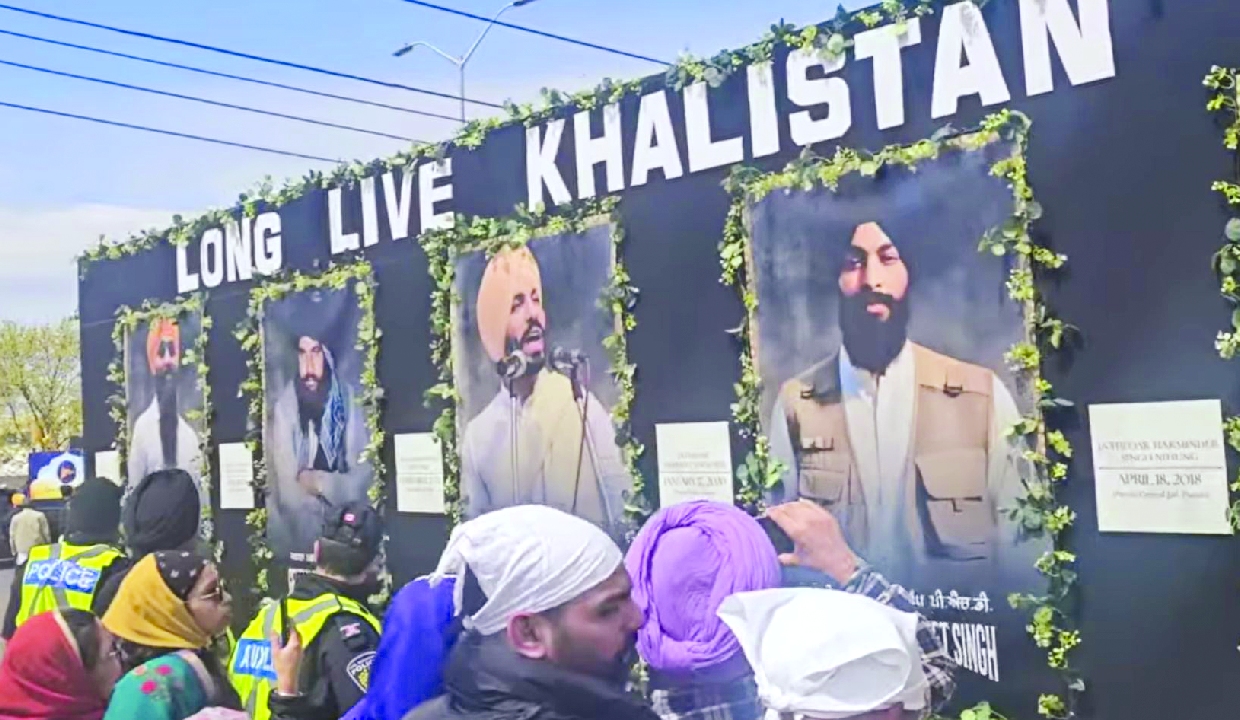
Canada’s latest public intelligence assessment does something the country often avoided in plain language. It says a small set of Canada-based Khalistani extremists is a national security threat, and it ties that threat to violence, fundraising, and organised support networks.
Indeed! the Khalistan movement has long been driven by a small but vocal set of activists, while most Sikhs, including many in Canada, focus on religion, work, and civic life rather than separatist politics. That distinction matters, because broad claims about an entire community blur the line between fringe advocacy and mainstream belief.
Even on the weekend Diljit Dosanjh was performing in Calgary, Canada, before a large crowd that cheered as he sang and moved around the raised stage in traditional attire under bright, colorful lights. During the concert, videos showed some pro-Khalistani attendees waving a flag linked to terror groups banned in India under the Unlawful Activities (Prevention) Act, 1967, or UAPA.
Dosanjh noticed them, paused, and pointed toward the crowd. With the microphone in hand, he told them to stop the nuisance and take it somewhere else. His concerts have faced similar disruption attempts before, as pro-Khalistani flag-waving fans have tried to interrupt the show.
Canada’s challenge is also more practical than rhetorical, since its laws protect free speech and worship, but they also require firm action when fundraising, intimidation, or violent extremism cross the line.
The political fallout has been real, especially after the 2023 G20 summit, when Ottawa’s handling of India-related security and diplomacy drew sharp criticism and embarrassment. In that setting, the issue is less about a popular Sikh demand than about how Canada polices its own space, and whether it can separate lawful dissent from actors who push a separatist agenda.
That shift matters because the debate has long been blurred by politics, diaspora tensions, and the wreckage of Canada-India mistrust. CSIS is now drawing a harder line. Its focus is on violent extremist networks, not on Sikh identity and not on peaceful support for Khalistan.
The report’s central point is narrow but important: violent extremism is the target, not lawful political belief.
In its Public Report 2025, highlighted again in May 2026, CSIS says Canada-based Khalistani extremists, often shortened to “CBKEs,” remain an active national security concern.
The agency says this small subset promotes a violent extremist agenda, plans or supports violence, and uses Canadian connections to back its cause. Most of that activity is described as directed at India, but CSIS also says it threatens Canada and Canadian interests abroad.
The wording matters. CSIS says no CBKE attack took place in Canada in 2025. Still, the agency does not treat the absence of a recent attack as proof of safety. It points to ongoing violent activity, extremist fundraising, and organised support efforts as enough to keep the threat in view.
That public clarity was overdue. For years, the issue sat in a political fog, where legitimate speech and violent militancy were often folded into the same argument. The report separates them.
Why the report places them under politically motivated violent extremism
CSIS puts these networks under “politically motivated violent extremism,” or PMVE. In simple terms, that category covers people who try to force political change through violence or the threat of violence.
That classification is important because it keeps the focus on conduct. A person can hold separatist views without crossing a legal or security line. The concern begins when advocacy turns into threats, plots, intimidation, or organized material support for attacks.
In that sense, the report is less about ideology than method. Canada is saying the problem is violent action in pursuit of political goals.
How fundraising and community networks fit into the threat picture
The report says some extremists use Canadian groups and contacts to spread their message and raise money. It also says funds can come from community members who do not know where the money is going. That allegation is serious because it points to deception, not just open activism.
Public discussion around this issue often centers on trusted spaces, including temples, schools, and community groups. CSIS is more careful in its wording. It says some extremists use Canadian networks and unsuspecting people, which suggests that influence can travel through ordinary social ties rather than secret cells alone.
That is one reason the threat is hard to police. A violent network does not need a large public footprint if it can borrow the credibility of a respected community setting.
Why this assessment matters beyond Canada’s borders
This is not a narrow public order issue. CSIS links the threat to possible harm in Canada and abroad, especially in India. Once planning, money, messaging, and intimidation move across borders, the case shifts from local policing to national security.
The report also lands in a tense diplomatic setting. Canada and India have spent the past few years trading grave accusations, especially after Ottawa said Indian agents were linked to the 2023 killing of Sikh activist Hardeep Singh Nijjar in British Columbia. India denies that charge. At the same time, India’s long-standing complaint has been that Canada did not take Khalistani extremism seriously enough. This report partly answers that complaint, even as broader disputes remain unresolved.
The Air India Flight 182 anniversary gives the warning extra weight
The 40th anniversary of the Air India Flight 182 bombing hangs over this report. In 1985, the bomb killed 329 people, most of them Canadians. It remains the deadliest terrorist attack in Canadian history.
That memory strips away any temptation to treat Khalistani violence as distant or abstract. Canada has seen the cost before, and the victims were not someone else’s problem. They were families in this country.
Historical memory does not prove every present claim. Yet it does explain why security agencies no longer speak about this issue as if it belongs only to foreign policy.
How the report could affect Canada-India relations and future enforcement
A public threat designation has practical effects. It can support tighter intelligence work, closer financial scrutiny, and more aggressive tracking of extremist fundraising or organized support activity. It may also shape how police and federal agencies prioritize investigations.
Diplomatically, the effect could cut in two directions. On one hand, it gives India public confirmation that Canada recognizes a violent extremist problem on its soil. On the other hand, the same report raises concerns about Indian foreign interference and transnational repression in Canada. So the path to better ties is not simple.
What matters now is follow-through. A threat named in a report matters less than a threat monitored, disrupted, and prosecuted.
The line between peaceful Khalistan advocacy and extremist activity
Canada’s position is clear on paper. Peaceful support for Khalistan, however controversial, is protected political expression. That protection does not disappear because another government objects to the cause.
The line is crossed when activism turns into violence, fundraising for violent acts, threats, coercion, or organized support for attacks. That distinction is not legal fine print. It is the core test for a democracy that must protect speech while stopping political violence.
Too much of the public debate has treated this line as blurry. It is not. A rally, slogan, or referendum campaign is one thing. A network that channels money or support toward violence is another.
Why that distinction matters for civil rights and public trust
Precision matters because broad suspicion can poison public trust. If enforcement paints an entire Sikh diaspora with one brush, the state damages its own case and pushes communities away from cooperation.
A narrow, evidence-based approach does the opposite. It protects civil liberties, avoids guilt by association, and keeps pressure on the people who cross into criminal or terrorist conduct. That is also the only durable way to separate real security work from political theater.
Canada’s report gets that point right. The harder task is keeping that discipline when rhetoric heats up.
In the end, Canada has now said plainly that violent Khalistani extremist networks are a security threat, even without a recent domestic attack. That matters because intelligence language shapes priorities, budgets, and enforcement.
The real test is not the wording in a public report. The test is whether Canada turns that assessment into sustained monitoring, stronger coordination, and credible action against violent networks, while protecting lawful speech and the broader Sikh community from lazy suspicion.
If that balance holds, the country will finally be treating national security as a matter of precision rather than posture.
Why Canada’s Intelligence Reports Matter for India Relations
Canada’s intelligence reports matter in India relations because they put alleged interference and repression into the language of state judgment, not just diplomatic dispute.
In the 2024 CSIS report, India appeared in a separate section and the language was direct, present-tense, and blunt about active concerns. The 2025 report used less space and shifted to “historically” when describing interference activity, yet it kept the core allegations alive through references to transnational repression, pressure on critics, and proxy relationships inside Canadian public life.
That change in tense matters because intelligence wording is never casual, and a softer phrase can suggest a narrower judgment without clearing the underlying suspicion. Dan Rogers, CSIS’s director, said in February 2026 that the agency’s threat assessment of India had not changed, so the report’s tone softened while the concern stayed on the record.
That keeps the issue tied to domestic politics in Canada, where accusations about influence, community pressure, and state conduct make a clean reset harder, and they leave both governments with less room for trust, even as official contacts recover.
The author is a veteran journalist and freelance writer based in Brampton Canada; Views presented are personal.