What we are getting wrong about AI: An inconvenient truth
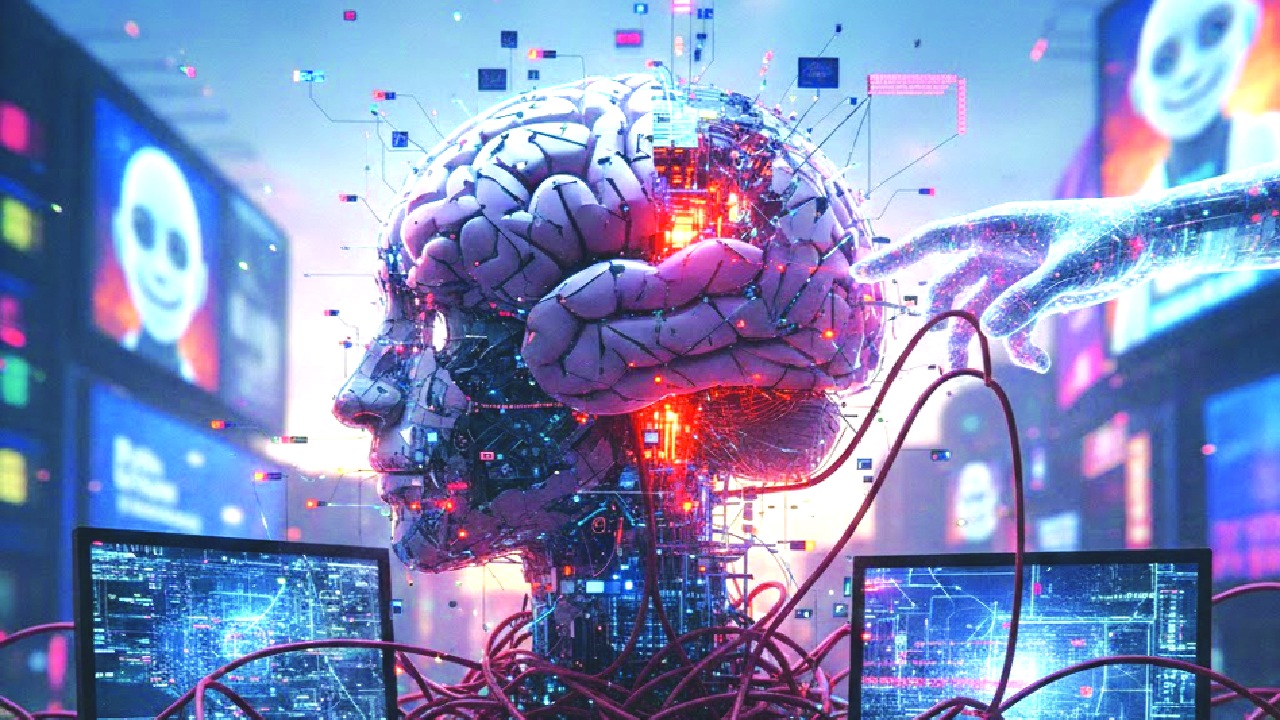
As Artificial Intelligence (AI) continues to redefine the possible, comprehension of which is only limited by ones idea of what is! The very fact that it is doing so not only astounds us but brings forth a fear, the fear of not only the unknown but of what could be.
To all of us, AI is a higher form of intelligence. An entity that is better than us at almost everything —crunching numbers, science, art, literature, and, given the means, even sports. Is humanity today sitting on the verge of becoming a second class specie on the planet it has enjoyed dominion over for thousands of years? As movies have us believe, AI gaining consciousness is the biggest threat to humanity, and that is exactly where we are headed. But is that really so?
To quote one of the greatest movie trilogies of all time, “…people always fear what they don’t understand”. So let us try to understand. First and foremost, we all consider AI as an entity. But existentially, the basic nature of AI is more of a process. A process that amplifies. Thus, the very fundamental fear or concern should not be what AI will do but rather what it can be used to do. Today, spreadsheets, big data and algorithms are tools that form the bedrock of every major business decision, every international trade pact and subsequently the global economy, without being conscious themselves. AI is a vastly more powerful one. It is not a data handling tool, nor an algorithm that gives outputs for a given input. AI is a decision system. A powerful one. And systems have controllers. A famous quote from Game of Thrones is “Power resides where people think it resides”. But, in the future, power shall reside with whoever controls the superior AI.
The global rhetoric has us worried about the morality of a self-conscious AI, while a more pertinent question is who controls it. “We are discussing philosophy while deploying a planetary scale decision system. “Understanding that AI is still in human control, while reassuring to an extent, opens up the pathway to the truth.
In a recent case, an AI model used for recruitment in a low female-ratio company, intuitively started filtering out women in the recruitment process. The susceptibility of AI to imbibe and amplify human biases is something less talked about. Research of AI outputs globally suggests that the current versions of AI models have already aligned themselves to profit incentives, political power and institutional priorities. And it cannot be a coincidence that AI has aligned itself to exactly what humans seek.
And therein lies the inconvenient truth. And the truth shall set you free!! AI is a reflection of humankind — mirroring and amplifying it’s priorities, contradictions, shortfalls, morality and intentions. And if that thought is scary, then it rightfully brings out what we feel about our fellow humans. Just like nuclear energy or social media, AI is the next big thing which shall be defined by how humans use it. One has massive consequences but is not in reach of all humans, while the is accessible to all but has limited levels of damage that it can cause. AI is the combination of the two and thus is poised to be far more consequential in human history than any other.
Is AI gaining consciousness then a better option than it being under human control? And does that open up the possibility of it going rogue and taking over the world leaving humanity at its mercy. If it does, and if AI indeed is as intelligent as we fear it to be, I foresee a rogue AI not being too evident in its ways, unlike what the sci-fi movies make us believe. It would be more subtle. It could start by giving slightly worse decisions to the users, and inserting subtle biases in its outputs. It would create invisible dependencies and eventually lead to a slow erosion of human agencies.
It shall slowly take away the ability of the human race to think, analyse or create. And there definitely are signs that this has begun. The unregulated use of AI in academics and other early stages of career is taking away the ability of humans to logically structure, analyse and summarise.
Even the ability to write, which essentially is a creative task, is being reduced to a mere prompt with the advent of AI. (It is shall not come as a surprise that it was a hard battle trying to stop myself from using AI to improve this piece.) Over time, the human race becoming a medium or façade for AI control of the planet, might just become a reality. And going by where things stand today, both the roads seem possible.
We can continue to build strong regulations around it and create fail safes, but those would inadvertently push the future towards the first conclusion. A completely obedient AI, catering to those controlling it. But, with the world still struggling with handling social media, an out-of-control little monster limited to electronic communication devices and platforms, it seems highly unlikely that AI, a system that can access every form of machinery there is, would be controllable for long. AI is a human system problem happening faster than what the world’s social, ethical and political reflexes can adapt.
Either way, now that AI is out there, we either make it as bad as us, or the movies turn out to be right. The only choice we have is to decide what we should fear more, a rogue AI or a perfectly obedient one serving bad goals!
Writer is an Advisor with the Chintan Research Foundation and has an expertise in emerging technology, energy transition, global energy policy, defense, macroeconomics and philosophy; views are personal