West Asia conflict threatens to push 2.5 million people in India into poverty: UNDP report
The conflict and military escalation in West Asia threatens to push 2.5 million people in India into poverty and the country is projected to experience some loss in its human development progress, according to estimates and projections by the United Nations.
The United Nations Development Programme, in a report titled ‘Military Escalation in the Middle East: Human Development Impacts Across Asia and The Pacific’ noted that the conflict is “widening human development pressures across Asia and the Pacific. Through higher fuel, freight, and input costs, the shock is diminishing household purchasing power, raising food insecurity, straining public budgets, and weakening livelihoods.”
The preliminary assessment, issued on Tuesday, estimates that globally 8.8 million people are at risk of falling into poverty and the West Asia military escalation could cost the Asia-Pacific up to $299 billion. In India, poverty is expected to rise from around 400,000 to 2.5 million, the report said.
It added that the number of people pushed into poverty in the world as a result of the conflict rises from approximately 1.9 million to nearly 8.8 million across scenarios, with South Asia accounting for the largest share, ranging from about 1.7 million to over 8 million, reflecting both the subregion’s population size and its higher exposure to income and price shocks.
China is estimated to experience a more moderate increase in the number of people at risk of falling into poverty, from around 115,000 to over 620,000, reflecting small proportional changes applied to a very large population base. Highlighting the estimated poverty impact of the military escalation (28-day conflict, most severe scenario with 8-month adjustment), the report said that India’s poverty rate is estimated to rise to 24.2 per cent post-crisis from 23.9 per cent, pushing 2,464,698 people into poverty.
An estimated 3,54,033,698 people are projected to live in poverty in the country post-crisis as compared to 351,569,000 pre-crisis.
The UNDP simulation estimates the impact of the conflict on the Human Development Index (HDI) for countries across the region.
It indicates that Iran’s HDI could decline by an amount equivalent to roughly one to one and a half years of human development progress. “India is projected to experience a loss of approximately 0.03–0.12 years of HDI progress, followed by Nepal at around 0.02–0.09 years and Viet Nam at 0.02–0.07 years, while for China, the estimated effects on HDI remain limited in magnitude, ranging roughly 0.01–0.05 years,” it said.
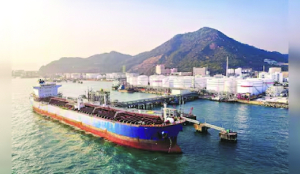
The report notes that among the region’s larger importers, India meets over 90 per cent of its oil needs through imports, sourcing more than 40 per cent of crude imports and 90 per cent of LPG imports from West Asia. Further, West Asian countries supply over 45 per cent of India’s fertiliser imports, while 85 per cent of the country’s domestic urea production depends on imported regasified liquefied natural gas.
The shock of the conflict is also influencing energy choices in several countries.
On trade and supply chain disruptions, UNDP country-level analysis indicated significant impacts in 25 out of 36 countries through freight surcharges, war-risk insurance premia, route diversions, and delayed delivery of intermediate and consumer goods.
India’s assessment shows that West Asian markets account for 14 per cent of exports and 20.9 per cent of imports, with roughly $48 billion in non-oil exports, particularly in basmati rice, tea, gems and jewellery, and apparel. Bangladesh also reports significant disruption as Gulf carriers cancelled flights, shipments from Bangladesh and India were stranded, it said.
Highlighting the impact of the military escalation on food security, the report said that “For several countries, including India, Pakistan, Bangladesh, Nepal, and the Philippines, food security pressures could also be compounded by remittance losses, as reduced Gulf economic activity weakens household incomes and purchasing power.”
“In India, the timing is especially sensitive: any prolonged disruption would coincide with the preparations for the Kharif (the monsoon cropping season), which begins in June. Urea stocks stood at 6.114 million tons, providing a near-term buffer but not fully insulating the sector if disruptions persist into the planting season,” it said.