US LLC for Indian Amazon Sellers: The Real Cost Breakdown
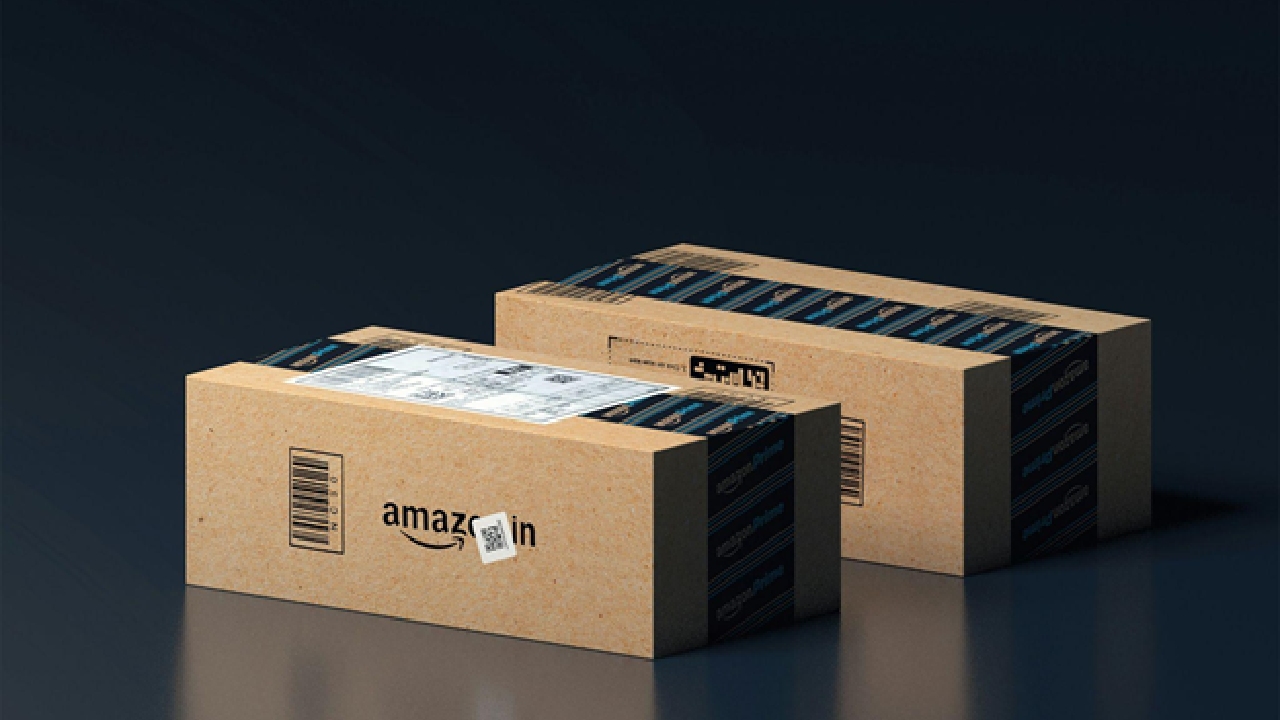
Something unusual is happening in India’s export economy. Thousands of sellers—first-generation entrepreneurs from Jaipur, Surat, Panipat, places with no historical connection to American corporate law—are registering Limited Liability Companies in US states they have never visited. Not because it sounds impressive. Because a US LLC can open the door to Amazon’s domestic marketplace, Stripe’s payment processing, and the American banking infrastructure that cross-border e-commerce runs on.
The numbers back this up. Amazon reported that its Global Selling programme surpassed $20 billion in cumulative e-commerce exports from India between 2015 and 2025, with over two lakh sellers now registered across 18 international marketplaces. The company has raised its target to $80 billion by 2030. India’s government wants $200–300 billion in e-commerce exports in that same window.
Behind many of those figures sits a small legal entity filed in Wyoming, Delaware, or New Mexico.
Why Indian E-Commerce Sellers Are Choosing US LLCs
The appeal is structural, not aspirational. Amazon’s US marketplace is built around American business entities. Amazon Global Selling does allow Indian businesses to sell on amazon.com using Indian registrations, but many sellers find that a US LLC gives them cleaner access to domestic seller infrastructure, US-based payment disbursement, and the ability to hold inventory through Fulfillment by Amazon without the friction of cross-border reconciliation.
Stripe typically requires a US business entity for standard onboarding. Shopify Payments operates the same way. For an Indian seller building a D2C brand aimed at American consumers, a US LLC is less a strategic choice than a functional prerequisite.
Formation costs are modest. According to LLCBuddy, which helps business owners and entrepreneurs with LLC formation across every US state, filing fees as of 2026 range from $35 to $500 in different states. Wyoming, Delaware, and New Mexico—the states non-US residents choose most often—charge roughly $100, $90, and $50, respectively. Add a registered agent service and an EIN application, and many Indian sellers get their entity formed for under $500.
That is the number people plan for. Everything that follows tends to be a surprise.
The Compliance Layer Nobody Budgets For
Formation is the straightforward part.
Under current IRS rules, a single-member US LLC is treated as a “disregarded entity”—profits pass through to the owner, not the company. For an American resident, this simplifies things. For an Indian resident who has never set foot in the United States, it creates a cross-border tax puzzle that nobody mentioned during the formation webinar. The LLC’s income may not be taxed at the US federal level if there is no permanent establishment, but under the Income Tax Act, Indian residents are taxed on worldwide income. Whether the money ever touches an Indian bank account is irrelevant.
In practice, this typically means the seller would need to report US LLC profits on their Indian return using ITR-3, with the LLC disclosed as a foreign asset under Schedule FA. Under the Black Money (Undisclosed Foreign Income and Assets) and Imposition of Tax Act, 2015, non-disclosure can attract a penalty of up to ₹10 lakh. The Central Board of Direct Taxes ran two rounds of its NUDGE campaign targeting exactly these taxpayers—people who hold foreign assets and have not disclosed them. The second round launched in November 2025.
FEMA adds another layer. Under the Foreign Exchange Management Act, setting up a business entity abroad may constitute an Overseas Direct Investment. The RBI’s 2022 Overseas Investment Rules generally require Indian residents making ODI to route funds through an authorised dealer bank, obtain a Unique Identification Number, and file Form FC within 30 days. Ongoing compliance typically includes an Annual Performance Report. The Liberalised Remittance Scheme caps individual outward remittances at $250,000 per financial year as of 2026.
Many founders skip these steps entirely, particularly when they fund the LLC from a PayPal balance already sitting in US dollars. Whether that arrangement satisfies FEMA requirements is a question for qualified legal counsel, not a YouTube tutorial.
The US Side Is Not Free Either
A foreign-owned single-member LLC is generally required to file IRS Form 5472 annually, reporting all “reportable transactions” between the LLC and its foreign owner. Under current IRS rules, the penalty for failing to file is $25,000 per form per year. Most Indian sellers do not prepare this themselves; a US-based CPA typically charges $500 to $1,500 for it.
Add a registered agent fee ($100–300 per year), a state annual report fee (as of 2026, Wyoming charges $60; Delaware’s LLC franchise tax is $300), and the cost of a US mailing address or virtual office. The annual maintenance bill for a US LLC operated from India may land between $1,500 and $4,000—before any Indian-side compliance costs enter the picture.
Steve Goldstein, who has tracked LLC formation patterns among non-US founders for over a decade, has observed how the gap between formation cost and total operating cost catches sellers off guard. His state-by-state data shows that the cheapest states to form an LLC are not always the cheapest to maintain one. New Mexico charges about $50 to file and, as of 2026, requires no annual report. Delaware’s $90 formation fee looks reasonable until the $300 annual franchise tax arrives every June. When margins on an Amazon listing are already thin, these differences compound.
The Revenue Question Worth Asking Early
Before any filing fee is paid, one question deserves honest arithmetic: does the expected revenue justify the compliance cost in both countries?
A seller generating $5,000 per month through Amazon US—respectable for an early-stage cross-border operation—earns roughly $60,000 per year. Against that, they may be spending $3,000–5,000 annually on US and Indian compliance alone. That is 5–8% of gross revenue consumed by paperwork before a single rupee goes toward inventory, advertising, or shipping.
At $1,000 per month, the maths falls apart.
None of this means a US LLC is the wrong choice. For sellers with real traction—significant volume through Amazon FBA, a recognisable D2C brand, recurring Stripe subscriptions—the entity may pay for itself through access to infrastructure that Indian-registered businesses struggle to replicate. The problem is timing. Too many sellers form the LLC before they have validated demand, then discover the recurring costs after obligations have already begun accruing.
The Regulatory Ground Is Shifting
India’s regulatory environment around foreign assets is tightening, not loosening. The Income Tax Act, 2025—which received Presidential assent in August 2025 and takes effect on 1 April 2026—replaces the Income Tax Act, 1961. While it retains most existing provisions and does not alter tax rates, the new Act expands the definition of “virtual digital space” for search and seizure purposes to include email servers, social media accounts, and online investment accounts. LLC owners who manage their US entity entirely through digital platforms should pay attention to that expansion.
Separately, New York introduced beneficial ownership disclosure requirements under its LLC Transparency Act, effective January 2026. As of early 2026, these apply primarily to non-US-formed LLCs registered to do business in New York, though the scope may change through pending legislation. At the US federal level, the Corporate Transparency Act’s BOI reporting requirements have been through multiple rounds of litigation and regulatory reversal. No current rule in this area should be treated as settled.
And on the Indian side, the CBDT’s NUDGE campaigns signal something larger: India is receiving foreign asset data from partner jurisdictions under the Common Reporting Standard and from the United States under FATCA. The tax department’s ability to identify Indian residents holding undisclosed US LLCs is growing. Quickly.
Four Things Worth Considering Before Filing
For Indian e-commerce sellers who have run the revenue numbers and concluded that a US LLC makes sense, a few steps may be worth completing before paying any state filing fee.
Many tax professionals recommend confirming FEMA and ODI implications with a qualified Indian lawyer or chartered accountant before forming a foreign entity. The consequences of non-compliance can include penalties and, in serious cases, Enforcement Directorate scrutiny. Some founders find it useful to budget for full-year compliance in both jurisdictions before committing—if the total cost exceeds what the business can absorb, forming the entity may be premature. Schedule FA disclosure is generally required from the financial year in which the LLC is formed, not the year it begins earning revenue, according to current Income Tax Department guidance. And formation state selection based on total annual cost rather than filing fee alone may reveal significant differences over time. LLCBuddy’s state-by-state data covers what each jurisdiction requires in terms of fees and ongoing filings.
The $500 Filing Fee and the $5,000 Surprise
India’s e-commerce export ambitions are real. The District Export Hub initiative, Amazon’s $80 billion target, the sheer volume of Indian sellers registering on global marketplaces—all of it points in one direction. A US LLC is a legitimate tool for participating in that growth.
But a tool that costs more to maintain than the user expected is a tool that gets abandoned. Often messily. With unfiled returns and undisclosed assets left behind.
The US Census Bureau recorded 5.62 million new business applications in 2025. Forming a company remotely has never been simpler. The compliance obligations that follow have never been more complex. Indian sellers building real businesses for the American market deserve to know both halves of that equation before they file.