US-Iran ceasefire crumbles as Trump hardens stand
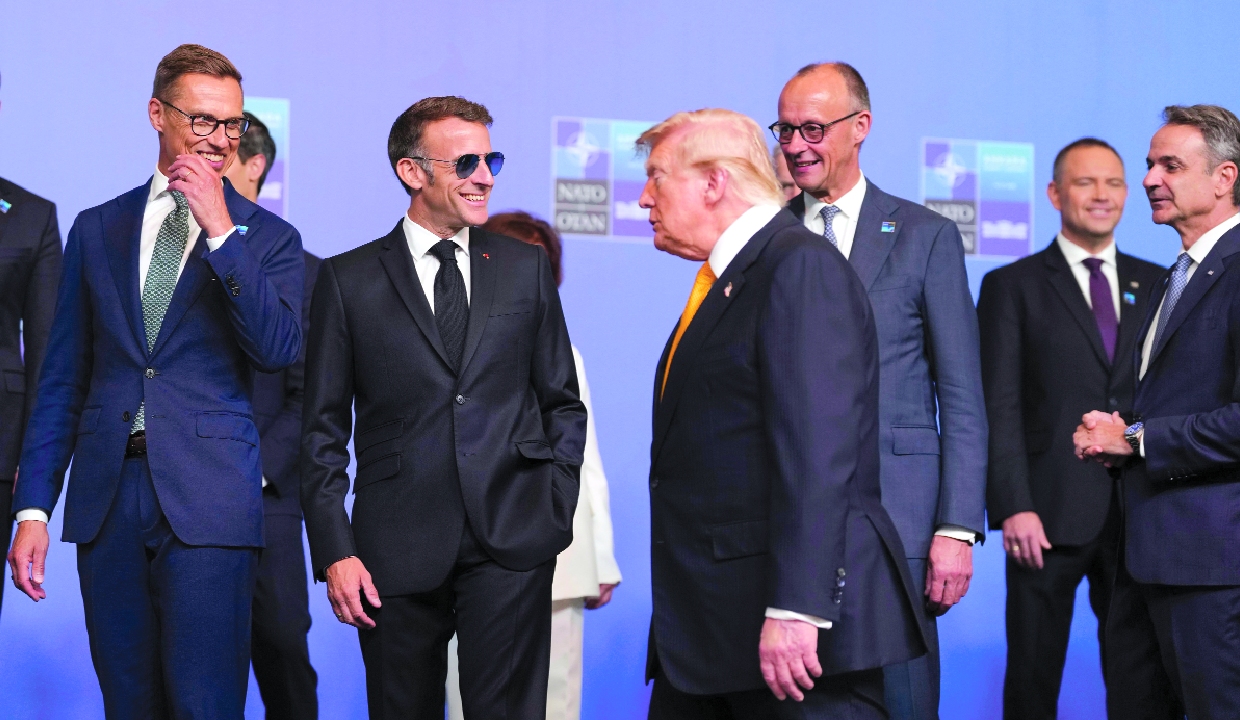
US President Donald Trump threatened on Wednesday to strike Iran’s civilian infrastructure and to seize Kharg Island, with its oil infrastructure, just hours after he said the ceasefire was over.
“We hit them very hard last night,” Trump said. “We’ll probably hit them hard again tonight.”
Trump made the remark in Ankara on the sidelines of the NATO summit. He said the strikes are continued retaliation for attacks on commercial vessels in the Strait of Hormuz. “Maybe we’ll take over Kharg Island. We may take over Kharg Island. There’s not a thing they could do about it,” Trump said.
The US launched strikes on Iran early Wednesday, hours after it revoked a license authorising the sale of Iranian oil.
The US said the license was revoked in retaliation for what it said were Tehran’s attacks on ships in the Strait of Hormuz. Iran hit back with strikes on Bahrain and Kuwait.
US President Donald Trump said later that the interim agreement with Iran was “over” but he would allow talks to continue. That raised concerns that the wider conflict in the Middle East could resume — and oil prices shot up.
“For me, I think it’s over,” Trump responded when asked about the status of ceasefire. He added that US representatives can continue negotiations but he cast doubt on the outcome. “They can talk, but I think they’re wasting their time,” he said.
The crossfire came during the dayslong funeral for Iran’s Supreme Leader Ayatollah Ali Khamenei, who was killed on February 28 in the war’s first moments. The funeral, which ends Thursday, was supposed to be a period of lower tensions -- though mourners have repeatedly called for the killings of Trump and Israeli Prime Minister Benjamin Netanyahu.
The US military’s Central Command said American forces launched strikes “to impose heavy costs for targeting and attacking commercial shipping crewed by innocent civilians in an international waterway.”
It said it hit Iranian targets, including air defense systems, radars and over 60 small boats used by Iran’s paramilitary Revolutionary Guard.
Those boats have been key to threatening ships in the strait, through which a fifth of the world’s traded oil and natural gas passed before the war. Iran’s ability to bring shipping in the waterway to a near halt during the war proved its greatest strategic advantage as rising prices for energy supplies, fertilizer and food put pressure on the US to make a deal. On Wednesday, the price of Brent crude, the international standard, spiked over 5 per cent after Trump’s comments.
Iranian state media reported explosions in several locations, including in Bandar Mahshahr, where a Guard member was killed. It also reported attacks on Bushehr, home to Iran’s nuclear power plant complex.
On Wednesday morning, both Bahrain, home to the US Navy’s 5th Fleet, and Kuwait, home to US Army forces, sounded missile alerts. The Guard issued a statement acknowledging targeting US military installations in both countries.
A similar spate of Iranian attacks on shipping and US retaliatory strikes occurred late last month -- which similarly drew Iranian attacks on Bahrain and Kuwait. Wednesday’s strikes came as Trump was in Turkey for a summit of the NATO military alliance.
Before the strikes, the US revoked a license that authorized the sale of Iranian oil as part of the interim deal. That paused US sanctions and allowed Iran to conduct oil sales openly for US dollars for the first time in years. Iran long had been suspected of selling sanctioned crude at below-market prices to China.
The decision came after the strikes on shipping. One tanker was off the coast of Oman when it was hit and caught fire, the United Kingdom Maritime Trade Operations center said. Iranian state television said the tanker came under attack after ignoring warnings but did not directly claim the assault.
Majed al-Ansari, a spokesperson for the Qatari Foreign Ministry, said the tanker was carrying Qatari natural gas and called the strike an “unacceptable attack” on international navigation and global energy security. He said Qatar, which has been a key mediator alongside Pakistan in the talks, holds Iran “fully legally responsible.”
Iran and the United States agreed as part of the interim deal to allow ships to pass through the strait without paying charges for 60 days. But Tehran has insisted it must control the vessels’ routes and vowed to later charge fees for passage. That would upend decades of practice in the waterway. The ships attacked on Tuesday all appeared to be using a route close to Oman’s shore, rather than one ordered by Tehran.
The US and many Gulf Arab states say they will not agree to Iran charging for passage through the strait.
Crude surge batters markets
New Delhi: Indian equities slumped on Wednesday as rising geopolitical tensions between the US and Iran sent Brent crude soaring 6.18 per cent to $78.74 a barrel, triggering heavy selling in oil marketing, aviation and paint stocks. HPCL, IOC and BPCL fell up to 4.6 per cent, while InterGlobe Aviation, SpiceJet and major paint makers also declined. The Sensex tumbled 1,677 points (2.15 per cent) and the Nifty lost 517 points (2.12 per cent), marking their steepest single-day fall in over two months. Analysts said fears of prolonged Middle East conflict, supply disruptions through the Strait of Hormuz and higher inflation weighed on investor sentiment.