US calls India indispensable partner in shaping Indo-Pacific balance
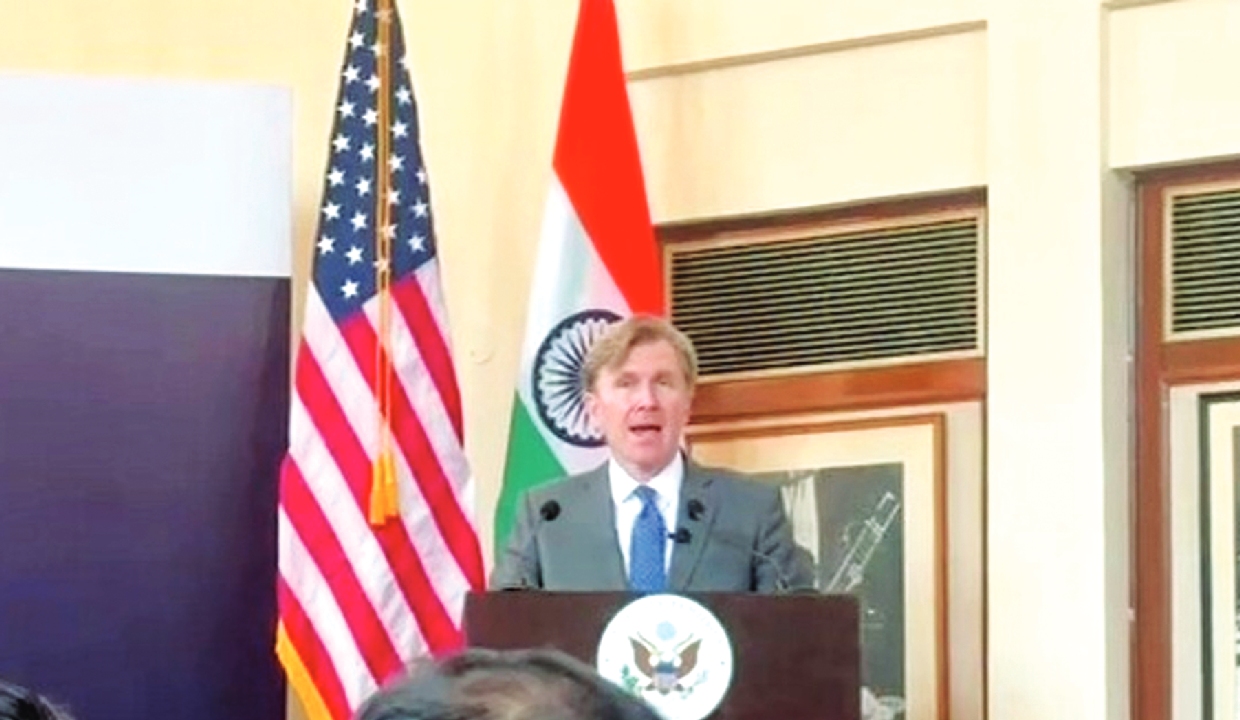
The United States has underscored India’s growing strategic importance in the Indo-Pacific, with Elbridge Colby describing India as an “essential partner” in maintaining regional stability during remarks at the Ananta Centre.
Speaking on his first official visit to India, Colby outlined Washington’s evolving defense and geopolitical framework toward New Delhi, emphasizing a pragmatic, interest-driven partnership rooted in shared concerns over the balance of power in Asia.
Colby highlighted that the Indo-Pacific has emerged as the central arena of global politics and economics, with both U.S. and Indian prosperity closely tied to developments in the region. He noted that no single nation can ensure stability alone, calling instead for “collective contributions of capable states.”
Within this framework, India’s geographic position, military capabilities, and economic rise make it a pivotal actor. “India’s role is indispensable,” Colby said, pointing to its location along critical Indian Ocean trade routes and its tradition of strategic autonomy.
A key theme of the address was the alignment between Washington’s “flexible realism” and India’s foreign policy doctrine articulated by Subrahmanyam Jaishankar. Colby drew parallels between US interest-based strategy and India’s “Bharat First” approach, both of which prioritise national interests and pragmatic decision-making.
He argued that such realism strengthens cooperation rather than limiting it, even when disagreements arise. “We do not expect nor require unerring agreement,” Colby said, adding that flexibility and mutual respect are central to long-term collaboration.
The speech highlighted rapid progress in US-India defense ties, including expanded military exercises, intelligence sharing, and technology collaboration. Colby referenced a recent defense framework agreement signed with Rajesh Kumar Singh, aimed at accelerating joint capabilities.
Priority areas for cooperation include maritime security, anti-submarine warfare, long-range precision systems, and resilient logistics — capabilities seen as critical in the Indo-Pacific security environment.
Colby also emphasised growing opportunities for defense industrial collaboration, including co-production and co-development of military technologies. While acknowledging regulatory and bureaucratic hurdles, he expressed confidence that both sides could overcome them.
In a notable acknowledgment, Colby said the U.S. and India would not always align on every issue, citing differing histories and strategic cultures. However, he framed this as a strength rather than a weakness, allowing for a more flexible and realistic partnership.
He reiterated that the relationship is not based on formal alliances but on “overlapping interests” and a shared objective: preventing any single power from dominating Asia.
Closing his remarks, Colby described the current period as a “dangerous” phase of geopolitical transition but expressed optimism about US-India cooperation. He characterised India as a “waxing power” and a central pillar in shaping a stable regional order.
The U.S., he said, seeks to build a partnership with India that ensures an Indo-Pacific defined by sovereign decision-making, economic prosperity, and strategic balance.
“If we succeed,” Colby concluded, “the region will be marked by peace and stability grounded not in idealism, but in strength and cooperation.”
The remarks signal Washington’s continued push to elevate India’s role in the regional security architecture, as both nations navigate an increasingly complex geopolitical environment.