UP CM announces new campus for Bhatkhande Sanskriti Vishwavidyalaya
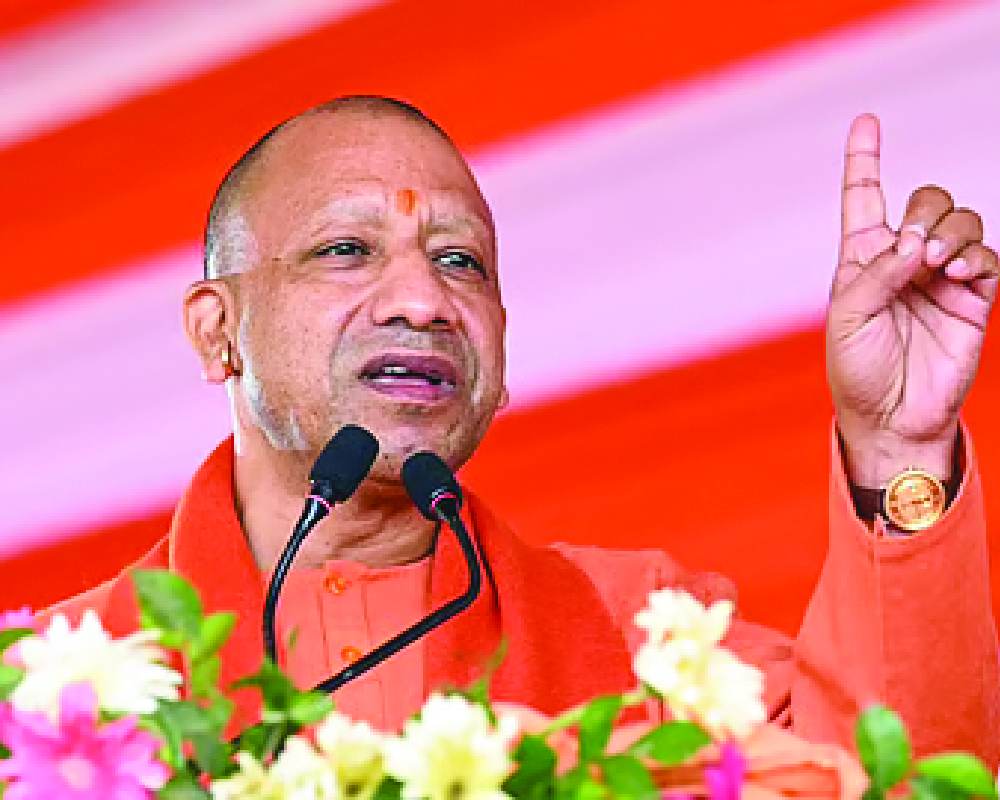
Uttar Pradesh Chief Minister Yogi Adityanath on Thursday said that when culture is separated from a nation, it becomes lifeless and loses its identity, asserting that Indian culture has established itself globally as a “Sanatan” culture due to its enduring artistic, musical and spiritual traditions.
Speaking at the centenary celebrations of the Bhatkhande Sanskriti Vishwavidyalaya, Adityanath announced that the state Government has provided approximately six acres of land to the university in the Kakrabad area of Lucknow for the construction of a new campus. He said the institution, established in 1926 as a centre for Hindustani classical music, was originally a small institution with facilities adequate for the needs of that period but insufficient for present requirements.
“They were sufficient then, but they are insufficient today. That is why our government has taken this decision. We have provided approximately six acres of land in Kakrabad for the new university building,” the chief minister said.
Adityanath said the university and the Department of Tourism and Culture should ensure that the new infrastructure meets global standards. “I would like both the university and the Department of Tourism and Culture to ensure that whatever is built there conforms to global benchmarks,” he said. Elaborating on the role of culture, the chief minister said that the soul of a nation resides in its cultural traditions. “When culture is taken away, a nation becomes lifeless and loses its identity. Just as a human body cannot survive without the soul, a nation cannot survive without its culture,” he said.
Adityanath said that despite favourable and adverse circumstances, India’s art, music and rhythm have preserved their unique identity. “The art (kala) of India, the music (swar) and the rhythm (laye) of India have maintained their distinctiveness. Because of these traditions, Indian culture has established itself as a ‘Sanatan’ culture in the world,” he said.
Highlighting the contributions of Pandit Vishnu Narayan Bhatkhande, the founder of the institution, Adityanath said his work was carried out at a time when India was under colonial rule and faced severe oppression.
“In 1926, there was no freedom of expression and no platform for music or art. During that period, Pandit Vishnu Narayan Bhatkhande gave Indian music a scientific foundation,” he said.
He credited Bhatkhande with introducing classical discipline, a structured curriculum and a systematic methodology for Hindustani music. “The work he did in classifying ragas and talas and integrating the guru-shishya tradition with modern education was not merely an academic exercise. It was a historical effort to give Indian culture self-respect, self-esteem and stability,” the chief minister said.
Referring to the Mahakumbh held in Prayagraj in January this year, Adityanath said there was a perception that today’s youth were drifting away from Indian culture, a belief he said was contradicted by the massive participation at the event. “During the colonial period, a negative perception was created about the Kumbh Mela. But anyone associated with organising the Mahakumbh 2025 would have witnessed that over 66 crore devotees attended it,” he said. He said the largest number of participants were young people, not only from across India but also from other parts of the world.
“This shows that if we provide young people with a platform, they will move forward on their own and forge their own path,” Adityanath said.
Emphasising the sanctity of art, the chief minister said artistic talent is a divine gift that must be respected and that artists across all disciplines should be encouraged to pursue their craft. Praising Vice-Chancellor Prof Mandavi Singh, he said the university’s anthem and logo, based on the theme “Nadadheenam Jagat”, the world is governed by sound, reflect a fundamental truth of life.