Twirled tales of tangled TNCs
Successful corporate histories can be unmade as easily as they are made. In some cases, the undoing is permanent. In others, it is temporary, but nerve-wracking, and leaves dark scars. Two Indian transnationals (TNCs), and one that was a TNC more than 15 years ago, find themselves in corporate swamps. One of them is sinking deeper into a quicksand, inch by inch, every day. The other two are in a mess, but their chances of pulling through are high. In any case, the trio will dent not just their business empires, but the economy. In some ways, the former hints at the pulls and pressures on the latter.
For the one, who is virtually neck-deep in the marsh-with-little-escape, may need to blame himself. His unbridled ambition, almost-fantastical plans, rush to talk-the-walk rather than walk-the-talk, and animosity with family members and outsiders may be responsible for the near-demise. Today, the official investigating agencies have seized assets worth INR 12,000 crore, including his grand home in Mumbai’s Pali Hills. He has had to plead to the Supreme Court that he will not leave the country without permission. For the second time on Thursday, he was summoned for interrogations by the Enforcement Directorate.
Anil Ambani, who was on the verge of being the richest Indian in 2008, and possibly on the way to be the richest Asian, is in the dumps. A few years ago, he declared personal bankruptcy in a London court. Since then, his empire, which was on the downhill path, has almost vanished. Most of his firms are bankrupt, and the investigating agencies seem to show no mercy, either to his existing businesses, him, or family members (including wife Tina, a former Bollywood actress).
Perhaps, in the same red corner as Anil Ambani stands Noel Tata, the successor of the Tata empire, who is in the middle of several intimate, personal, and do-or-die battles. Sometimes, even the most ardent and sympathetic observers feel like these are more like do-and-die fights. No one, not even a Tata, can come out of boardroom brawls, and corporate clashes without tell-tale marks. These tussles will leave several wounds and scabs, some of which will never heal. Like it or not, believe it or not, the ‘Tata’ name has lost its sheen, if some was still left.
Within months after he took over the mantle, or months after the death of Ratan Tata, Noel was in a fight mode. After inculcating his children in some of the Tata trusts, which own a majority in Tata Sons, the holding company of the group, Noel trained his guns on some of the trustees. He believed that their allegiance lay with the dead Ratan, and not him. The trustees too wished to impose their authority. In an open war, which involved the home minister and finance minister, apart from corporate chieftains, and influential Parsis, Noel triumphed.
With Tata Trusts under his thumb, his ownership over Tata Sons and, by default, Tata Group, was complete. But there was another war on the horizon, which was in the making for years, even when Ratan Tata was alive. Noel, the half-brother, was invariably seen as a half-achiever, the one who had no flair for business. So, when he became the group head, Noel was dying to show his mettle (pun intended). One of the ways was to prove that the vision of N Chandrasekaran, Tata Sons’ chairman who was handpicked by Ratan, was wrong.
Hence, Noel pointed fingers at the losses incurred in new acquisitions like Air India, and other ventures. He wanted assurances, sorry, guarantees from the chairman. Tata Sons would never be listed on the stock exchange. Its debt would be zero, and its cash coffers would be always full to fund the philanthropic work of Tata Trusts. Or else, Chandrasekaran's third tenure, which will begin in 2027, was in danger. Until a few months ago, Chandrasekaran was untouchable in the sense no one could have even thought of removing him as the chairman.
One can see irony in the Tata tangles. When Ratan became the group chairman in 1991, he was considered a softie, someone who had never proven himself as a businessman. Within a few years, he got rid of the satraps, the feudal lords who were deeply entrenched in large firms like Tata Steel, and Tata Chemicals. Once he declared himself as the Tata Emperor, Ratan built the empire his own way. Noel possibly wishes to do the same, and establish his own legacy that he can safely and securely leave for his children. He knows what can happen in a succession battle at the Tatas. Remember Ratan versus Cyrus Mistry!
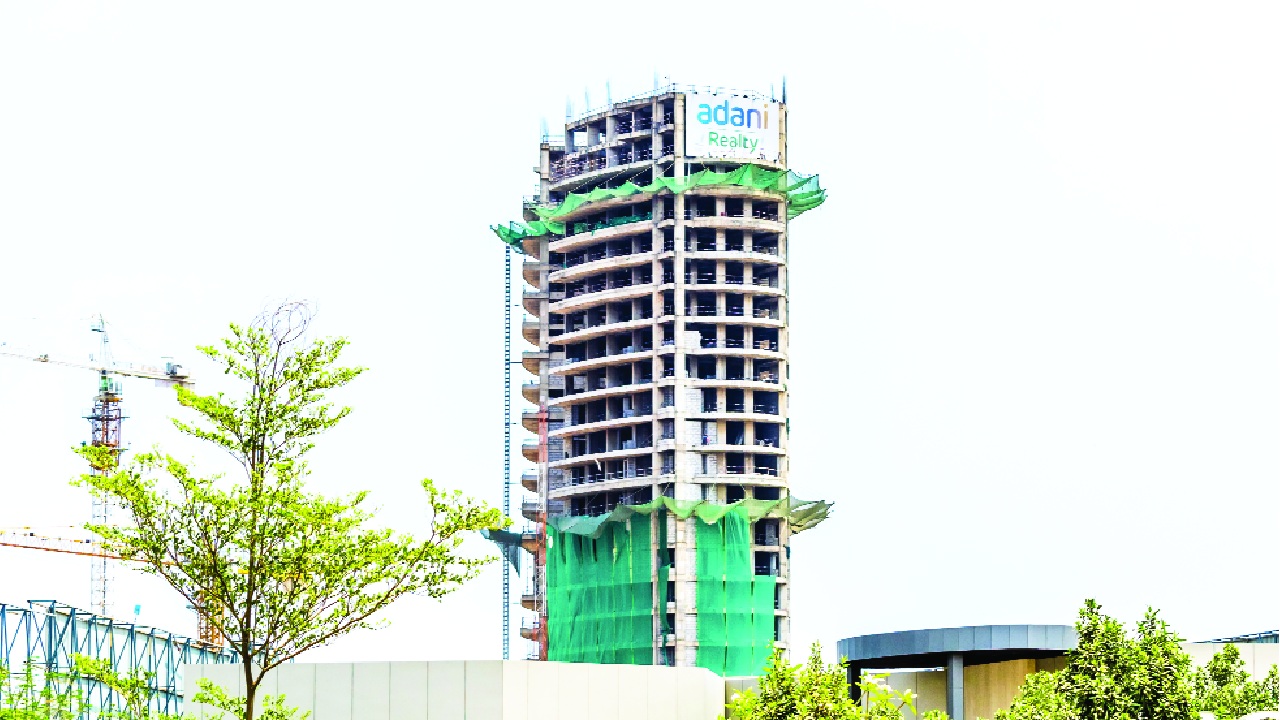
Succession is possibly the last thing in the mind of Gautam Adani, the patriarch of the sprawling Adani Group, which hopes to be bigger than the Tata or Ambani clan. His problem stems from external missiles that are regularly aimed at him, rather than internal tensions and dissensions. After the Hindenburg report that decimated his stocks, he rebuilt the empire quite quickly. But the report has a larger-than-life after death. The regulator, Sebi convinced the Indian Supreme Court that there were no truths in the Hindenburg allegations. The stocks recovered.
But it marked the beginning of new innings on a wetter wicket. The US stock market regulator alleged that bribes were paid to secure solar power contracts, and summoned Gautam Adani. An Italian bank investigated some of the charges in the Hindenburg report. The US launched an investigation on the imports of solar panels, including from India, and asked Gautam Adani to appear for questioning. When he did not, the miffed Uncle Sam imposed a 166 per cent tariff on solar panels. In essence, the corporate events escalated into an economic war.
To be fair, the Adani fortunes were intricately linked with that of the nation. The Indian Government saved him from repeated summons from the American stock market regulator. In the Indian courts, the policy-makers acted to demolish the Hindenburg charges. Many openly claimed that this was the foreigners’ way to discredit India. In some senses, India became Adani, and Adani India. So, when the scales are reversed, it is logical to assume that mud slung on Adani will stick to the nation's image. However, as experiences prove, the Adani group has resilience and strength to withstand any attack. Gautam Adani consistently faced corporate missiles, global guns, business drones, and online sniping, and came out largely unscathed.