Trump’s agri tariff rollback signals reset
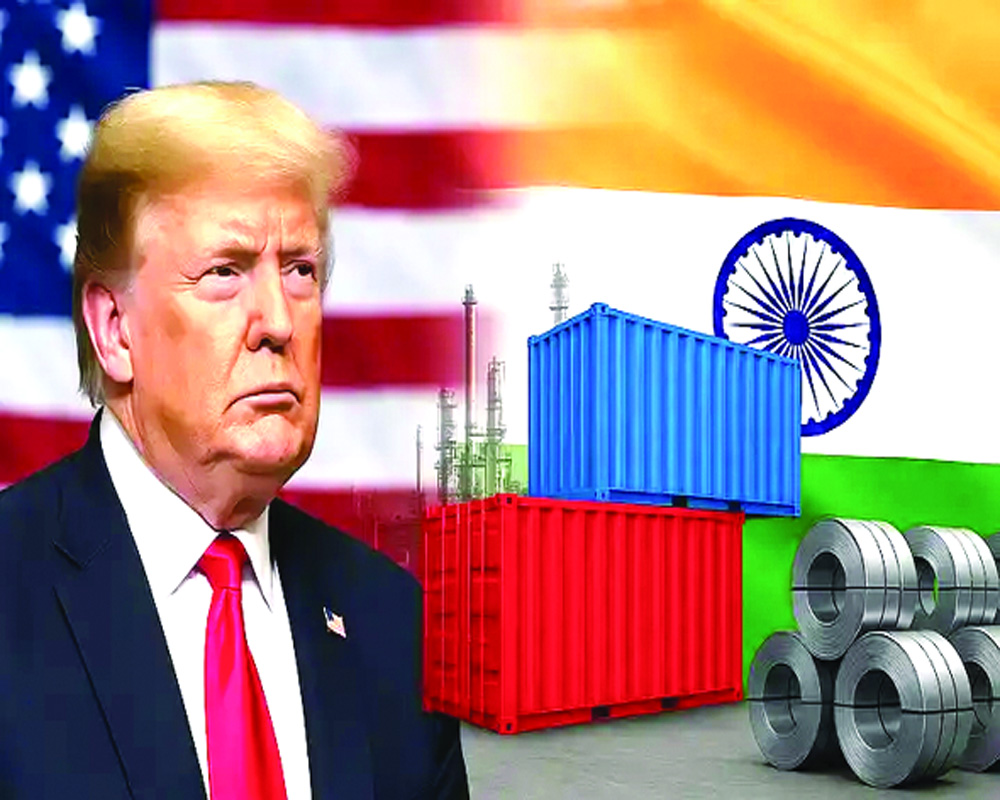
Finally, there is respite for Indian farmers and exporters of agri and processed food products to the US. The US President Donald Trump’s decision to slash tariffs on a wide range of agricultural and processed-food imports marks a notable shift in his trade posture — a move driven as much by domestic compulsions as by emerging geopolitical recalibrations. But this gives India a relief it has been waiting for, as its agricultural sector was badly hit by Trump’s tariffs. The revised list exempts 254 products — including 229 agricultural items — from the scope of reciprocal tariffs imposed earlier. The biggest relief in this category would be for exporters of fruits, nuts, spices, tea, coffee, cocoa preparations, essential oils, and value-added food ingredients — almost all the products that find their way to the US.
Though these items constitute a small portion of India’s exports to the US, they represent more than $1 billion worth of agricultural exports. But these items support thousands of farmers and agro-processors.
Zero tariffs on agri products give Indian exporters a level playing field vis-à-vis other Asian nations. India already enjoys credibility as a consistent supplier of high-quality agri products, backed by strong distribution networks and diaspora-driven demand — tea and coffee extracts, processed fruit products, and essential oils — would now be competitively priced in the US market.
However, the big question is: why this sudden change of heart? Why is Donald Trump — who built his political career on aggressive tariff policies — suddenly softening his stance?
The answer lies squarely in US domestic politics. American consumers have been grappling with high food prices for months. Besides, the Democrats’ victories in states also rang alarm bells. Economic anxiety contributed to significant Democratic wins in Virginia and New Jersey. Trump’s climbdown is not just an economic decision — it is a political necessity with immediate electoral implications.
This reconsideration comes on the heels of Trump’s decision to restore parity in student visa fees for international applicants, including Indians. Both steps indicate an awareness that punitive economic measures — whether on imports or immigration-linked fees — lead to economic chaos and unease in his core vote banks.
Yet, these shifts may also reflect a broader strategic recalibration. With geopolitical competition sharpening and partnerships with India becoming more critical, Washington cannot afford to alienate India beyond a point. Easing tariffs on agri products may be the first in a sequence of pragmatic adjustments aimed at consolidating alliances and stabilising domestic markets simultaneously.
For India, the tariff rollback is a major relief. Trump would be realising that tariffs as a tool of foreign policy are not that effective after all. Economic realism would indeed be required for political headway. India, meanwhile, must be ready to seize the moment.