The tyranny of the algorithm and digital India act
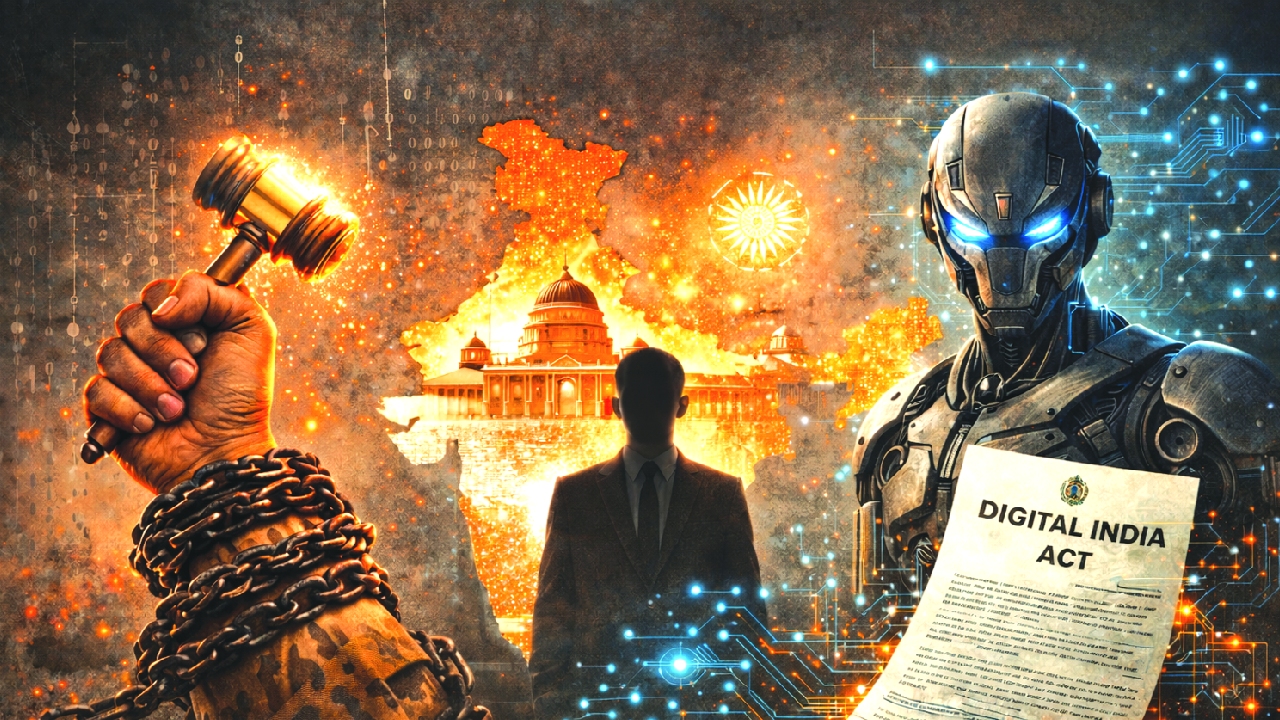
JS Mill who is regarded as the father of negative liberty and a staunch opponent to state interventionism, in 1859 warned that the “tyranny of the majority” was more dangerous than the “tyranny of a magistrate”. Today as India prepares the Digital India Act we face a new version of this threat: “the tyranny of the algorithm”.
JS Mill is a frequently quoted philosopher for his views on freedom of speech, expressions, thoughts and opinion. In this supposed “age of information” where most of the social media platforms are filled with misinformation or half truths, Mills’ harm principle is highly relevant to justify state intervention in the digital sphere because “cognitive harm” is just as dangerous as physical harm. False news and narratives can cause tensions between the groups of society as we will see in the Angel Chakma case. Social media has a great impact on the lives of people of any age and with the coming up of AI deep fakes it is very easy to fool the common public and shift the narratives. Along with AI deep fakes, tyranny of the algorithm is also coming out as a very big problem.
According to a recent research from National Institute of Health (NIH), 2025 “cognitive overload” from social media leads to reliance on the “illusionary truth effect” which means when a false narrative or news is presented to a person many times, it feels like the truth. We recently saw some great examples of this happening in real life as in the case of killing of a North Eastern student in Uttarakhand named Angel Chakma, where the racial discrimination narrative was pushed but in police investigations it was found that there was no angle of racial discrimination rather two of the killers were themselves from Nepal and North East.
While a lot of people talked about it on social media, the truth remains buried, most of them still think that the incident was an issue of racial discrimination. This shows how the harm is being done to the cognitive autonomy of individuals violating the harm principle of Mill to which he allows state intervention. Another example of the spread of fake news regarding the death of India’s one
of the prominent actors, Dharmendra, which was a systemic failure of our digital commons. When government offices themselves are misled into posting condolences, the ‘rational and political competence’ of the citizenry, which Mill deemed essential for a functioning democracy, is under siege. We are witnessing the ‘illusory truth effect’ at a national scale, where familiar falsehoods become our reality.
The Digital India Act is our opportunity to move from a trampling digital marketplace to a stationary state of digital stability, where technology serves human flourishing rather than outrage-for-profit. Election processes occurring worldwide, be it USA or Slovakia, are facing the last minute impact of AI generated deepfake videos or audio clips. This makes it very important for the state to intervene but in a positive way. The State must not use this intervention to try to control and shift the narratives to benefit themselves.
This can be done by introducing an element of algorithmic transparency where a sign of AI comes up attached with the post that was created using AI; just like foods have a nutritional label, information should have a “provenance label” tracing their source of origin and showing whether they were generated with AI or amplified through it, which will help people to differentiate between original and fake content. This acts as a Millian middle path avoiding banning accounts which would violate negative liberty and instead provides the transparency needed for individuals to exercise free judgement. Another solution is to introduce an option of checking the content’s truth factor using AI itself, which will help people discriminate between true and false content, specifically news or reports. As India is hosting Global AI Summit 2026, first in the global South, these issues demands awareness, deliberation and policy intervention. Some critics might argue that State interventionism can lead to censorship but it is actually that unregulated algorithm acting as true censors burying truth with false news and narratives.
At last it is very important to note that AI and technology are modern weapons which must be utilized to empower people and not misguide them. This bill with the right propositions will make sure that India’s digital renaissance will not be built on sand and age of information does not turn to an age of misinformation. It will also show to the world that a superpower like India doesn’t have to choose between corporate anarchy and State censorship.
Abhishek is assistant Professor in Deshbandhu College, University of Delhi and Yuvraj is completing BA (Research) in Political Science; views are personal
Leave a Comment
Comments (1)
👏🏻💯👍🏻