The Tirthan: A Study in Riverine Conservation
“These days, the greatest temple, mosque, or gurdwara is the place where a person works for the welfare of humanity. What place could be greater than this—this Bhakra-Nangal?”
These powerful words were spoken by Jawaharlal Nehru at the inauguration of the Nangal Canal Project in July 1954. They captured the optimism and determination of a young nation struggling to rise from the shadows of nearly two centuries of colonial rule. For a newly independent India, development was not merely a policy—it was a mission, almost a form of nation-building faith. The decades that followed witnessed the construction of colossal dams, the expansion of heavy industries, the establishment of national institutes of excellence, and the pursuit of atomic energy. These projects symbolised progress, self-reliance, and the promise of a modern India. The world was moving forward at a relentless pace, and India was determined not to be left behind. Such development demanded enormous resources—minerals, land, labour, and capital. Yet the people and the government willingly embraced these sacrifices, believing they were essential to break free from the chains of poverty and underdevelopment. Progress seemed urgent, necessary, and unstoppable. However, like all great transformations, this rapid march toward modernisation came at a price. In the enthusiasm to build a strong and prosperous nation, the environmental, social, and human costs of development were often pushed into the background. What appeared to be temples of progress sometimes concealed the silent burdens borne by nature and by communities whose voices were rarely heard.
Ignored for so long was the ecological damage perpetrated; forests cut down, habitats drowned, people displaced, and villages vanished. The unrelenting march of industrialisation was too strong for grassroots opposition to register a meaningful protest. Only in recent times has there been an outpouring of research showing the many dangers and pitfalls of damming our rivers, nowhere more so than in the highly fragile and ecologically sensitive Himalayan region. Along with this has come a growing realisation that we need to protect the ecological health, cultural heritage, and future sustainability of these riverine ecosystems.
Himachal Pradesh is one of the jewels of India, blessed with emerald rivers and heavily forested with deep valleys running the length of the state. It is also known as the power state of India with the highest per capita number of dams and hydel power projects (HPP), with more planned for the near future. Almost all valleys in the state have or will have dams and HPPs, leaving very few places where the rivers run free.
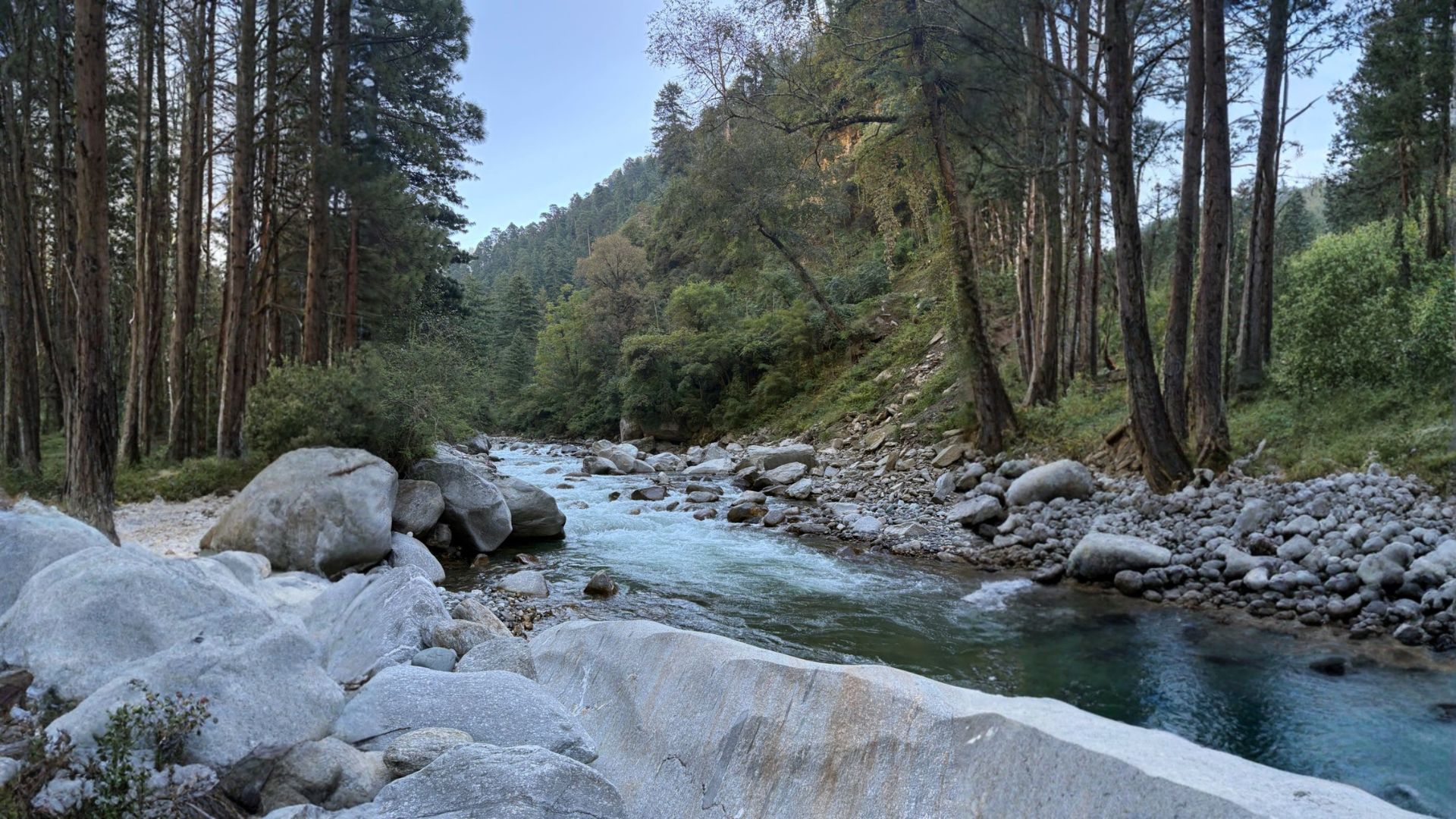
One such slice of heaven is the remote Tirthan Valley. Thanks to the pioneering efforts of inhabitants, not one of the seventeen proposed dams ever materialised along the roaring, tumultuous path of the river as it gushes past orchards, farms, and stony banks down the Tirthan valley. Far from lacking in development, the valley is today a model for sustainable eco-tourism.
Trout fishing for the fabled rainbow trout and the brown trout brings anglers from across the world to this remote Himalayan valley. The government runs hatcheries, sells trout, and earns fees from the sale of angling permits, while the residents run homestays, cultivate orchards, act as ghillies for the anglers, and guides for those going trekking. People come for the peace and quiet, to hear the birds call in the early hours, to hear the river rush past rocks and around bends on its perpetual, hurried journey down to the great plains. There is no roaring industrial SEZ, no effluents draining into the river, no funnels belching smoke in the air; there are anglers quietly casting their flyrods for hours upon the crystal clear waters which flow clean and cold, Persimmons, Apple, Pears and Apricots hang heavy on the boughs of trees and trekkers hoist their loads to trek high up and catch a sight of the elusive Western Tragopan.
Angling for the wild brown and the stocked rainbow trout is the main source of direct and indirect income for the valley. Ghillies, who are local inhabitants of the villages in the valley, keep a keen eye out for those pulling fish out of the river without a permit and anyone dumping waste in the river. The daily angling permit allows one to take up to six fish with some conditions attached. Ghillies and anglers usually never take any fish, with all brown trout being put back, and maybe the odd rainbow trout being harvested. This is because brown trout are wild, while rainbow trout are often hatched in the government-run hatcheries and released into the river to keep enough stock of fish when numbers get depleted. This respect and reverence for the river arises not only out of our cultural and mythological affinity but also because a healthy river and fish population means a constant and sufficient income for the residents of the valley.
Along the banks of the Tirthan River, life follows the gentle rhythm of the mountains and the water that sustains them. Here, angling is not merely a pastime but a way of engaging with the river—an exercise in patience, observation, and respect for nature. A day on the river begins early, as the sun slowly lifts above the valley. Before a line is ever cast, the river is carefully studied. Where does the current deepen? Where are fish rising to the surface? What insects are hatching? Turning over a few stones along the riverbed reveals the tiny aquatic life forms that sustain the ecosystem—and offer clues to what the trout might be feeding on that day.
Only then does the quiet contest begin.
Fly fishing along the Tirthan is a slow and thoughtful pursuit, a delicate battle of wits with one of the world’s most celebrated game fish—trout. Moving gradually along the bank, anglers cast their lines again and again, waiting for that subtle tug. Often there is only stillness, sometimes a curious nibble, and occasionally the thrill of landing a trout—only to gently release it back into the cold, clear waters where it belongs. The true reward lies not in possession, but in the experience itself: the sound of the current, the changing light over the valley, and the quiet satisfaction of sharing space with a thriving river. By evening, as the sun dips behind the mountains, the day ends much as it began—with the river flowing on and memories carried home.
Such mindful interactions with nature do more than offer recreation. They discourage poaching, support local livelihoods, and foster a culture of stewardship that protects forests, wildlife, and fragile river ecosystems. In places like the Tirthan valley, this balance between livelihood and conservation offers an important lesson for mountain regions across the Himalayas.
Development is both necessary and inevitable, but it must not come at the cost of the rivers that sustain life itself. Protecting river ecosystems, aquatic wildlife, and freshwater biodiversity is not merely an environmental concern—it is a responsibility. Because when rivers are allowed to thrive, they continue to nourish landscapes, communities, and future generations alike.
Author: Arjun Balraj Mehta
Designation: Biodiversity and wildlife conservation advocate with a specific interest in Human-Wildlife Conflict.