Supreme Court grants full pension to women officers
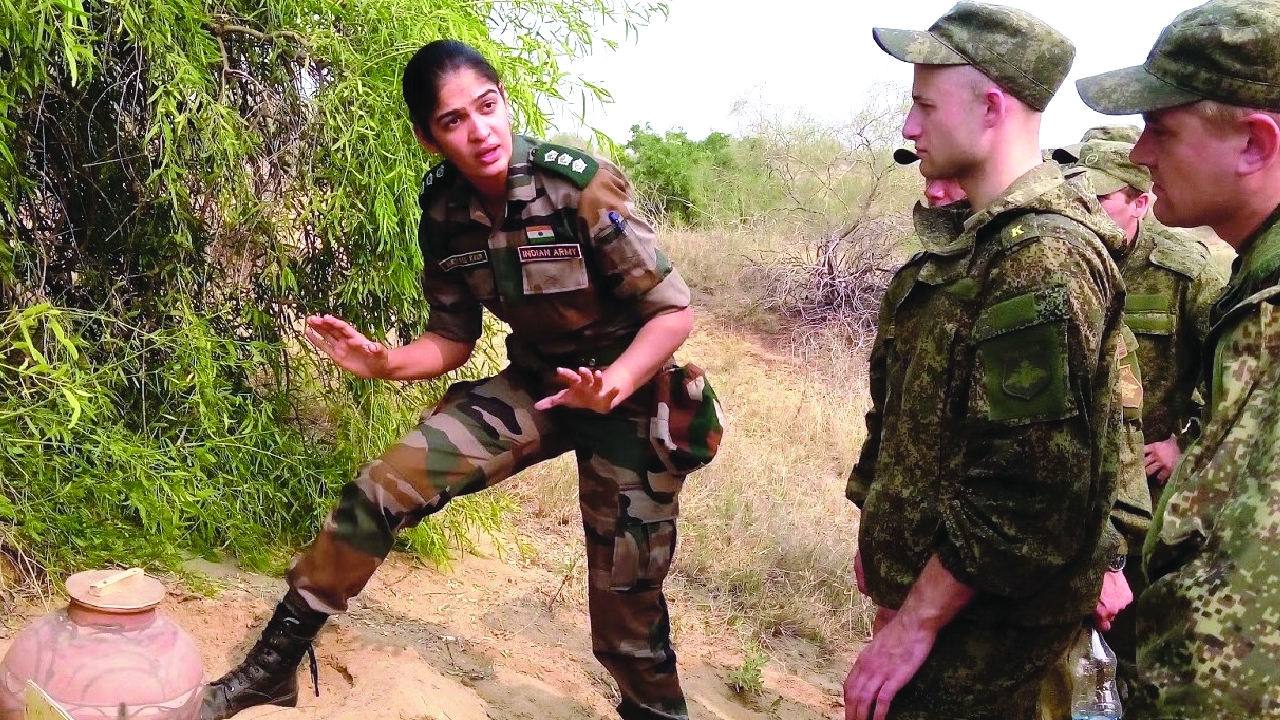
In a landmark ruling, the Supreme Court on Tuesday held that women Short Service Commission (SSC) officers in the Army, Navy, and Air Force, who were denied Permanent Commission (PC) due to arbitrary assessment, are entitled to full pensionary benefits.
A bench comprising Chief Justice Surya Kant and Justices Ujjal Bhuyan and N. Kotiswar Singh ruled that these officers would be “deemed” to have
completed the minimum qualifying service of 20 years required for pension, even if released earlier.
The verdict arose from petitions, including those by Wing Commander Sucheta Edan, challenging the denial of PC following policy changes in 2019 and earlier Armed Forces Tribunal rulings. Reading the operative parts of the judgment, the CJI noted that Annual Confidential Reports (ACRs) for women officers were often graded casually, assuming they would not be eligible for career progression. “The ACRs were written with the presumption that they would not undergo career progression. This adversely affected their overall merit,” he said.
The bench examined each service separately. In the Air Force, it found that the “Service Length Criteria” and “Minimum Performance Criteria” introduced in 2019 were implemented hastily, denying officers a fair chance to meet them.
Using powers under Article 142 of the Constitution, the court ruled that, as a one-time measure, all SSC officers considered for PC in selection boards held in 2019, 2020, and 2021, including those released in 2021, will be deemed to have completed 20 years of qualifying service. Pensions will be fixed accordingly, effective November 1, 2025.
While the court declined to order reinstatement, citing “operational effectiveness,” it clarified that this cannot bar officers from receiving financial benefits.
For the Army and Navy, the court identified similar flaws in assessment models and noted that non-disclosure of evaluation criteria adversely impacted women officers. However, the plea for notional time-scale promotions to Wing Commander for those not in active service was rejected.
The Centre had earlier defended its policy, claiming the Army’s processes were gender-neutral and that “elimination is part of a policy to keep the forces young.” The detailed judgment is awaited.