
Xi’s India return signals thaw in ties
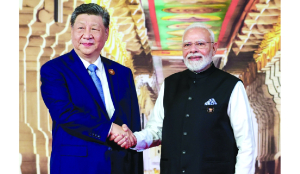
Prime Minister Narendra Modi and Chinese President Xi Jinping on Saturday held bilateral talks on the sidelines of the BRICS Summit, discussing the next phase of India-China relations, including peace along the border, the unresolved boundary question, trade, investment and people-to-people exchanges.
Xi’s visit to New Delhi, his first to India in seven years, comes as the two countries seek to consolidate the steady improvement in ties since the prolonged tensions that followed the 2020 eastern Ladakh standoff and the Galwan Valley clashes.
According to the Ministry of External Affairs, the two leaders welcomed the “steady progress” in bilateral relations since their last meeting in Tianjin in August 2025. They reaffirmed that both countries should take a strategic and long-term perspective on their ties. “Differences should not become disputes,” the MEA release said.
Prime Minister Modi underlined that the relationship should be guided by “three mutuals — mutual respect, mutual sensitivity and mutual interest.”
Peace and tranquillity along the disputed border emerged as a central element of the discussions.
Modi emphasised that “peace and tranquillity in the border areas remains an essential basis for the continued development of bilateral relations” and underlined the need for both sides to “observe existing agreements and understandings on border-related issues.”
The two leaders expressed commitment to a “fair, reasonable, and mutually acceptable resolution of the boundary question proceeding from the political perspective of their overall bilateral relations and the long-term interests of the two peoples.”
The talks come against the backdrop of renewed high-level engagement. National Security Adviser Ajit Doval and Chinese Foreign Minister Wang Yi, the designated special representatives for the India-China boundary talks, held discussions in Beijing last month. The Special Representative mechanism, established in 2003, remains the principal channel for addressing the boundary question.
On economic and people-to-people ties, the leaders “took note of the progress in people-to-people ties and underscored the need to further promote cultural exchanges, business linkages and greater mobility between the two countries.”
On trade, they underlined the need to “address each other’s concerns, including structural trade imbalance and supply chain issues, and facilitation of meaningful and predictable market access.”
The economic focus assumes importance as India seeks to deepen domestic manufacturing and diversify supply chains while remaining significantly engaged with China through bilateral trade. Greater economic engagement is also a key component of the broader effort to stabilise bilateral relations.
The two leaders agreed that both sides must continue to expand common ground on regional and global issues. Prime Minister Modi “appreciated China’s support for India’s BRICS chairship and its contributions towards the success of the BRICS Summit-2026.”
The meeting followed the leaders’ discussions in Tianjin on August 31, 2025, which had helped set the stage for efforts to stabilise ties. Since then, the two sides have gradually sought to restore economic and people-to-people engagement while keeping the unresolved boundary question within sustained diplomatic dialogue.
For New Delhi, the latest Modi-Xi engagement reflects a more pragmatic phase in the relationship: rebuilding economic and people-to-people ties while ensuring that border peace remains the foundation for any broader normalisation.