
World Mental Health Day: Heard, but not yet helped
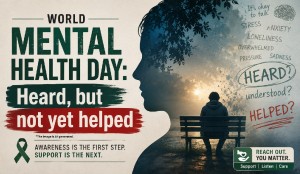
India's mental health conversation has never been louder. On World Mental Health Day, October 10, campaigns flood social media and webinars multiply. Yet in thousands of homes, parents sit alone with a fear they cannot name, a guilt they cannot shake and a system they cannot navigate.
A spectrum nobody prepared you for
Young people can slide from struggling to drowning, and the line is invisible, least of all to those who love them.
It may be a teenager who has stopped eating, a boy in full sleeves in summer hiding cuts, a young adult who hasn't left his room in three weeks, or a daughter hearing voices that aren't there. Whether anxiety, self-harm or schizophrenia, in India the story is shared: confused parents, little support, and a society quick to blame.
The guilt in every home
Then comes guilt. Was it my parenting? Did I push too hard, or not enough? Our culture feeds that voice, treating mental illness as a failure of upbringing. Hear this: schizophrenia, bipolar disorder and clinical depression have strong neurobiological roots. Genetics and environment both matter: academic pressure, peer dynamics, fear of unemployment. A parent's love, however imperfect, did not cause this. Guilt immobilises.
When to worry
Take seriously mood, sleep or appetite changes and withdrawal lasting over two weeks, talk of hopelessness or being a burden, unexplained marks, severe self-neglect, disorganised speech, or hearing things others cannot. If your instinct says something is wrong, trust it. “She seems fine at school” proves little; home is often the only place a struggling child drops the mask.
That is trust, not manipulation.
“Just get help” is not advice
Therapists are listed at Rs 200 to Rs 8,000 a session with no quality filter, and a trained clinician is hard to tell from a weekend-certificate holder. In rural India, families rely on faith healers or silent endurance. A psychiatrist is a doctor who can diagnose and prescribe, essential for schizophrenia or bipolar disorder; a clinical psychologist offers therapy and assessment, so look for Rehabilitation Council of India registration; counsellors suit milder difficulties only. Affordable help exists, such as iCall, run by TISS. Ask providers about their qualifications.
The caregiver nobody sees
Who is finding help for the parent? Caregivers wake at 3 am, cancel meetings, smile through exhaustion and rebuild finances, friendships and careers around a child's illness, most often mothers. Caregiver burnout is clinically documented. Caring for yourself is not a betrayal of your child; it is a prerequisite for caring. Support, whether therapy, peer groups or honest conversation, is treatment.
The awareness we need
This year's World Mental Health Day theme is “Lived Experiences Heard: Real Voices, Real Change.”
This piece is for the parent whose lived experience is rarely acknowledged. India needs trained professionals, regulated online care, services beyond the metros, schools that spot struggling students early, and workplaces that support caregivers. If you know a parent carrying something heavy, don't just send an infographic. Call them. Sit with them. Ask how they are doing.
Gracy Andrew is Head of Training and Mental Health Programs, PHFI's Institute of Public Health Sciences (Deemed to be University), Hyderabad; Views presented are personal.