
Don’t bring Delhi to a halt: SC
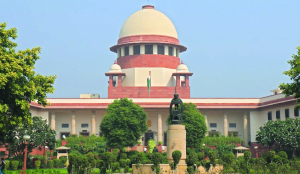
Expressing concern over the restrictions on public transport announced ahead of the Cockroach Janta Party (CJP) protest in Delhi, the Supreme Court on Friday directed the Government to ensure “everything is not brought to a halt” and citizens don’t face difficulties. “You cannot use a hammer to kill a fly,” the court observed.
“We are mainly concerned about the complete closure of metro station entries; we have serious concerns about this,” the Court said, adding, “Take corrective steps keeping in mind difficulties for citizens.”
The Supreme Court said, “The law enforcement agencies have the right to take steps to restrict unruly movement; citizens should not be unduly harassed.” The Court also asked the Government to consider designating an alternative venue to Jantar Mantar for peaceful protests in the national Capital.
A Bench of Chief Justice Surya Kant and Justices Joymalya Bagchi and V Mohana told Solicitor General Tushar Mehta, appearing for the Centre, that the court was concerned with the complete closure of these Metro stations from 9 pm on Friday till further orders, and cancellation of main and express trains.
“One very important principle that we follow for every citizen is the principle of proportionality… You have to prevent certain things. Take measures only to the extent necessary to prevent them.
“But that does not mean you use a hammer to kill a fly. That principle must be kept in mind,” CJI Kant told Mehta.
Solicitor General Tushar Mehta said he understands the concerns of the court and will discuss with the authorities concerned. Still, he said that the remark of the CJI on use of a hammer was just an example and it should not be reported that the Chief Justice of India told the government that it is using a hammer to kill a fly.
CJI Kant said, “Exercise caution in abundance. There is nothing wrong with that. “You are responsible for maintaining law and order. But that responsibility is not merely about protecting the State property; it is about protecting people. That is your sovereign duty.”
The bench said daughters, young children, senior citizens, very old adults, and patients who travel by public transport need protection. “There is absolutely no difficulty with taking appropriate measures. But make sure nothing is brought to a halt. There cannot be complete prohibition,” it said.
At the outset, the bench said it has serious concerns about the orders passed by the authorities regarding the closure of Metro stations in the national capital and the cancellation of trains. “Our concern is not with respect to any protester or any individual. Our concern is the hundreds of thousands of commuters from Gurugram, Greater Noida, East Delhi, and South Delhi who travel to Delhi for their livelihood.
“They are students, employees and senior citizens who travel by public transport. We are speaking on behalf of the common citizens of this city. The law enforcement authorities are certainly entitled to take regulatory measures. There is no doubt about that.
“If you want to restrict unruly movement, you can do so. But that does not mean you can bring everything to a halt and leave people without any transport facility,” it said. Justice Bagchi said that while reducing the frequency of trains and Metro services can be a regulatory measure, the complete closure of services till further orders would be an extreme step.
“You can regulate the frequency of trains, but don’t stop it altogether,” Justice Bagchi told Mehta. The solicitor general said that, depending on the prevailing circumstances, a complete stoppage might be a proportionate measure, and the situation cannot be foreseen in advance, so law enforcement agencies need some leeway.
Justice Bagchi agreed with the contention but flagged that the order issued by the authorities saying that Metro stations will be closed from 9 pm on Friday onwards cannot be a regulative measure. Justice Mohana also raised concerns after lawyers said the entire city was barricaded and police were not allowing free flow of traffic.
“If tomorrow anything untoward happens, who will be responsible? Some measures are required but proportionately,” she said. Mehta said the impression given by the lawyers on the other side that the entire city has been shut down is far from the truth, and claimed the authorities have taken only proportionate measures in view of the violence that followed the July 20 Parliament march attempt by the CJP protesters.
“I have taken instruction, and I am being told that the internet shutdown was only effective in certain sensitive pockets in the vicinity of the President’s House in a radius of 4 kilometres and that too will be reviewed based on the security inputs,” he said.
The bench stated that it is confining the consideration only to the issue of transport services, as none of the parties, who have organised the protest on October 10, were before the court. When advocate Vrinda Grover raised the issue of police visiting mosques and hotels and advising people not to join the protests, the bench told her that it would not go into the issue based on statements made. None of the aggrieved parties was before it.
The bench also asked the Centre to consider designating another location for peaceful protests in place of Jantar Mantar.
“During the course of hearing, it was also suggested, and senior counsel/ counsel for the parties are ad idem that it’s high time that some suitable place where all basic amenities can be provided for peaceful and lawful protestors needs to be identified and designated. Let the competent authority consider the suggestion and take an appropriate decision,” the court ordered.