
Leaders Call for Urgent, Integrated Action to Transform India's Urban Habitats at Urban Adda 2026
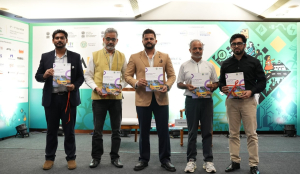
NEW DELHI, October 5, 2026 — Urban Adda 2026 convened today at the India Habitat Centre, uniting senior government officials, global urban experts, corporate leaders, and youth icons to formulate an action-oriented blueprint for India’s rapidly evolving urban landscape. Organized to foster sustainable, equitable, and climate-resilient habitats, the three-day summit opened with a unified commitment to move past administrative silos and execute concrete solutions across clean transport, regional air quality management, street safety, and urban water security.
Coming on the heels of a massive Raahgiri Day street takeover in Connaught Place, the conference opened under the banner of Urban India 2047: Growth, Equity and Resilience. Opening the summit, Nidhi Madan, Director at Raahgiri Foundation, captured the spirit of the gathering as a collective impatience for tangible progress. Panelists reinforced that with over half the global population now inhabiting urban centers, the current decade represents a decisive turning point where the future of public space, clean air, and livability will be permanently defined.
Accelerating Zero-Emission Transport and Regional Airshed Enforcement
A major focus of the summit was unlocking the policy mechanisms necessary to scale electric mobility and eliminate vehicle emissions across whole airsheds rather than isolated municipal boundaries. Bringing together policy leadership to examine clean vehicle execution, speakers stressed that tackling seasonal smog demands uniform policy adoption—such as expanding the model of Delhi EV Policy of mandating zero emission vehicle and stopping the registration of ICE vehicles across all National Capital Region (NCR) states.
Highlighting India’s potential to lead global clean transit transitions, Amitabh Kant, Former G20 Sherpa and Former CEO of NITI Aayog, stated:
"If we can get our policies right, we can electrify at a speed and scale that the world has never seen before. Achieving clean mobility across India requires robust regulatory frameworks, relentless institutional alignment, and an unwavering commitment to scaling zero-emission transport across every state border."
Addressing the structural mechanisms required to enforce clean transport policies across urban corridors, Rajesh Verma, IAS, Chairperson of the Commission for Air Quality Management (CAQM), emphasized:
"Addressing vehicle emissions demands regional enforcement across entire airsheds rather than isolated administrative borders. By ring-fencing high-density corridors, mandating clean fleet transitions, and expanding continuous real-time monitoring, we are building an integrated, accountable system to secure clean air for every citizen."
Reclaiming Streets for Public Health and Future Generations
Beyond vehicle technology, discussions highlighted the imperative of human-centric urban design, street equity, and pedestrian safety. Sessions framed mobility not merely as congestion management, but as a critical economic driver that must prioritize vulnerable road users, active transport, and safe school zones.
Framing the strategic imperative for India's urban transformation over the coming decade, Amit Bhatt, India Managing Director at the International Council on Clean Transportation (ICCT), noted:
"The next decade is the ultimate powerplay for Indian urbanism. The battle for equitable public space will be won or lost in these ten years. By collectively building sustainable, human-centric mobility today, we lay the foundation to realize a truly Viksit Bharat 2047."
Underscoring the fundamental duty to build safer, healthier urban environments for youth, Sarika Panda Bhatt, Co-Founder of Raahgiri Foundation and Director at Nagarro, stated:
"More than half the world now lives in cities, where immense potential awaits. I hope Urban Adda is remembered for its real-world consequences: transforming every school zone into a safe zone, every street into a complete street, and every city into a place where all citizens can truly thrive."
Emphasizing individual ownership, civic responsibility, and the leadership of younger generations, World Cup-winning cricketer and youth icon Suresh Raina remarked:
"Protecting our cities is a shared responsibility that starts with each of us. We must come forward to make this world a healthy haven for our children. Everyone must contribute, and I see a young generation ready to take up that mantle."
Pioneering Knowledge Reports and Grounded Water Solutions
Urban Adda 2026 also served as the launchpad for milestone research and practical toolkits aimed at guiding municipal administrations nationwide:
- Clean Air, Clean Mobility in Heritage Cities: Jointly published by Raahgiri Foundation and the Ministry of Environment, Forest and Climate Change (MoEF&CC), this report establishes a framework for Low Emission Zones (LEZs) across culturally significant cities such as Varanasi, Mathura, Agra, and Jaipur. The study outlines a "3C's Framework" (Clean Air, Convenient Transit, and Congestion-Free Streets) to protect historic sandstone and marble structures from corrosive vehicular pollutants while creating pedestrian-friendly corridors.
- Health Impacts on School-Aged Children: A landmark study by the ICCT examining the direct health burdens of road-transport-related air pollution on adolescents in Gurugram, India, urging the immediate implementation of zero-emission school zones.
- Water-Secure India Frameworks: Hosted by GuruJal during "Towards Water-Secure India: Walking the Talk," water experts called for designing cities around natural hydrological topography and treating communities as active custodians. During the session, GuruJal launched its case study documenting the BSF Campus in Bhondsi, Gurugram, as India’s first water-neutral paramilitary campus, establishing a scalable blueprint for institutional rainwater harvesting, nature-based wastewater treatment, and groundwater recharge.
- Electrifying urban public fleets: A study by ICCT and Maulana Azad National Institute of Technology is the first real-world look at electric buses and garbage trucks operating together in an Indian city, and the numbers are striking. It found that electric buses use 54% less energy per km and electric waste collection trucks use 91% less energy per km than diesel counterparts, with total cost of ownership already favoring electric vehicles in both cases.
A Decisive Roadmap Ahead
By bridging high-level policy mandates with community-led execution, Urban Adda 2026 established a comprehensive blueprint for India's urban future. The summit continues over the next two days with specialized technical roundtables, urban design labs, and collaborative workshops aimed at scaling proven solutions to every city across the nation.
About Urban Adda
Urban Adda is a three-day conference hosted by Raahgiri Foundation and co-hosted by GuruJal and International Council on Clean Transportation (ICCT). This year, the second edition was held on October 5-7, 2026 at the India Habitat Centre. Researchers, policymakers, artists, businesses, young people, and citizens came together with a vision for our urban infrastructure and a path forward.