
UP to Bangkok: Accused in ISI-underworld terror case
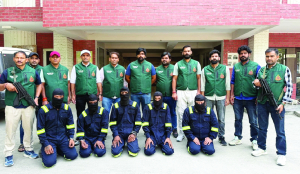
They came from different cities, different States, and different countries. One was 23 and from a village in Mirzapur. Another was 66 and had spent 17 years in a Thai prison on a narcotics charge before emerging to handle money and logistics for a man who once tried to kill Chhota Rajan on Dawood Ibrahim’s orders.
Between them, in age, geography, and criminal biography, lay the full width of the network that Delhi Police’s Special Cell dismantled across multiple states on Friday, eight people who had never, in many cases, met each other, but had been woven together by handlers sitting in Pakistan, Dubai, and Bangkok into a single operational module tasked with carrying out attacks on security installations in India’s capital and beyond.
Their profiles, according to the Special Commissioner of Police Anil Shukla, reveal a network stitched together not from hardened ideological recruits but from young men from economically marginal backgrounds and a transnational criminal web that stretches from Ludhiana to Kathmandu to Bangkok to Karachi.
Vijay alias Shooter, 23, Mirzapur, Uttar Pradesh, the youngest of the accused and the first to be arrested, on May 14 from Pune, Vijay was the module’s primary point of contact for the Shahzad Bhatti network operating from Pakistan and Dubai.
He had been tasked to carry out terror and criminal activities across Delhi, Punjab, Haryana, Rajasthan, and Uttar Pradesh and was also assigned the role of recruiting youth for executing attacks in the Delhi-NCR region. His arrest in Pune, far from his home district, suggests an operative already on active deployment.
Nitish Paswan, 23, of Sahibganj, Jharkhand, was arrested in his home district on May 17. He was Vijay’s associate and was drawn into the network through that connection. His profile, like Vijay’s, is that of a young man from a relatively obscure geography with no prior public criminal history who was pulled into the module through existing contacts.
Taoqeer Rizwan Ahmad Shaikh, 27, Mumbra, Maharashtra, and Sajid Mehboob Shaikh alias Arbaz Khan, 27, Kurla, Mumbai, both arrested from Mumbai on May 27, were recruited by a man named Huzaifa, who remains absconding and was himself working at the direction of Shahzad Bhatti and ISI handlers Yawar Khan and Munna Jhingada. The two had been in direct contact with these handlers and were tasked with carrying out grenade attacks and firing at vital installations, security establishments, and police personnel in Delhi and Mumbai. Both were brought to Delhi after arrest.
Harvinder Singh, 28, Gagandeep Singh, 28, and Manjeet Singh, 23, all from Ludhiana, Punjab, were intercepted on the Mehrauli-Badarpur Road in Delhi at around 1:00 am on May 30 with four Pakistan-made hand grenades, two Glock pistols, and 24 live rounds.
They had been sent to Delhi by the same handlers to carry out attacks on vital installations and security personnel. Two stolen vehicles, a Pulsar motorcycle and a Honda Activa, were also recovered from them. All three are residents of Ludhiana, suggesting a local recruitment chain in Punjab feeding the same cross-border network.
Lama Ang Kami, 66, Kathmandu, Nepal, the most unusual profile in the group. The Nepali citizen was arrested after interrogation of the Punjab-based accused pointed to him as the logistics and finance coordinator in Delhi. He had been tasked by Munna Jhingada to arrange a hideout for the operatives and fund their activities.
Ang Kami’s connection to the network traces back to a Thai jail. He was imprisoned in Thailand from 2001 to 2018 in a narcotics case, during which he shared incarceration with two Pakistani nationals, Aizaz Rasool and Md Salim alias Munna Jhingada. After his release, he maintained contact with Jhingada, who is identified in the press release as a known associate of Dawood Ibrahim and the man who carried out an attack on rival gangster Chhota Rajan in Bangkok in 2000 at Dawood’s behest. Jhingada spent 17 years in a Thai jail for that crime.
That two people in this case, Ang Kami and Jhingada, share a Thai prison background and a criminal bond formed there is among the more striking details of a case whose human geography spans four Indian states, Nepal, Pakistan, Dubai, and Bangkok.