
UP redraws India’s innovation map
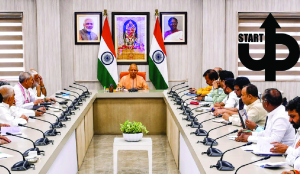
Driven by bold policy interventions, world-class digital infrastructure and a long-term vision for technology-led growth, Uttar Pradesh is positioning itself at the forefront of India’s next startup revolution.
India’s innovation geography is undergoing a profound cartographic shift and it is being redrawn from the heartland. For decades, the country’s startup map was a narrow coastal corridor, with the Hindi belt treated as little more than a reservoir of engineers who built wealth for different states. A state once defined by demographic scale rather than economic ambition is no longer exporting talent alone. Under the visionary leadership of Chief Minister Yogi Adityanath, it intends to retain, nurture and scale its human talent pool into billion-dollar enterprises.
With over 21,000 recognised startups, eight unicorns, UP has now India’s fourth-largest startup ecosystem. This rise is not an accidental byproduct of a global liquidity boom but a mature and futuristic understanding of Yogi Adityanath’s leadership. To build on this, the Uttar Pradesh Startup Policy 2026 represents a structured attempt to transform the state into one of India’s leading innovation hubs in emerging technologies such as Artificial Intelligence, Quantum Computing, Blockchain and other deep-tech domains, as well as in priority sectors including Agri-Tech, Rural-Tech, Space-Tech, Defence-Tech, Edu-Tech, Health-Tech, thereby positioning Uttar Pradesh among the top start-up ecosystems in India. At the centre, the policy provides a wide range of incentives, which include sustenance allowances at the rate of Rs 20,000 per month, prototype grants of up to Rs 10 Lakhs, seed capital of a maximum Rs 15 Lakhs per startup, and matching grants. These ensure that startups can survive the volatile early stages of their development.
Further, these measures are complemented by reimbursements for quality certifications, patent filings, bank loans, network support, interest subvention to boost ecosystem growth, handle operational costs and encourage formal employment. Importantly, the policy distinguishes between service-based ventures and those with genuine technological innovation, ensuring resources are more directed toward deep-tech startups capable of creating scalable impact. In this regard, the policy enables enhanced incentives, including “Patience Capital” of up to `40 crore per startup, royalty-based R&D matching grants and compute power reflect the state’s ambition to lead in frontier technologies like AI, quantum computing and blockchain.
To complement the larger goal of catalysing the growth of an innovation-driven entrepreneurial ecosystem, Uttar Pradesh government has also rolled out its Data Center Policy 2026, which reinforces the state’s vision of becoming a green, AI-ready and globally competitive data centre hub. The policy targets over Rs 2 lakh crore in investments and the development of an additional 2 GW of data centre capacity while creating around 50,000 indirect job opportunities.
With a strong focus on Graphic Processing Units (GPU)-based infrastructure, energy efficiency, AI compute and sustainable operations, the policy offers dedicated incentives for Tier/Ratings 3 and 4 data centres, positioning UP alongside Karnataka, Maharashtra and Andhra Pradesh and challenging their dominance in India’s rapidly expanding data center market.
Together, both the policies aim to catalyse the growth of an innovation-driven entrepreneurial ecosystem, leveraging its demographic dividend, expanding industrial base and knowledge ecosystem.
In essence, the Startup Policy 2026 and Data Centre Policy 2026 are not just a set of incentives but a systemic blueprint which is designed to nurture startups from idea to scale, embed them within the state’s economy and position Uttar Pradesh as a frontrunner in India’s innovation-driven future.
A notable aspect of the Uttar Pradesh’s government’s vision is its focus on inclusivity, sustainability and ensuring regional balance. For this, additional incentives are extended to women-led startups such as additional grants and 25 percent of incubation seats in incubators for women, to promote women entrepreneurship. Similarly, additional incentives for start-ups registered in Purvanchal/Bundelkhand region include provisions for capital grants, ensuring that innovation is not concentrated in urban centres but decentralized. The establishment of district-level innovation clusters, linked to ODOP industries, further embeds entrepreneurship into local economies. In the same vein, 50 per cent additional grant and subsidies for start-ups in agri-tech, renewable energy, clean technologies, health and waste management reflect a forward-looking vision of the state. These measures collectively build a pipeline of ventures that can scale while remaining anchored in Uttar Pradesh.
As the Chief Minister aptly noted, when technology is infused with ‘samvedna’ (empathy) and policies with navachaar (innovation), development becomes truly inclusive. This is tech-led social justice at its best.
Dedicated towards the goal of 1 trillion USD economy and project UP as a premiere investment destination, Chief Minister Adityanath visited tech giants like Google Cloud, NVIDIA, and marquee venture capital firms in Bengaluru visit, signalling maturation in its economic thinking and base readiness of the state in welcoming capital and expertise.
Rather than losing talent to Bengaluru, Mumbai or Gurugram, UP is making serious efforts to draw them back. The government has smartly transitioned its role from being the primary investor to a highly effective derisking agent that crowds in private venture capital. In doing this, Uttar Pradesh has successfully shattered the glass ceiling that once confined its economic ambitions.
To complement the larger goal of catalysing the growth of an innovation-driven entrepreneurial ecosystem, Uttar Pradesh government has also rolled out its Data Center Policy 2026 which reinforces the state’s vision of becoming a green, AI-ready and globally competitive data centre hub
Shehzad Poonawalla is National Spokesperson, Bharatiya Janata Party & Dr Vijeta Rattani is Development and Sustainability Professional; Views presented are personal.