
Jantar Mantar: Protests withdrawn, legal questions remain
At a time when the national Capital was heavily volatile and facing severe unrest, remarks stating that the court had “no time to watch video evidence” appeared dismissive
The protest movement at Jantar Mantar, New Delhi, was officially withdrawn after Education Minister Dharmendra Pradhan tendered his resignation on Saturday, July 25, from the Union Council of Ministers.
This followed a 26-day hunger strike by activist Sonam Wangchuk, who had called off his fast a day earlier on Friday, July 24, 2026, at a private hospital in Gurugram following high-level Government negotiations. With these developments, the Government successfully stepped forward to defuse the intense standoff witnessed earlier in the week.
Hopefully, peace will prevail, and normalcy will return to the heart of the national Capital as Parliament commences its daily business from July 27 to deliberate on the pressing issues of the nation.
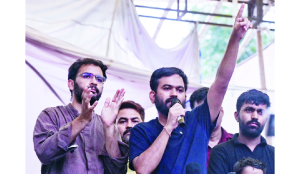
The events that unfolded on July 20 — when a call was given for a ‘Sansad Chalo’ march coinciding with the start of the Parliament session — truly speak for themselves. The clashes and tense incidents that took place at Jantar Mantar and surrounding areas drew conflicting narratives, ultimately prompting the top-level political interventions needed to calm the situation.
Efforts were also made to draw the attention of the judiciary to the matter. The judicial interventions surrounding Wangchuk’s protest and subsequent hospitalisation involved multiple petitions filed before the Delhi High Court.
A Public Interest Litigation (PIL) was filed seeking urgent medical intervention and daily health supervision by Government doctors given his prolonged indefinite hunger strike.
Following the Ladakh-based activist’s removal from the Jantar Mantar protest site and his admission to Safdarjung Hospital, his wife moved the court challenging the shifting, alleging it amounted to “illegal detention” and a violation of his bodily autonomy.
An appeal was subsequently filed to transfer Wangchuk from the Government-run Safdarjung Hospital to Medanta Hospital in Gurugram, which the High Court ultimately permitted to protect his fundamental rights and well-being.
Additional PILs were presented before the High Court addressing matters related to the ‘Sansad Chalo’ march mayhem, requests for First Information Reports (FIRs) or Special Investigation Teams (SITs) regarding the police action, and security or surveillance issues at the protest site.
The sequence of events shifted briefly to the Supreme Court when an urgent mention was made seeking immediate intervention regarding the police crackdown on protesters.
Initially, the Supreme Court displayed reluctance to entertain the plea. During the hearing, the Chief Justice of India (CJI) declined an urgent listing, remarked that the court did not have time to watch video evidence of the incident, and firmly instructed counsel not to waste the court’s time, sparking widespread controversy and debate across media platforms.
However, the very next day, a formal clarification came directly from the CJI in open court. The CJI dismissed certain media reports as reckless, clarifying that the court had not technically “refused” to hear a proper petition, as no writ petition had actually been filed at that stage — only an informal letter representation.
The bench emphasised that matters of such magnitude require strict adherence to proper procedural filings rather than oral mentions or informal requests. The CJI was also seen on electronic media making this clarification.
However, when the matter was first mentioned, the Chief Justice could have handled it with greater sensitivity. On the first day, standard judicial procedure simply required advising the lawyer to file a proper, formal writ petition rather than dismissing the urgency outright.
At a time when the national Capital was heavily volatile and facing severe unrest, remarks stating that the court had “no time to watch video evidence” appeared dismissive. Such casual brush-offs during a public crisis can deepen distress and alienation among citizens seeking timely justice.
A person sitting at such an exalted constitutional position is naturally expected to stay informed about critical developments from mainstream media or administrative sources. Total detachment from ground realities during widespread civil tension risks projecting institutional indifference when public reassurance is needed the most.
Despite this friction, the Supreme Court’s decision to take up the matter has offered reassurance. It signals to the public that the broader questions surrounding the protest will finally receive thorough judicial scrutiny.
Though the protest movement has been withdrawn, the judiciary is expected to examine the delicate line between the fundamental right of citizens to peacefully assemble and the State’s duty to maintain public safety and order.
Deliberations will likely focus on whether law enforcement agencies used reasonable crowd-control measures or excessive force during the mobilisation.
The legal boundaries surrounding emergency hospitalisation, medical supervision, and the preservation of life during prolonged hunger strikes will be scrutinised.
The judiciary’s review will aim to address systemic grievances and executive transparency, reinforcing public confidence in constitutional remedies.
The Foreign Funding and Conspiracy Claims need to be scrutinised. Statements by ruling political figures and a section of the media alleged that the agitation was not merely a student protest but part of a larger conspiracy, backed by foreign organisations and external funds, to destabilise the Capital.
If these conspiracy and funding angles are pushed during formal hearings, the judiciary will have to separate speculative narratives from concrete, verifiable evidence to ensure that national security laws are not misused to suppress legitimate dissent.
At the same time, proponents of the Government’s stance maintain that the state has a binding sovereign duty to investigate external funding channels and safeguard internal security.
From this perspective, rigorous administrative scrutiny and adherence to financial transparency laws like the FCRA are vital defences against foreign interference, ensuring that domestic civil movements remain indigenous, lawful, and free from malicious external manipulation.
Ultimately, a balanced judicial approach will be key to addressing these complex layers. By upholding both national security imperatives and constitutional freedoms, the legal system can ensure that justice is served fairly, transparency is maintained, and public trust in democratic institutions is firmly preserved.
Writer is a senior journalist covering legal affairs; Views presented are personal.