
The Karmayogi in the age of AI: Why ethics must be the operating system of governance
Something remarkable happened in India over the past decade that we often forget to tell ourselves. We built digital public infrastructure at a scale no other country has achieved-and made it available to everyone, not as a commercial product, but as a public good. Aadhaar gave over a billion people a digital identity. UPI now processes over ten billion transactions a month. When the pandemic came, we delivered vaccines to a billion people using architecture that existed only because we had built it over the previous decade.
This is not merely a technology story. It is a governance story — a testament to what happens when administrators, engineers, and policymakers work together with clear purpose. And it is a story that every civil servant should carry with pride. But as we stand at the threshold of the next transformation-the age of artificial intelligence — we must ask ourselves a fundamental question: What will be our intelligence layer?
The answer will shape how citizens experience the state more fundamentally than anything we have done so far. Imagine a future where a citizen interacts with Government through a conversation in their own language. They state their need. The system pulls their data, checks eligibility, processes the application, and delivers the outcome. Implementation time shrinks from months to seconds.
This is not speculation. Every element is technically possible today. What is missing is not technology. What is missing is will, design, and coordination. And that is our job. But here is what I want to stress most strongly: AI in governance is not primarily a technology project. It is a reimagining of what governance is. We have traditionally thought of ourselves as file-pushers, scheme-deliverers, gatekeepers, controllers. The officer of the next decade must be a problem-solver, a platform-builder, an enabler, a data-informed practitioner. And above all, the human in the loop.
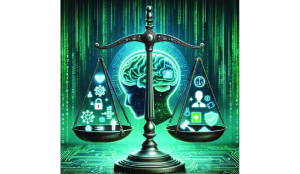
You might think that AI reduces the scope for human error, and therefore reduces the need for human ethics. The opposite is true.
Consider three dangers. First, the black box problem. If a citizen asks why their application was rejected, the answer cannot be “the algorithm said so.” That is not acceptable in a democracy. Second, algorithmic bias at scale. AI does not just replicate human bias-it scales it. If training data reflects historical patterns of exclusion, the system will systematically exclude. Third, the outsourcing of judgment. If AI recommends Policy A over Policy B, it becomes difficult even for elected representatives to choose otherwise. Decisions get subtly shifted from those we elected to systems no one elected. AI must remain a tool. It can inform, advise, recommend. But accountability-the accountability fundamental to democratic governance-must remain human.
Think of governance as a computing system. The hardware is our constitutional framework. The application layer is what citizens experience-forms, queues, files, and tomorrow, intelligent interfaces. But the operating system is the set of values that determines how everything runs. Ethics is the operating system of governance. You can have the best applications in the world, but if the operating system is compromised, everything above it becomes dangerous. This is why the Karmayogi of the future must be both ethically grounded and technologically fluent. Not one or the other. Both.
What does this mean practically? Integrity must be architectural, not incidental-designed into systems from the beginning. Impartiality must be tested, not assumed. Accountability must be personal-there must be a named human being answerable for every automated decision. Transparency must be real, not performative. The citizen must be able to understand why a decision was made about their life.
And the fundamental principle must be this: The measure of technology is not how sophisticated it is, but how much it improves the life of the common citizen. Not the citizen with the loudest voice. Not the citizen with the best lawyer. The citizen at the very bottom.
We cannot build this future alone. The state is essential but cannot be the source of every idea. We need scientists, engineers, entrepreneurs, students, researchers. We need to shift the relationship between Government and innovation from regulator-regulated to partner-partner.
This is not a new idea. It is the oldest idea in our civilisation. Kautilya wrote in the Arthashastra that in the happiness of the subjects lies the happiness of the king. The Bhagavad Gita teaches Nishkama Karma-duty without attachment to reward. The Karmayogi is not defined by rank but by purpose-one who governs the self before governing others, who serves the citizen not because the rule requires it but because conscience demands it.
Technology can process data, optimise systems, predict outcomes. But technology cannot replace compassion. I have seen officers do extraordinary things-not because the rulebook required it, but because their conscience did. That is the heart of public service. No algorithm will ever replicate it. The age of AI is not the age of less humanity. It is the age of more humanity. Because the more machines can do, the more human qualities-empathy, judgment, courage, integrity-become the differentiator.
You are the differentiator.
Years from now, your legacy will not be measured in files processed or revenue collected. It will be measured in trust built. Whether citizens felt the Government was fair to them. Whether your juniors learned what integrity looks like in practice. Whether the systems you built continue to serve long after you have moved on.
The Arthashastra tells us that the science of governance is the science of conducting the world. Let us conduct it well. Let us govern with integrity, in the age of intelligence. Let us build systems that are efficient, but also just.
Let us be the Karmayogis who shape this new era.
The author is an IRS officer and chairman of Pan IIT Alumni India; Views presented are personal.