
The Freebie reckoning: How cash-for-votes politics is fuelling a global debt trap
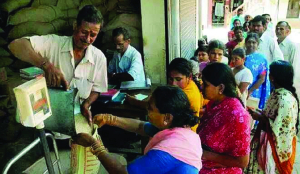
Freebies have become political currency worldwide, and the currency keeps changing denomination. In India, what began with free electricity, water and bus travel has expanded into bicycles, scooters, mangalsutras, laptops and tablets - doled out by parties that once opposed such schemes on principle, all in the name of “public welfare.” The habit has now crossed the Pacific. US President Donald Trump has proposed handing every American adult $5,000, contingent on his Republican Party retaining control of both the House and the Senate in the midterms.
Strip away the packaging, and the message to voters is blunt: back Trump’s party, collect a cheque.
There is a bitter irony here. Agencies tied to the United States have long marked down Indian democracy despite its peaceful transfers of power, free press, and independent judiciary - even as those same agencies have recently begun downgrading America’s own democratic score. Now Trump’s direct cash-for-votes offer raises an uncomfortable question worldwide: will elections turn on development, clean governance and constitutional rights, or on who pays more? If Democrats respond by topping Trump’s offer, the rivalry will not stay at the national level - it will filter down to state and local races too, exactly as it has in India, where the strain such competition places on public services offers a preview of what it eventually costs.
India’s freebie economy is concentrated in a familiar list of states - Punjab, Andhra Pradesh, Karnataka, Telangana, Rajasthan, Kerala, Madhya Pradesh and Tamil Nadu. Comptroller and Auditor General data for 2024-25 shows Punjab, Karnataka, Madhya Pradesh and Tamil Nadu each spending over 13.5 percent of total government expenditure on such schemes.
Tamil Nadu and Delhi are cited most often, but their books don’t show the same strain: Delhi’s per capita government revenue is more than double the national average - an indirect result of per capita income also more than twice the national figure - and Tamil Nadu sits in a broadly similar position, a cushion most states simply don’t have.
Even the BJP, historically the loudest critic of freebie politics, has fallen in line - not just matching rival schemes but publicising its own versions to shift the political calculus, from Madhya Pradesh’s Ladli Behna Yojana to Delhi’s Mukhyamantri Mahila Samman Yojana.
The party frames these as more disciplined - Delhi’s version, unlike AAP’s, is restricted to economically weaker women, even as the BJP has quietly kept AAP’s free power and water in place. Principle, it turns out, is negotiable once a rival’s scheme starts working - a case study in political compulsion overriding fiscal caution.
The real cost shows up in the debt numbers. In 2010-11, combined Centre-and-state debt stood at 65.6 percent of GDP - a figure adjusted for transactions between the two layers of government, so it isn’t double-counted - with the Centre accounting for 48.6 percent and states for 23.5 percent. By 2024-25 that combined figure had climbed to 81.9 percent, with the Centre at 57.5 percent and states at 28.5 percent.
The distribution matters as much as the total: states leaning hardest on freebies carry debt-to-GSDP ratios far above the national picture - 47.3 percent in Punjab, 44 percent in Himachal Pradesh, 38 percent in West Bengal, 37 percent in Kerala, 36 percent in Rajasthan, and 34.7 percent in Andhra Pradesh. That kind of debt load eats into fiscal space, inflates interest obligations, and crowds out productive investment.
What should alarm policymakers is the pace, not just the level. Between 2010-11 and 2018-19, India’s total debt crept from 63.6 percent to 66.5 percent of GDP - barely moving. That it then jumped to 81.9 percent within seven years reflects both the pandemic shock, which briefly pushed combined liabilities to 88.7 percent in 2020-21, and a freebie-driven spending pattern that has kept debt elevated well after the emergency passed. Even now, the country sits far above its 2010-11 baseline - and state governments, not the Centre alone, are driving a meaningful share of the increase.
The United States is not immune to the same arithmetic, and arguably has less room to spare. Its debt-to-GDP ratio has risen from 95.7 percent in 2010-11 to 123.9 percent in 2025, with the IMF projecting 141.5 percent by 2030. Against that backdrop, Trump’s $5,000 pledge is estimated to cost the federal budget $1.2 to 1.3 trillion. Trump insists tariffs will cover the bill, but independent estimates put tariff revenue at a ceiling of roughly $195 billion - leaving close to $1 trillion to be absorbed by the federal budget, and by extension US government debt, pushing it up by a further 2 to 3 percentage points.
India offers the preview; the United States may be about to live the sequel. Once cash offers replace policy debate as the currency of elections, the competition rarely stays contained - it moves from the centre to the states, from one party’s ledger to its rival’s, until governments of every stripe are borrowing against the future to win the present. The fiscal reckoning that follows is not abstract: it shows up as debt states can’t service, investments that never get made, and less room to respond to the next genuine crisis. Democracies that let elections be auctioned this way are not so much choosing their leaders as mortgaging them. That is a bill voters, not politicians, eventually pay - and unless the debate returns to development, governance and public amenities rather than who hands out more, it deserves a far louder public reckoning than it has received so far.
The writer is the National Co-convenor of the Swadeshi Jagaran Manch and a former Professor at PGDAV College, University of Delhi; Views presented are personal.