
The entrepreneurs building a self-reliant India
India has long been home to millions of skilled micro-processors making distinctive local products. What many of them lacked was affordable finance, modern technology, quality certification and a way into organised markets
When the COVID-19 pandemic disrupted lives and livelihoods in 2020, Prime Minister Narendra Modi recognised that recovery had to reach beyond large industry. It had to reach the smallest producers and enterprises, especially those working in India’s villages and small towns.
The Pradhan Mantri Formalisation of Micro Food Processing Enterprises Scheme was launched that year under the Aatmanirbhar Bharat Abhiyan with this purpose. It began with a part of the food economy that had long remained outside formal finance and institutional support: the micro-processor already producing, selling and employing a few people, but without the capital or guidance needed to grow. The scheme reflected a conviction the Prime Minister has consistently held, that India’s growth must begin at its base, among people willing to build enterprises of their own.
The credit-linked component of PMFME has now crossed two lakh sanctions. The milestone matters because of the people behind it, entrepreneurs who have entered the formal credit system and secured a real chance to build. It is an achievement worth celebrating, and a moment to honour those who made it possible.
The first of them was Jamnalal Patidar, whose application was the very first sanctioned under PMFME. A tenth-pass entrepreneur with no background in food processing, he began a coriander-processing unit with an investment of Rs 10 lakh. With the scheme behind him, he gained access to finance, machinery and guidance, and his idea grew into a working enterprise that today employs more than five people.
His story makes a simple point. Enterprise is not the privilege of the well-born or the well-schooled. It turns on whether a person with an idea can find the finance, technology and support needed to act on it. By enabling ordinary Indians to build enterprises and employ others, PMFME is carrying forward the Prime Minister’s vision of turning job-seekers into job-creators.
India has long been home to millions of skilled micro-processors making distinctive local products. What many of them lacked was affordable finance, modern technology, quality certification and a way into organised markets. The scheme was built to close those gaps together, through credit-linked assistance, capacity building, common infrastructure, branding and market linkage, and to bring informal enterprises into the formal economy where they have a real chance to grow.
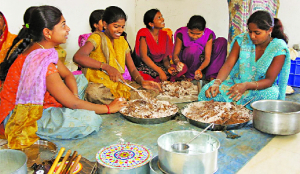
Women have been among the principal drivers of this change. Nearly 44 per cent of the two lakh credit-linked sanctions have gone to enterprises led by women, while more than four lakh Self-Help Group members have received seed capital to strengthen and upgrade their businesses. The scheme as a whole has drawn more than Rs 20,300 crore in investment and enabled close to six lakh livelihood opportunities. More than 75,000 units have entered the formal economy through Udyam registration and compliance under FSSAI and GST. For many women, this has meant turning skills practised within the household or community into recognised enterprises with access to finance, technology and wider markets. Helping many more make that transition must remain central to the phase ahead.
Behind each of these numbers is a wider gain. A working enterprise buys a farmer’s produce, cuts the loss that once followed every harvest, and keeps more value close to where it is made. A local crop becomes a branded product. A household skill becomes steady employment. In time, a district comes to be known for what it makes. This is Vocal for Local in practice, one enterprise at a time.
The sanction that carried PMFME to two lakh went to Inderjeet Singh of Ranchi, who is building a bakery and dreams that his cakes and pastries will one day be known across Jharkhand.
Like Patidar before him, he begins with a small venture and a large ambition, and he begins with the scheme behind him. He is one of thousands of first-generation entrepreneurs PMFME is now carrying from a first sanction towards a thriving enterprise. If Patidar shows how far this journey can travel, Singh shows that it is still gathering pace.
That is the shape of the road ahead. Opening formal credit to micro-processors was the first task, and the harder, more rewarding one is to help each sanction become a disbursed loan, and each loan a business that trades and endures. A sanction opens the door; our work is to help every entrepreneur walk through it and build something that lasts.
This must define the next phase of PMFME. We will get credit to promising enterprises faster, help them adopt better technology and packaging, widen their access to markets, and prepare many more of them to reach buyers at home and abroad. And we will stand with our entrepreneurs after the sanction, not only before it, with the steady support that turns a first loan into a lasting livelihood.
Taken together, these two lakh sanctions are far more than an administrative milestone. Each enterprise that takes root strengthens the economy around it. It buys from nearby farms, creates income closer to home, and gives more women and young Indians the confidence to build businesses of their own.
When we look at Patidar’s coriander unit, the lesson is simple. The first sanction under PMFME went to a man with no established factory and no specialised degree. What he had was an idea and the will to work; what the scheme gave him was access. Two lakh sanctions later, that opportunity has reached entrepreneurs across the country. Our task now is to help more of them build businesses that survive, employ others and create value where they begin.
The Pradhan Mantri Formalisation of Micro Food Processing Enterprises Scheme was launched that year under the Aatmanirbhar Bharat Abhiyan with this purpose. It began with a part of the food economy that had long remained outside formal finance and institutional support
The writer is the Union Minister for Food Processing Industries; Views presented are personal.