
Contempt plea in SC alleges Delhi metro station closures, train cancellations violated court order
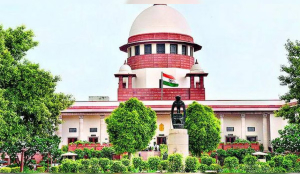
A contempt petition has been filed in the Supreme Court alleging that authorities continued to restrict Delhi Metro and railway services despite the court's October 9 order directing that there should be no complete prohibition on public transport in view of protests planned in the national capital.
The petition, filed by advocate Shailendra Mani Tripathi, seeks contempt proceedings against Union Home Secretary Govind Mohan, Delhi Police Commissioner Anurag Kumar and Delhi Metro Rail Corporation (DMRC) Chairperson D Thara for allegedly wilfully disobeying the court's directions.
Tripathi, who was among the petitioners seeking an independent probe into violence during the July Jantar Mantar student protests, alleged that arbitrary metro station closures and train cancellations had caused severe inconvenience to commuters and disrupted public life.
The petition claimed that the restrictions continued despite the Supreme Court directing authorities to allow public transport to operate in a regulated manner, rather than impose a blanket shutdown.
The plea stated that the authorities had maintained restrictions across transit corridors and failed to issue transparent traffic and transport advisories, allegedly leaving essential travellers stranded and undermining the authority of the court.
The contempt petition arises from the Supreme Court's October 9 order in MA Baby v. Union of India. A bench comprising Chief Justice of India Surya Kant and Justices Joymalya Bagchi and V Mohana had considered restrictions on metro and railway services in view of the proposed protests at Jantar Mantar against Chief Election Commissioner Gyanesh Kumar.
The court took note of Delhi Police communications directing the DMRC to close 57 metro stations and another communication concerning the cancellation of Mail and Express trains scheduled to arrive at New Delhi and Hazrat Nizamuddin railway stations.
Observing that the notifications appeared to be “overreaching” because they amounted to a complete ban on essential public transport, the court clarified that there should be no outright prohibition on the movement of metro trains. It allowed authorities to regulate operations in a manner consistent with the principle of proportionality.
In his petition, Tripathi claimed that he visited GTB Nagar and Vishwavidyalaya metro stations around 9.30 pm on October 9 and found their entry gates closed, while exits were being permitted through manually regulated gates.
He alleged that Gate No. 2 at GTB Nagar station was locked and that Gates 1 and 3 were also closed or regulated to allow passengers to exit. The petitioner said he had recorded a video of the situation and could provide it along with real-time location details.
The plea also referred to an announcement on the DMRC's official X account stating that entry and exit at the affected stations would remain closed from 9 pm on October 9 until 6 pm on October 10, subject to review by security agencies.
According to the petition, the number of stations proposed to be closed was subsequently reduced from 57 to 45, but restrictions remained in place.
Tripathi further claimed that he visited Jantar Mantar and nearby areas around 8.30 pm on October 9 and found only police and paramilitary personnel present. He questioned the justification for continuing the restrictions on metro station access.
As an interim measure, the petition seeks directions to revoke blanket prohibitory orders affecting metro and rail services.