
SC to form special bench on OBC creamy-layer rules for 2025 Civil Service Exams
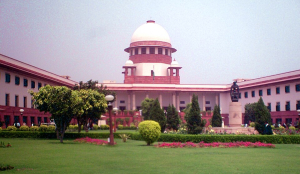
The Supreme Court on Tuesday agreed to constitute a special bench to consider the Centre's request for directions on how its March 11 judgment on OBC creamy-layer criteria should apply to candidates of the Civil Services Examination (CSE) 2025.
The Centre wants to proceed with service allocation for the 958 candidates recommended by the UPSC using the creamy-layer criteria that were applied when the examination process was conducted. The government says changing the criteria after the selection process ended could disadvantage candidates who made decisions based on the rules that existed at the time.
The issue has arisen because the Supreme Court's March 11 judgment in Union of India vs Rohith Nathan came five days after the UPSC declared the final CSE 2025 results. The judgment changed how the government must assess OBC creamy-layer status in cases involving parents employed in public sector undertakings and the private sector.
What did the Supreme Court rule in March?
The dispute centres on how the OBC creamy layer is identified.
The creamy layer refers to the relatively socially advanced sections within OBC communities who are excluded from the benefits of OBC reservation. The framework for determining who falls within that exclusion was laid down through a Sept. 8, 1993 Office Memorandum, issued following the Supreme Court's landmark Indra Sawhney judgment.
The 1993 rules contain different categories for determining exclusion. They consider factors such as the status of a parent's government post and an income or wealth test. The framework also extends relevant criteria to parents working in PSUs, banks, universities and private organisations where comparable posts can be established.
In 2004, the government issued a clarificatory letter that led to salary income of parents working in PSUs and the private sector being taken into account for the creamy-layer test.
In the Rohith Nathan case, the Supreme Court held that salary or income of a parent working in a PSU or private-sector organisation cannot, by itself, determine that the child falls within the creamy layer. The parent's post and status must also be considered, along with the applicable income and wealth criteria.
The court also held that the 2004 clarification could not override the framework established by the 1993 Office Memorandum.
Why does this affect CSE 2025?
The timing of the judgment is central to the Centre's plea.
The CSE 2025 notification was issued on Jan. 22, 2025. The preliminary examination was held on May 25, followed by the main examination from Aug. 22 to 31.
The UPSC announced the final result on March 6, 2026, recommending 958 candidates for the IAS, IFS, IPS and other central services.
Five days later, on March 11, the Supreme Court delivered its judgment in Rohith Nathan.
The Centre says candidates had already made decisions about their applications and category status under the interpretation that prevailed during the examination.
For example, a candidate whose parent worked in a PSU or private company and whose income exceeded the applicable ceiling could previously have been treated as falling within the creamy layer. Such a candidate may have applied as a general-category candidate instead of seeking OBC non-creamy-layer benefits.
Others may have decided not to apply for the examination at all because they believed they were ineligible for OBC benefits.
OBC non-creamy-layer candidates can also receive benefits such as age relaxation and additional attempts in the civil services examination. A candidate who did not apply as OBC cannot necessarily recover those opportunities after the examination has concluded.
The Centre's argument
The Centre says applying the March 11 ruling retrospectively could create two groups of similarly placed candidates who acted differently based on the same rules.
A candidate who applied under the OBC category could potentially have their status reassessed under the new interpretation. But a candidate who never applied as OBC would have no equivalent opportunity to change their category after the examination.
The government therefore argues that mechanically applying the new interpretation to CSE 2025 could itself produce unequal treatment.
It has invoked the principle of prospective overruling, asking the court to consider the fact that the CSE 2025 selection process had already concluded before the March 11 judgment.
The Centre has stressed that it is not asking the court to dilute or overturn the judgment. It is seeking directions on how the judgment should be implemented for this particular examination cycle.
Why is the matter urgent?
The government has also pointed to the timing of the CSE 2025 batch's training.
The Foundation Course at the Lal Bahadur Shastri National Academy of Administration (LBSNAA), Mussoorie, is tentatively scheduled for the last week of August.
Any delay in finalising service allocation could affect cadre allocation, seniority, pay fixation and training schedules across the IAS, IPS and other central services, according to the Centre's application.
The government has therefore asked permission to finalise service allocation for the 958 UPSC-recommended candidates using the OBC creamy-layer criteria that were applied before the March 11 judgment.
The Supreme Court's decision to consider a special bench does not mean the Centre's request has been accepted. The question of how the March 11 judgment will apply to CSE 2025 remains to be decided.
(Inputs from PTI)
Leave a Comment
Comments (1)
Only the income and salary should be the only criteria for determining the creamy layer. he Rohith Nathan case, If other things or criteria are added, they will add to more confusion and corruption. The Supreme Court should held that salary or income of a parent working in a PSU or private-sector organisation, by itself, determine that the child falls within the creamy layer. The parent's post and status must also be considered, along with the applicable income and wealth criteria.