
Saudi Arabia turns to Israel for intelligence help against Houthis as Pakistan's defence pact falls short
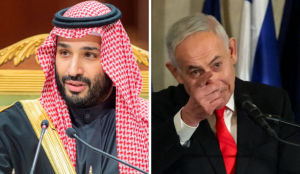
Saudi Arabia and Israel have held talks mediated by the U.S. Central Command (CENTCOM) aimed at providing Riyadh with intelligence assistance to counter an intensifying campaign of Houthi attacks, regional diplomatic sources have confirmed — an outreach that comes even as Saudi Arabia's own defence pact with Pakistan has so far yielded no direct military support.
According to reports citing diplomatic and security officials in the region, Saudi Crown Prince Mohammed bin Salman had reached out to several countries across the Middle East — and, indirectly, to Israel — seeking help as the kingdom faces mounting setbacks against the Houthis. The approach to Israel is understood to have gone through CENTCOM rather than direct contact, with the request centred on intelligence support rather than any Israeli combat role.
The push for outside help comes amid a sharp escalation in Houthi attacks over the past week, including a drone strike on oil pipelines that forced a partial pipeline shutdown, and an attack on Saudi civilians inside a mosque near the Yemen border. The Houthis have also reportedly seized islands in the Red Sea and blocked Saudi vessels from the Bab al-Mandab Strait. On Tuesday, the threat radius reportedly widened to include the Mecca area for the first time, with alerts activated in Jeddah, Taif, Abha, Jazan, AlUla and Yanbu. A Saudi-led coalition said 13 civilians were injured in strikes on Khamis Mushait, Abha and Taif.
Why Pakistan hasn't stepped in
The Israel outreach is notable given Saudi Arabia's own Strategic Mutual Defence Agreement (SMDA) with Pakistan, signed in September 2025, under which any attack on either country is to be treated as an attack on both — a commitment later folded into the broader trilateral Mecca Joint Defence Agreement with Turkey. Pakistan has already deployed several thousand troops, fighter aircraft, drones and an air-defence system to Saudi Arabia under the pact.
Yet despite the pact's language, Islamabad has stopped short of direct military action against the Houthis. Pakistan's foreign ministry spokesperson Sajjad Haider Khan said on September 10 that while the defence agreement exists, "there is no discussion" currently of using it against the Houthis specifically. Officials from Saudi Arabia, Pakistan and Turkey have reportedly agreed that any response would be conducted solely from Saudi soil, with forces not entering Yemeni territory — reflecting Pakistan's stated position that its role remains defensive and limited to support within Saudi borders. Analysts have pointed to Islamabad's delicate balancing act between its Saudi alliance and its relationship with neighbouring Iran, as well as gaps in inter-military planning and interoperability among the three pact countries, as reasons the agreement has not translated into direct Houthi-facing action.
That gap appears to be part of what is now pushing Riyadh toward alternative channels — including the CENTCOM-mediated approach to Israel — for the kind of targeted intelligence support its existing regional pact has not yet delivered.