
NIA files 7,500-page chargesheet in Red Fort Blast case that killed 11
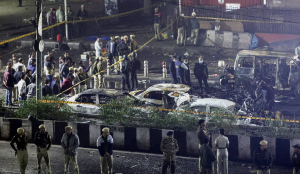
The National Investigation Agency (NIA) has filed a massive 7,500-page chargesheet against 10 accused in connection with the deadly blast near Delhi’s Red Fort on November 10, 2025, which killed 11 people and injured several others.
The chargesheet was submitted before the NIA Special Court at Patiala House Courts in New Delhi under multiple provisions of the Unlawful Activities (Prevention) Act (UAPA), Bharatiya Nyaya Sanhita (BNS), Explosive Substances Act, Arms Act and Prevention of Damage to Public Property Act.
According to the NIA, all the accused were linked to Ansar Ghazwat-ul-Hind (AGuH), a terror outfit associated with Al-Qaida in the Indian Subcontinent (AQIS).
The prime accused, Dr Umer Un Nabi, a former assistant professor at Al-Falah University in Faridabad and a resident of Pulwama, died in the blast itself. Investigators confirmed his identity through DNA fingerprinting.
Other accused named in the chargesheet include Aamir Rashid Mir, Jasir Bilal Wani, Dr Muzamil Shakeel, Dr Adeel Ahmed Rather, Dr Shaheen Saeed, Mufti Irfan Ahmad Wagay, Soyab, Dr Bilal Naseer Malla and Yasir Ahmad Dar.
The NIA said the accused were allegedly part of a larger extremist conspiracy inspired by AQIS ideology. Investigators claimed some members, including medical professionals, were radicalised and involved in reviving the AGuH network.
According to the probe agency, the group reorganised itself during a secret meeting in Srinagar in 2022 under the name “AGuH Interim” after a failed attempt to travel to Afghanistan through Turkey.
The agency alleged that the accused launched a campaign called “Operation Heavenly Hind” aimed at overthrowing the Indian government and establishing Sharia rule. They were also accused of recruiting members, spreading extremist propaganda and stockpiling weapons and explosives.
The blast was allegedly carried out using Triacetone Triperoxide (TATP), a highly volatile explosive that investigators said was manufactured by the accused after procuring chemicals secretly and conducting multiple experiments.
The NIA further claimed that the module had tested drone-mounted and rocket-based improvised explosive devices (IEDs).
Officials said forensic evidence, DNA profiling, voice analysis and materials recovered from Delhi, Faridabad and Jammu and Kashmir played a crucial role in the investigation.
The chargesheet is based on 588 witness testimonies, more than 395 documents and over 200 seized material exhibits. So far, 11 people have been arrested in the case while efforts continue to trace absconding accused.