
Mumbai-Ahmedabad bullet train: A new lifeline for India's growing cities
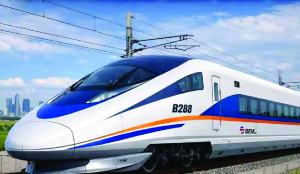
The Mumbai-Ahmedabad Bullet Train is not simply a faster train project; it is being built as a new transportation lifeline connecting some of western India's most important economic centres.
The 508-km Mumbai-Ahmedabad High-Speed Rail corridor is expected to transform the way people travel between Mumbai, Thane, Virar, Palghar, Boisar, Surat, Vadodara, Ahmedabad and other cities along the route.
City Centre to City Centre Travel
One of the biggest advantages of the Bullet Train will be its city-centre-to-city-centre connectivity. Instead of relying on airports far from urban centres, passengers will be able to reach major business and residential areas via strategically located high-speed rail stations. The Mumbai station at Bandra-Kurla Complex is particularly significant because BKC is one of Mumbai's major commercial districts. The underground station will also connect with the city's metro network and road transport. Similarly, stations at Surat, Vadodara and Ahmedabad will bring high-speed rail closer to the heart of the cities they serve.
This can make the journey more convenient, especially for daily or frequent travelers. A New Lifeline for Middle-Class Passengers: The bullet train is often associated with premium travel, but its larger impact could be felt by India's growing middle class.
As cities expand and employment opportunities become concentrated in major urban centres, affordable and reliable intercity transportation becomes increasingly important.
The Bullet Train can provide for passengers travelling frequently for work, education, business or family commitments, which could significantly improve mobility. The corridor can also strengthen economic opportunities in cities and towns along the route by making it easier for people to travel between residential areas and major employment centres.
Relief from Heavy Traffic in Major Cities
Mumbai, Ahmedabad, Surat and Vadodara are major economic centres that experience substantial road and rail congestion.
A high-speed rail system can shift a portion of long-distance passenger traffic away from roads and conventional rail services. Better integration between high-speed rail stations, metro systems, buses, and other public transport can encourage passengers to leave their private vehicles behind and use a more integrated public transportation network.
Time Savings for Greater Mumbai Commuters
The project could be particularly important for commuters and residents in the wider Mumbai Metropolitan Region.
Cities and towns such as Thane, Virar, Boisar and Palghar are increasingly connected to Mumbai through employment, education and business.
Reducing overall travel time between regional centres and major employment hubs will be a big relief for the daily commuters from these places.
The integration of high speed, metro, bus could make the Mumbai region function more like a connected metropolitan economic zone rather than a collection of separate cities.
Engineering Marvels Taking Shape
Perhaps the most fascinating aspect of the project is the scale and complexity of the engineering work taking place. The Mumbai section includes a 21-km underground tunnel between BKC and Shilphata.
This section is being constructed using massive Tunnel Boring Machines & NATM. Approximately seven kilometres will pass beneath Thane Creek, making it India's first undersea rail tunnel.
The TBMs being used are engineering giants, with cutterheads measuring 13.6 metres in diameter and machines weighing around 3,200 tonnes. Advanced Mixshield technology is being used to control ground settlement while tunnelling beneath densely populated urban areas and critical infrastructure.
The project is also introducing advanced Japanese-inspired J-Slab ballastless track technology in India. The system is designed for stable high-speed operation, with precision-engineered track slabs, rails and Cement Asphalt Mortar. Noise barriers are another important feature.
Around six lakh noise barriers have already been installed along approximately 297 km of the corridor. These barriers are designed to reduce the impact of high-speed train operations on surrounding communities. The electrification system is equally ambitious. The corridor is adopting a 2×25 kV overhead traction system, supported by thousands of masts and sophisticated electrical infrastructure designed for trains operating at speeds of up to 320 km/h.
The engineering achievement is impressive, but the real test of the project will be how effectively it improves everyday mobility for the millions of people living and working across Mumbai, Gujarat and the surrounding regions.
Author is Director of Public Relations Society for Civil and Environmental Engineers (SCEE) Delhi Technological University; Views presented are personal.