
Months after ceasefire, Israel and Hezbollah battle over strategic hill in Lebanon
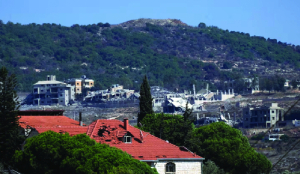
Since a ceasefire went into effect between Israel and Hezbollah more than two months ago, fighting has stopped in much of Lebanon, but not on a strategic hill overlooking parts of a main southern city.
In recent weeks, Ali Taher hill has been the scene of daily shelling and airstrikes by Israel’s military. Hezbollah, a militant group backed by Iran, has repeatedly attacked Israeli forces in the area with drones.
The United States, which is mediating talks between Lebanon and Israel, had wanted Hezbollah to hand over the hill to the Lebanese army as part of larger plan to disarm the militant group and dismantle its infrastructure. But Hezbollah has refused. Lebanon and Israel reached a framework agreement in June stating Israel will withdraw from Lebanon as Hezbollah is disarmed.
The militant group was not a party to the negotiations and has rejected calls to disarm in areas north of the Litani River, which is where Ali Taher is located.
A full-on battle over this hill near the city of Nabatiyeh could escalate fighting across the country, and unrest in Lebanon complicates efforts to resolve the war in Iran. On Thursday night, Israel’s military announced it had taken “operational control” of Ali Taher and a network of tunnels beneath it that Hezbollah uses to shelter its fighters and weapons. It is unclear how far Israel’s control extends. Just before Israel’s announcement, its air force was still targeting the hill, according to Lebanese state media. There has been no official statement from Hezbollah since Israel’s announcement.
US pushes Lebanon to pressure Hezbollah
Hezbollah firmly rejected a proposal from the Lebanese government to hand over Ali Taher to the country’s army. It fears Israel would then seize control of the hill from the Lebanese army and then demand the handover of more territory. Israel had occupied Ali Taher for 18 years before it withdrew from Lebanon in 2000.
The hill has a strategic location overlooking several villages as well as main roads leading to Nabatiyeh. Losing full control of it would disrupt Hezbollah’s presence and supply lines in the area.
The Israeli military says the site is also important to Hezbollah because of tunnels it built there, with funding from Iran.
Israel said in its statement Thursday that the hill housed underground command centres, weapons storage rooms, generators, living quarters, showers and a kitchen. Israel said it cleared Ali Taher of Hezbollah fighters and was working to “neutralise underground infrastructure sites.”
Hezbollah legislator Ihab Hamadeh questioned why the Israeli military was still attacking the hill if it was really in control of the area, according to Sputnik.
An Associated Press photographer who visited the nearby village of Kfar Rumman saw no sign of Israeli military presence on the hill.