
Made in India credited elsewhere
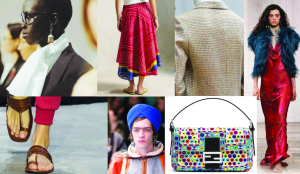
The crafts are Indian, the price tags are foreign, and the credit is usually the first thing to go missing
Open almost any almirah in an Indian home and out come the usual things: a dupatta from a mother’s trunk, a bandhani skirt sent by an aunt in Gujarat, Kolhapuri chappals that bit the feet for a week before they softened, and the mirror-work bag that comes out every Navratri. Nobody calls any of this luxury, yet the same things keep landing on Western runways with a foreign name, a price in dollars and barely a word about India, as if they had been dreamt up somewhere between Milan and Manhattan. The dupatta became a “Scandinavian scarf” on TikTok, Ralph Lauren listed a printed skirt “inspired by Bandhani”, Prada sent what looked every bit like Kolhapuris down its Milan runway, and Fendi’s mirror-work Baguette went for close to $10,000.
The most telling case came on September 12, when Ralph Lauren posted close-ups of a deep pink gown from its Spring 2027 show, “draped with shimmering silk-viscose and scattered with hand-applied embellishments”. That bland word, embellishments, was made to stand in for zardozi, which, as designer Prakhar Rao Singh Chandel pointed out, has been officially registered in Lucknow and six neighbouring districts since 2013 and supports nearly 1.75 lakh artisans. When the post closed with a Ralph Lauren line about every garment carrying its own history and character, Chandel asked: “Whose history? Whose character?” Under the brand’s own post, one Instagram user put it more simply: “Very pretty but this is Indian craftsmanship.”
Fashion has always borrowed, but borrowing without naming is another matter, and the excuse wears thinner every season. This is Ralph Lauren’s third such row this year, after jhumkas presented as “vintage accessories” and the Bandhani skirt, and it is getting hard to call it an accident. A house that can describe silk-viscose down to its shimmer can surely spare one word for the craft it is selling, a word that costs nothing and would mean a great deal to the karigars who have kept zardozi alive for generations. Indian craft, it seems, is good enough to fetch luxury prices abroad but not good enough to be called by its own name. Chandel said it best: “Name it when you use it. Not when you get caught.”
Mirror, Mirror, Whose Craft Is It?
Fendi calls it the Baguette 26424 Multicolour Re-Edition. It is inspired by a bag from the label’s Spring/Summer 1999 collection, carries 475 mirrors and 39,500 beads, and sells for about $10,000, which is over Rs 8 lakh. Harsh Goenka called it the “Navratri” bag on X and compared it to “a Rs 500 bag available in the streets of Gujarat”, while Kiran Mazumdar-Shaw called it “a case of cultural appropriation”. Many people missed that, according to the fashion watchdog Diet Paratha, the bag was made by artisans at Chanakya, a Mumbai embroidery house founded in 1984. In April, Fendi posted a video crediting “the skilled hands of Chanakya artisans”. Critics say that credit was easy to miss, since the bag itself carried no clear mention of India.
Inspired by… Whom?
From Gucci’s turban in 2018 to Ralph Lauren’s Bandhani skirt, how Indian craft has turned up on global runways, and who got the credit
Jhumkas, renamed
At its Fall 2026 show, Ralph Lauren sent models out in dome-shaped, bell-like earrings that South Asian viewers recognised at once as jhumkas. The brand presented them as “vintage accessories”, with no word on where the design came from.
Bandhani, printed
In April 2026, Ralph Lauren listed a Print Cotton Wrap Skirt for about Rs 44,800 and described it as inspired by Bandhani, without naming India or the communities in Gujarat and Rajasthan who still tie and dye the cloth by hand. Digital creator Radha Patel asked why India got no credit. She also pointed out that printing a Bandhani pattern is a long way from making one.
The Kolhapuri comeback
In June 2025, Prada showed Kolhapuri-style sandals in Milan without crediting India. After the outcry, it partnered with the state leather bodies LIDCOM and LIDKAR. This year, it released 2,000 pairs made by Indian artisans, along with a three-year training programme for them.
Getting it right
For its 2023 Mumbai show under Maria Grazia Chiuri, Dior named the Chanakya School of Craft in its show notes. In 2022, after Mexico accused Polo Ralph Lauren of copying Indigenous designs, the brand pulled the clothes, apologised and promised that future Indigenous designs would be made with the communities and properly credited.
Mukaish, unnamed
At Jonathan Anderson’s debut Dior show in Paris on 27 June 2025, a gold and ivory coat reportedly worth $200,000 was covered in mukaish, Lucknow’s metal-wire embroidery, and was said to have taken 12 artisans 34 days. Dior’s official communication made no mention of India or its artisans.
The turban
Gucci sent models down its Milan runway in turbans in February 2018, and in May 2019 Nordstrom listed the Gucci “Indy Full Turban” for $790. The Sikh Coalition reminded both companies that the turban is a sacred article of faith, and Nordstrom pulled the item and apologized.
@amisha6b Stop stealing Indian embroidery!!
@lostsiya Seriously, why do foreign brands keep doing this?