
The war that shattered Iraq
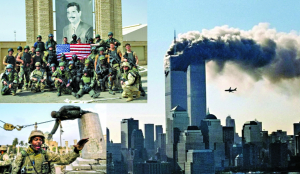
They came. They ruined. They handed us back to the same old enemies. This is how a war supposedly fought for security can end: with a country left carrying the consequences long after the soldiers who invaded it have gone.
Twenty-five years after September 11, 2001, the American-led wars in Afghanistan and Iraq offer a record of military intervention that is impossible to separate from the destruction of institutions, displacement, sectarian violence and the weakening of societies supposedly being protected. Brown University’s Costs of War project estimates that the post-9/11 wars produced between 4.5 million and 4.7 million direct and indirect deaths and displaced more than 38 million people. Iraq remains the clearest example of how quickly the promise of security can become a prolonged political and human disaster.
The 2003 invasion was justified through the claim that Saddam Hussein possessed weapons of mass destruction and represented an urgent danger. The weapons were not found. The Iraq Survey Group did not discover an active Iraqi WMD stockpile, while later official investigations exposed serious failures in the intelligence used to support the pre-war case. Saddam’s dictatorship and his previous use of chemical weapons were real. What collapsed was the proposition that Iraq possessed the active WMD capability used to justify the invasion. Yet the war went ahead, and the United States then faced the far more difficult question of what would replace the state it had destroyed. The occupation did not simply remove Saddam Hussein while preserving Iraq’s governmental machinery. Coalition Provisional Authority Order No. 1 imposed sweeping de-Ba’athification, while Order No. 2 dissolved the Iraqi military and other state institutions. These were occupation decisions, not inevitable consequences of removing Saddam. The dissolution of the army was especially consequential. Hundreds of thousands of trained personnel suddenly lost employment, authority and their place in the new state. Not all had been committed Ba’athists. Many had joined the army as a profession. Removing the institution therefore did not eliminate military knowledge or political grievances. It scattered them into a country already filled with weapons, uncertainty and anger.
Former soldiers, Ba’athists, nationalists, Islamists, criminals and foreign jihadists became part of an expanding insurgency. Sunni resistance and al-Qaeda in Iraq grew amid the disorder, while sectarian militias expanded. The bombing of the al-Askari shrine in Samarra in 2006 helped unleash an extraordinary escalation of Sunni-Shia violence, turning Baghdad into a city of checkpoints, kidnappings, assassinations and death squads. The occupation had dismantled one of the state’s principal instruments of order without possessing a credible substitute.
The United States changed strategy. The 2007 surge, the Sunni Awakening and changes in military tactics reduced violence, but they did not create a durable political settlement. Sunni tribes that had fought al-Qaeda alongside American forces later felt marginalised by the government in Baghdad, creating grievances that were exploited by the organisation that evolved into Islamic State. It would be simplistic to say that America directly created ISIS. Its rise also depended on the Syrian civil war, the collapse of Syrian state authority, sectarian politics and decisions by Iraqi and Syrian actors. But the chain linking the 2003 invasion, the destruction of Iraqi institutions, the insurgency, al-Qaeda in Iraq and the later rise of Islamic State is part of the documented history of the organisation. The irony is brutal. America invaded partly in the name of preventing terrorism, fought an insurgency that produced al-Qaeda in Iraq, later returned to fight the organisation that emerged from that movement, and ultimately fought Islamic State in a country whose political order its own invasion had helped destroy.
The human cost extended beyond the battlefields. On 19 November 2005, after a US Marine was killed by a roadside bomb at Haditha, Marines killed 24 Iraqi civilians, including women and children. The initial account did not accurately describe what had happened, and subsequent investigations produced criminal proceedings with varying outcomes. Abu Ghraib exposed an even wider crisis of detention, abuse and accountability. Photographs of prisoners being humiliated became symbols of an occupation that claimed to be constructing a democratic order.
Reconstruction brought another contradiction. The Coalition Provisional Authority controlled approximately $23 billion in Iraqi revenues and assets between May 2003 and June 2004, while the United States separately appropriated billions for reconstruction and security. The evidence does not support the crude claim that America simply stole Iraq’s oil, but the occupying authority exercised extraordinary control over a sovereign country’s finances while its institutions were being rebuilt. A huge contracting system followed, involving construction, logistics, security and maintenance, with oversight struggling to keep pace with enormous spending. The result was an economy dependent on oil and foreign-supported reconstruction. The World Bank estimates that in 2025, oil represented about 53 per cent of real GDP, 88 per cent of government revenue and 91 per cent of merchandise exports.
The consequences reached far beyond government accounts. The World Bank puts Iraqi unemployment at about 15.5 per cent in 2025 and identifies youth employment as a major structural challenge, while women remain dramatically underrepresented in the labour force. UNICEF says close to 3.2 million Iraqi school-age children are out of school and links the educational crisis to decades of conflict and under-investment. More than one million Iraqis remained internally displaced years after the territorial defeat of Islamic State.
The fact, however, is that Saddam’s Iraq had been a hostile barrier to Iranian regional influence. Its destruction removed that barrier, allowing political parties, religious networks and armed groups connected to Iran to become deeply embedded in the post-Saddam system. Some militias that fought American forces eventually became part of Iraq’s political and security architecture. Washington therefore removed an enemy of Iran and spent years confronting forces that benefited from the new order.
But the deeper failure was the inability to translate battlefield victories into political institutions capable of surviving without foreign military power. As Masrour Barzani, whose Kurdistan Regional Government governs Iraq’s Kurdish-majority north, described the US withdrawal from Iraq as “shameful”.
The writer is a columnist based in Colombo; Views presented are personal.