
Kerala unveils action plan to tackle human-animal conflict
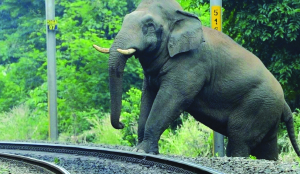
The Kerala Forest Department has prepared a 100-day action plan to reduce human-animal conflict in the State, an issue highlighted by the Congress-led UDF during its Assembly election campaign in the high-range regions.
Addressing a press conference after holding meetings with forest officials in Thiruvananthapuram, Kerala Minister Shibu Baby John said a centralised solar fencing monitoring system and an automatic fault-detection system would be set up with public participation.
He said the system would allow controlled public access to report faults in solar fencing along forest borders.
The State Forest minister said solar fencing currently covers 2,000 kilometres of border areas and that fencing along an additional 100 kilometres would be completed within the next 100 days.
The Government also plans to extend solar fencing by another 1,900 kilometres over the next five years. “Another major step is vista clearance-the clearing of trees and dense shrubbery up to 20 metres from the solar fencing-to prevent elephants from pushing trees onto the fences to gain entry,” John said.
He added that shrubs and undergrowth near forest roads would also be cleared with the help of local self-Government departments.
Funds from MPs, MLAs, NGOs, and CSR initiatives would be explored to meet the costs of the programme.
He said vista clearance covering 100 kilometres would be completed within the next 100 days.
Similarly, the number of Rapid Response Teams (RRTs) would also be increased.
“At present, we have 28 RRTs, which are inadequate to monitor 6,000 kilometres of forest boundaries. We are planning to create 25 more satellite RRTs that will function out of forest offices,” the minister said.
The Kerala Forest department currently relies on Primary Response Teams (PRTs) comprising trained local community members in panchayats located along forest borders.
Similarly, the department will also create Metro Rescue Teams, modelled on the PRTs, in which trained volunteers will help drive away straying animals.
In the first phase, eight metro rescue teams will be formed in Thiruvananthapuram, Kollam, Kottayam, Ernakulam, Thrissur, Palakkad, Kozhikode, and Kannur. Drone squads will also be formed to provide timely alerts about animals straying into human settlements and to monitor stranded animals in populated areas or farmlands.
“We will also ensure AI-aided real-time warning systems and monitoring systems in all forest divisions. Camera traps will also be deployed in areas witnessing severe human-animal conflict for better monitoring of animal movement,” John said.
The quality of existing forests would be improved by removing invasive species such as Senna and Acacia.
The department is also exploring the production of value-added products using invasive species as a revenue-generation model for tribal communities. The action plan also seeks to address the compensation system for victims and survivors of human-animal conflict.
The proposal includes a 50 per cent increase in compensation for fatalities caused by human-animal conflict and a single-window clearance system to ensure compensation is disbursed within seven days.
Similarly, higher compensation is also being considered for crop loss and injuries caused by wildlife conflict.
“We will form an expert committee to study and create a compensation protocol for crop loss. Many farmer organisations have complained that the criteria for determining compensation are outdated and need revision,” the minister said.
Addressing another major issue, the increasing wild boar population outside forest boundaries, he said a census of wild boars living outside forest areas would be conducted.
Additionally, a special drive to eliminate wild boars posing a threat to human life and property would begin on June 15 in strict adherence to existing rules, he said.
The minister said the public had serious concerns regarding the population of various wild animals, especially reports of increasing numbers that differed from scientific studies and official estimates.
“We will depute the Wildlife Institute of India, Dehradun, to study the carrying capacity of forests in Kerala, understand animal distribution, and determine how they can be managed while avoiding possible conflict with humans,” John said.
He said the department had also held discussions with the Indian Air Force on translocating captured animals deeper into forest areas, as people often object to releasing them near human settlements.
John also launched an online reporting portal for monitoring the functioning, maintenance, and inspection of solar fences.
The portal will help officials and the public report faulty fences in their areas and provide details of functional, faulty, or damaged solar fences across the State at a single click.
He also launched the Hostile Activity Watch Kernel (HAWK) software, which enables all forest crime cases to be submitted online to courts through the District Court Management System (DCMS).