
Jaishankar on China, Bangladesh, Pakistan : ‘Mutual interest’ key to India ties
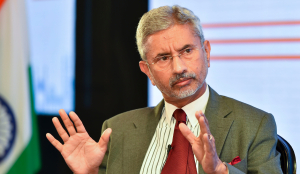
India wants a stable relationship with China, but peace along the border will remain central to the ties, External Affairs Minister S Jaishankar said on Saturday, while stressing that New Delhi will continue to engage with Beijing from a position of confidence.
Speaking at the Economic Times World Leaders Forum on August 22, Jaishankar said relations with China had gone through a difficult phase after the 2020 Galwan clashes and the prolonged military standoff in eastern Ladakh.
"I think we went through a particularly bad patch between the summer of 2020 and the autumn of 2024, and that was primarily an outcome of the situation in the border areas," he said.
Jaishankar said peace and tranquillity along the border were necessary for improving bilateral ties.
"The state of the border, to a very large measure, naturally would determine the state of the relations," he said.
At the same time, he said India could not afford to stay away from China economically.
"We have to do business with the entire world. That includes China too. But it is important we deal with them confidently and we stand our ground as we have stood in the border," he said.
He pointed out that India and China are major economies, markets for each other and part of global supply chains. Jaishankar said India needed to strengthen manufacturing and industrial capacity to compete with China and other major economies.
"A stronger, a more Atma-Nirbhar India, a more industrialised India, a stronger and more manufacturing India will be able to actually compete with China," he said.
India and China have taken several steps since late 2024 to ease tensions along the border. The two sides reached a disengagement agreement for Depsang and Demchok in October 2024, followed by a meeting between Prime Minister Narendra Modi and Chinese President Xi Jinping in Kazan.
Jaishankar said India had also raised with China issues faced by Indian businessmen, including visa-related problems.
‘Mutual interest’ must guide India-Bangladesh ties
Turning to Bangladesh, Jaishankar said bilateral relations could work only when both sides recognise each other's interests.
"For any relationship to work, it has to meet the test of mutual interest. It has to work for us," he said.
His remarks came amid continuing uncertainty over the proposed visit of Bangladesh Prime Minister Tarique Rahman to India. New Delhi has invited Rahman for a bilateral visit and also for the outreach session of the BRICS summit.
Jaishankar declined to comment on Dhaka's demand for the extradition of former Bangladesh prime minister Sheikh Hasina.
He said India could not expect its neighbours to act only according to its interests, adding that successful relations require both sides to find common ground.
"It is when you get that landing point, that common ground, relationships work smoothly," he said.
India-Bangladesh ties have faced fresh strains following Hasina's virtual interaction from New Delhi on August 5. Dhaka subsequently renewed its demand for her extradition and expressed its displeasure over the event.
India has said it had no role in the interaction and did not endorse her remarks.
Jaishankar calls Pakistan ‘unique’ over use of terrorism
On Pakistan, Jaishankar said the country was "unique" because of what he described as its systematic use of terrorism against a neighbour.
He was responding to a question on Pakistan-US relations and said Islamabad and Washington had a long history of engagement.
"Pakistan is unique not because it is a neighbour of India," Jaishankar said, pointing out that India has several other neighbours.
He said no other country, in India's experience, had used terrorism "so systematically and in such a sustained manner" to attack and pressure another neighbour.
Jaishankar said this had an impact on public opinion in India and that, as a minister in a democratic system, he could not ignore it.
On the US-China relationship, Jaishankar cautioned against viewing it simply as a "G2" arrangement, describing it as a complicated relationship that could involve competition, cooperation and differences depending on the issue.
He said India's approach would continue to be guided by its national interest.
(With inputs from PTI)