
Iran denies US talks, says Strait of Hormuz discussions only with Oman
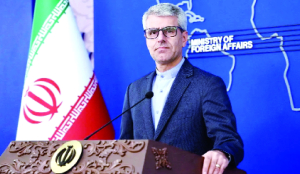
Iran on Monday categorically denied reports of direct or indirect negotiations with the United States, asserting that its current diplomatic engagement is limited to bilateral discussions with neighbouring Oman on ensuring the safe passage of shipping through the Strait of Hormuz.
Iranian Foreign Ministry spokesperson Esmail Baghaei dismissed claims of active dialogue between Tehran and Washington, saying there are no plans to exchange delegations with the US or any other country at present.
“We do not have any negotiations with the United States at the moment,” Baghaei told reporters. “We are not going to host a delegation or be guests of a country during these days.” According to Iran's Fars News Agency, Baghaei clarified that the ongoing talks with Oman are focused exclusively on establishing a temporary maritime route to facilitate safe navigation through the strategically important Strait of Hormuz.
He said the discussions are technical in nature and confined to maritime traffic management between the two coastal nations. While an understanding with Muscat on a temporary shipping lane is an essential step, it alone would not be sufficient to fully restore normal operations in the waterway.
Baghaei attributed the continued disruption in the Strait of Hormuz to what he described as ongoing US military operations and Washington's naval blockade against Iran initiated earlier this year.
He maintained that no broader change in the status of the waterway would be possible as long as the United States continued its military presence and what he termed an “aggressive posture” in the region.
“Negotiations are with Oman, focused on reaching an understanding on a route that would ensure the safe passage of shipping through the Strait of Hormuz,” Baghaei said. “Therefore, these negotiations are bilateral between two coastal governments. What happens next must be decided upon.”
Commenting on the regional security situation, Baghaei argued that the US military presence in the Persian Gulf has contributed to growing instability, affecting the security of all neighbouring countries. “The fact that all countries in the region consider themselves stakeholders in the future of the region is a positive thing,” he said. “America's war against the Islamic Republic of Iran is not just a war against one country; it is a war against the entire region and against the security of all countries in the region.”
While welcoming diplomatic efforts by regional governments to ease tensions, Baghaei stressed that Iran's own military capabilities remained the country's primary means of deterrence.
“We value these efforts, but experience has shown us that what can ultimately deter the enemy from escalating its actions against Iran is nothing but Iran's authority and deterrent power,” he said. Baghaei's remarks came after US President Donald Trump said negotiations with Iran, expected to be conducted through intermediaries, were scheduled to begin on Monday.
Speaking to reporters aboard Air Force One, Donald Trump said diplomatic channels involving Saudi Arabia, the United Arab Emirates, Qatar and Iran had remained active.
He also claimed that those diplomatic efforts had prompted him to call off what he described as a “massive attack” that had been planned for Friday.