
India’s Taiwan moment: Deepening ties without redrawing policy
As India’s global profile rises and our strategic partnerships expand, we too have increasingly become targets of coordinated attempts to shape public narratives and influence policy debates. Democracies cannot afford to underestimate information warfare simply because it unfolds without conventional weapons
India’s foreign policy has often found strength in its ability to reject false binaries. We have maintained relationships with adversaries, partnered with competitors and pursued strategic autonomy in an increasingly polarised world. It is this ability to engage without becoming entangled that has defined Indian diplomacy for decades. This is what strategic autonomy in motion looks like. Yet this confidence appears to diminish in the case of Taiwan, despite bilateral trade crossing US$10 billion and cooperation steadily expanding within India’s existing policy framework.
In the case of Taiwan, Indian governments over the years have always asked themselves: does deeper engagement contradict India’s One China policy? It is a misplaced question. India’s official position has been clear and consistent. Equally clear, however, is that our One China policy has never precluded meaningful economic, educational, technological or cultural engagement with Taiwan. If anything, with bilateral trade having more than doubled over the past decade and Taiwan emerging as a major source of investment in electronics and semiconductors, the rapidly changing geopolitical and economic landscape demands fuller use of the diplomatic space that already exists.
The challenge before India is not whether to change policy, but whether to fully leverage it. My visit to Taiwan convinced me that the time has come to do precisely that. Like many observers, I arrived with a mental picture shaped largely by international headlines. Taiwan has often been portrayed through the prism of geopolitical rivalry, military tensions across the Taiwan Strait and global anxieties over semiconductor supply chains. What I discovered instead was a thriving democracy with remarkable institutional resilience, an innovation-led economy and a society that has quietly built global leadership in sectors that will define the future.
The resilience of Taiwan is visible not merely in its economic achievements but in the confidence of its people. Universities work seamlessly with industry. Small and medium enterprises continue to drive global manufacturing networks. For a country like India, which often boasts of a demographic dividend and wants to become a global manufacturing and technology hub, these are lessons worth absorbing.
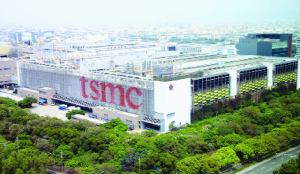
Taiwan today produces over 60 per cent of the world’s semiconductors and more than 90 per cent of advanced chips, making it indispensable to global supply chains. Its expertise in semiconductors, electronics manufacturing, precision engineering, healthcare technologies, renewable energy and advanced manufacturing complements India’s own developmental aspirations. As companies diversify through the “China Plus One” strategy and India expands electronics manufacturing under Production Linked Incentive (PLI) schemes, both sides have a commercially viable and strategically beneficial opportunity to deepen cooperation.
The case extends beyond economics. China’s increasingly assertive behaviour, from repeated transgressions along the Line of Actual Control to growing naval deployments, survey vessels and maritime militia activity across the South China Sea and the wider Indo-Pacific, has reinforced the importance of resilient regional partnerships. Deepening engagement with Taiwan complements India’s broader Indo-Pacific vision of a free, open and rules-based maritime order without altering our stated policy.
Taiwan lives under the constant shadow of organised disinformation campaigns. At times, one does feel that its ideas of freedom of speech are based not on its lived reality but more on the idealism of Western concepts. Like many democracies confronting algorithm-driven disinformation through Chinese digital platforms and coordinated online influence campaigns, Taiwan faces an existential challenge. India’s own decision to ban 59 Chinese-linked mobile applications demonstrated how democracies can respond decisively to national security concerns. Taiwan’s contentious relationship with China has made the island one of the world’s foremost laboratories for information warfare. False narratives, manipulated content, coordinated online campaigns and psychological operations seek to influence elections, erode trust in democratic institutions, polarise public opinion and weaken confidence in governance.
What makes these campaigns particularly dangerous is that they rarely appear overtly political. They often masquerade as grassroots concerns, anonymous citizen movements or seemingly authentic public opinion. By the time misinformation is identified and corrected, it has frequently achieved its objective of creating confusion and mistrust. Taiwan has invested considerably in combating these threats through digital literacy, rapid government communication and active civil society participation. Yet, even with these safeguards, the challenge remains enormous. The experience carries an important lesson for India.
As India’s global profile rises and our strategic partnerships expand, we too have increasingly become targets of coordinated attempts to shape public narratives and influence policy debates. Democracies cannot afford to underestimate information warfare simply because it unfolds without conventional weapons. Keeping this in mind, in my meetings with the leadership of the Taiwanese government, as part of the IPAC group and its India co-chair, I advocated greater momentum for the proposed India-Taiwan Labour Mobility Agreement, which has been collateral damage in the disinformation emanating from China. The agreement was conceived as a practical response to complementary economic needs. Taiwan’s median age now exceeds 44 years, and labour shortages persist across manufacturing, healthcare and construction. India, by contrast, has one of the world’s youngest workforces, creating a natural complementarity. A well-regulated labour mobility framework could create a win-win partnership. Indian workers would gain access to structured employment opportunities, skill development and higher incomes. Taiwan would benefit from addressing labour shortages through transparent, rules-based migration.
Yet, despite its promise, the agreement has remained in cold storage. Distorted claims circulated, suggesting that the agreement would result in uncontrolled migration, derogatory commentary on the Indian diaspora, displacement of local workers or exploitation on a massive scale. Facts were replaced with speculation. Public debate was overshadowed by fear, and these narratives achieved one objective: they slowed a partnership that could have generated tangible benefits for both societies.
Whenever two democracies move towards greater strategic cooperation, particularly in sectors carrying long-term economic significance, there will inevitably be those who perceive such proximity as contrary to their interests. Information manipulation has become one of the least visible yet most effective tools for delaying or derailing international cooperation.
Besides these partnerships, our engagement with Taiwan must extend far beyond labour mobility. Semiconductors understandably dominate public discussion. Taiwan’s leadership in semiconductor manufacturing is unmatched. With India investing nearly US$15 billion through semiconductor incentives and fabrication projects, collaboration can strengthen technological resilience while reducing dependence on concentrated supply chains. But there are equally compelling opportunities elsewhere. Vocational education offers enormous scope for collaboration, particularly in advanced manufacturing skills. Joint research programmes between universities could deepen scientific cooperation. Partnerships in healthcare technology, biotechnology and medical devices would contribute to India’s growing life sciences sector. Renewable energy, electric mobility and digital governance represent additional areas where Taiwan’s experience could complement India’s scale.
Perhaps most importantly, people-to-people exchanges deserve greater attention than they currently receive. Diplomatic relationships endure not because governments sign agreements but because societies develop familiarity with one another. Student exchanges, academic collaboration, tourism, technology partnerships and professional mobility create durable constituencies of trust that often outlast political cycles. India has successfully cultivated such relationships with many countries across Asia. Taiwan should be no exception.
None of this requires India to abandon its strategic autonomy or alter its official diplomatic position. Indeed, the strength of Indian foreign policy has always rested on its refusal to allow external powers to define the limits of our engagement. We have consistently maintained independent relationships based on our own national interests rather than the preferences of competing geopolitical blocs. Our approach to Taiwan should reflect the same confidence.
Ultimately, the question is not whether India should revisit its One China policy, but whether it has the confidence to fully utilise the diplomatic space it already provides. Strategic autonomy has always meant making sovereign choices in pursuit of national interests. Deepening ties with Taiwan is not a departure from India’s foreign policy but a natural extension of it in an increasingly contested Indo-Pacific.
The writer is a former Member of Parliament (Rajya Sabha) and currently heads Women Led Futures at ORF; Views presented are personal.