
India’s ambitions hostage to geopolitics
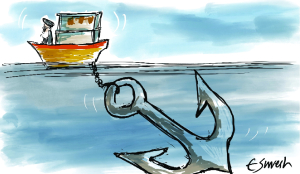
US sanctions and escalating regional tensions have stalled India’s ambitions for Iran’s Chabahar port, a vital gateway to Afghanistan, Central Asia and beyond. Despite mounting obstacles, New Delhi is betting on strategic patience to keep its regional connectivity vision alive
The peaks and troughs that have come to define the development of Iran’s strategically located Chabahar port offer a stark reminder of how geopolitics can hamper major infrastructure projects. Vital for Iran, the port is also crucial for India, which views it as a strategic anchor for its own sub-regional connectivity efforts.
The Chabahar project, however, remains severely hobbled by an ever-shifting global landscape. Over the years, the port’s development and operational use have been crippled by unilateral US sanctions stemming from long-drawn Washington-Tehran tensions.
The recent completion of a key rail link between Chabahar and Iranshahr, part of the larger planned 630-km line extending to Zahedan near the Afghan border, should have given India cause for cheer. But use of this rail link by India will have to wait, with Chabahar under sanctions.
Construction of the Chabahar-Iranshahr-Zahedan rail link has also suffered from prolonged delays. But Iran now says the entire Chabahar-Zahedan rail link, designed to carry 7.7 million tonnes of freight and 2.2 million passengers annually, will be ready by January next year. Once operational, this rail link could be a game-changer for regional connectivity and commerce.
Chabahar and Iranshahr are key cities in its Sistan and Baluchistan province, which shares long, porous borders with both Pakistan and Afghanistan, while Zahedan is its capital. Iran is also hopeful that the Chabahar connectivity project will bring economic prosperity to this underdeveloped province.
Yet, India’s ability to utilise this infrastructure remains on hold. Amid Iran’s ongoing conflict with the US and Israel, the Strait of Hormuz, which is so vital for global trade and commerce, has been under a blockade. First imposed by the Iranians after military strikes by the US and Israel, Washington also initiated a naval blockade in retaliation.
With the Strait of Hormuz becoming a choke point, Chabahar, Iran’s only oceanic port located close to the Gulf of Oman and overlooking the Indian Ocean, can be an alternative trading gateway. For India, Chabahar port also offers an invaluable sea-land route to landlocked Afghanistan, Central Asian countries and even Europe, effectively bypassing its hostile neighbour Pakistan and giving it the much-needed access to countries in its extended neighbourhood and beyond.
With the likelihood of Pakistan allowing transit rights to India in the foreseeable future being remote, Chabahar seems a viable alternative route to Afghanistan and beyond. The denial of transit rights by Pakistan found indirect mention by a senior Indian diplomat, who was recently in Islamabad to participate in the SCO coordinators’ meet, where he stressed the need for regional connectivity.
To secure this strategic foothold, India has assisted Iran in developing the port’s Shahid Beheshti terminal. However, the US sanctions have seriously impacted India’s ambitions to use the Iranian port. The waiver India had obtained for using the port lapsed on April 26 this year. The Trump administration, which has been riding roughshod over Indian interests, threatening tariffs of up to 100 per cent for purchasing Russian oil being one such instance, did not grant a further extension to the waiver. India had used the previous waiver to good effect, providing humanitarian assistance to Afghanistan.
India, however, was forced to withdraw hastily from operating the Shahid Beheshti terminal in Chabahar for fear of inviting US sanctions.
This has been a huge setback for India’s regional connectivity ambitions. Amid heightened US-Iran tensions, it’s unlikely that a sanctions waiver will come again anytime soon. While Iranian President Masoud Pezeshkian, during his visit to India last month, pressed upon New Delhi to increase its investments in Chabahar and deepen economic ties with his country, US sanctions preclude any such thing happening for now.
The ongoing sanctions on this strategic connectivity project are part of US strategy to apply maximum pressure on an adversary that has, over the decades, refused to be cowed down by Washington’s arm-twisting tactics.
Beyond trade access, Chabahar for India can serve as a strategic counterweight to Pakistan’s Gwadar port, which is located just 140 km away and has been built with China’s assistance. India has justifiable concerns about China actively using Gwadar as a military outpost.
In the long term, India also envisions Chabahar as the maritime anchor for the ambitious International North-South Transport Corridor (INSTC), a multi-modal transport network to access regions beyond its extended neighbourhood, right up to St. Petersburg in Russia and beyond.
Backed by India, Iran and Russia, the INSTC project, however, also remains a challenging one, given the geostrategic turmoil that is currently at play. The continuing Russia-Ukraine war and the consequent nosedive in Moscow’s relations with European countries are further setbacks for this ambitious connectivity project.
Despite all these formidable obstacles, India has demonstrated strategic patience, maintaining its long-term investment in Chabahar in the hope that shifting geopolitical tides will eventually allow the project to realise its full potential. New Delhi is keeping its fingers crossed.
Chabahar and Iranshahr are key cities in Iran’s Sistan-Baluchistan province, which shares long, porous borders with both Pakistan and Afghanistan, while Zahedan is its capital. Iran is also hopeful that the Chabahar connectivity project will bring economic prosperity to this underdeveloped province
The writer is a policy analyst; writes on international issues; Views presented are personal.